
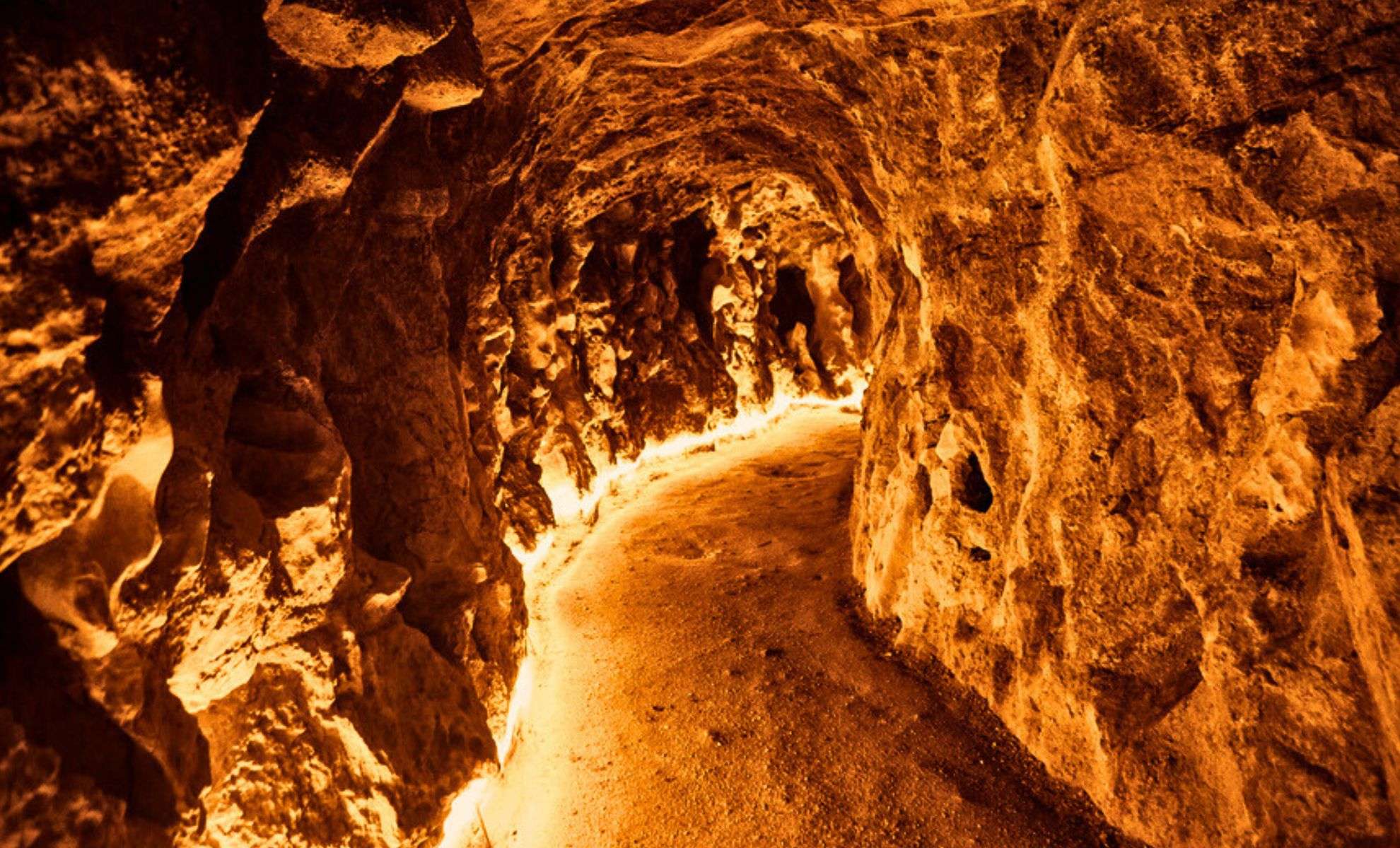
A recent peer-reviewed article in Nature by geochemists at the University of Göttingen reveals an extraordinary chemical signature: minute amounts of precious metals, specifically gold and ruthenium, are making their way from the Earth’s core up to the surface via volcanic hotspots such as those found in Hawai‘i.
This breakthrough provides concrete evidence reinforcing longstanding hypotheses about Earth’s internal mechanisms and suggests a far more interactive relationship between the deep core and surface than previously understood.
Ruthenium Points to a Deep-Earth Connection
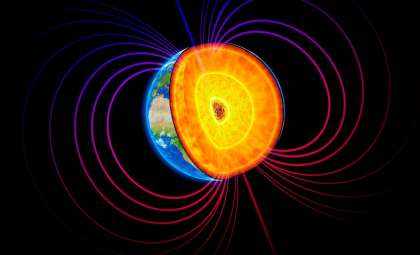
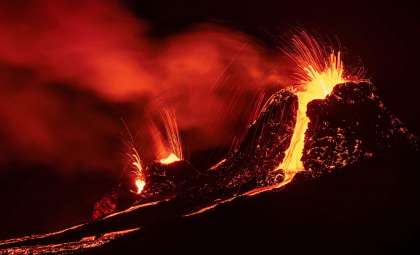
Focusing on ocean island basalts (OIBs), volcanic rocks formed by upwelling mantle plumes, researchers examined samples from Hawaiian volcanoes such as Kīlauea and Lo‘ihi. These sites overlay plumes thought to originate near the core–mantle boundary, roughly 3,000 kilometers deep.

The team employed precise mass spectrometry to detect isotopic anomalies in ruthenium (100Ru) and tungsten (182W). Ruthenium, typically more concentrated in the core than in the mantle, serves as a tracer. Elevated levels of 100Ru in lava beyond mantle expectations indicate that material from Earth’s core is reaching the surface through these mantle plumes.
Lead author Nils Messling explained, “Our data reveal a significant excess of s-process Ru isotopes in Hawaiian lava,” linked to core formation processes. The study suggests that “less than 0.3% of core-derived material can account for these isotopic deviations,” highlighting a measurable exchange between the core and surface.
Minute Flows, Major Geological Consequences
Though the volume of core-derived substances surfacing is tiny, the ramifications are profound. Traditional views held the core chemically sealed off from the mantle since Earth’s birth 4.5 billion years ago. This study challenges that, indicating the core may continue to supply trace elements to the mantle and crust.
Geologically, this points to a more interconnected planetary interior, supporting a model of a geochemical feedback system where infinitesimal core materials cycle upward over millions of years via volcanic activity.
Previous research noted anomalous tungsten isotope ratios (μ182W) in plume basalts but lacked definitive links to the core. Ruthenium isotopes now provide stronger evidence of core leakage.
Abundant Gold Deep Below, But Not Accessible
The media attention on this discovery often centers around the vast theoretical gold content in the Earth’s core. Estimates, drawn from mantle and crustal data, suggest the core might harbor as much as 30 billion tons of gold, worth about €2.77 trillion at current prices.
Matthias Willbold, co-author, cautions, “Although isotopic traces of core materials exist at the surface, their quantities are extremely tiny. These are traces, not commercially viable deposits.”
The investigation stresses this as a scientific breakthrough rather than a mining opportunity. Direct access to the core remains impossible due to the extreme temperatures and pressures in the 3,000-kilometer-thick rock layer above. Mining any core material remains beyond technological reach.
Nevertheless, these trace signatures offer a unique glimpse into Earth's deep interior, inaccessible by any other means.
Volcanoes as Natural Earth Probes
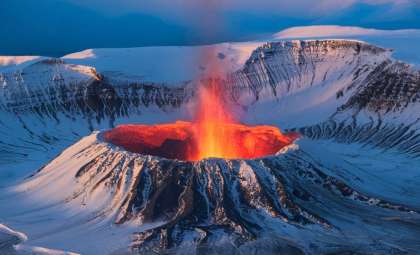
Instead of drilling, the researchers propose treating volcanoes as natural observation sites. Hotspots—such as those in Hawai‘i, La Réunion, and the Galápagos—serve as perfect laboratories to analyze the flow of deep Earth substances.
Lava emissions contain geochemical fingerprints reflecting deep-Earth material composition. Monitoring isotopic variations across multiple locations allows geoscientists to chart how core materials migrate and integrate into the mantle.
This approach advances our understanding of Earth’s internal processes, layer formation, and long-term structural evolution. It also has implications for refining planetary formation models, relevant to both Earth and other terrestrial planets.
Extending Core Leakage Concepts to Other Worlds
A fascinating implication considers whether similar core-to-surface material transport occurs on other planets. “If Earth's core leaks isotopes through mantle plumes, then comparable processes might happen on planets like Mars or Venus,” notes Messling. “This could clarify puzzling surface attributes or elemental patterns observed but previously unexplained.”
Upcoming missions might monitor isotopic anomalies in volcanic rocks on Mars or crustal samples from Venus, applying the techniques demonstrated by Earth's hotspot analyses.
- Categories:
- News







0 comments
Sign in to Comment