
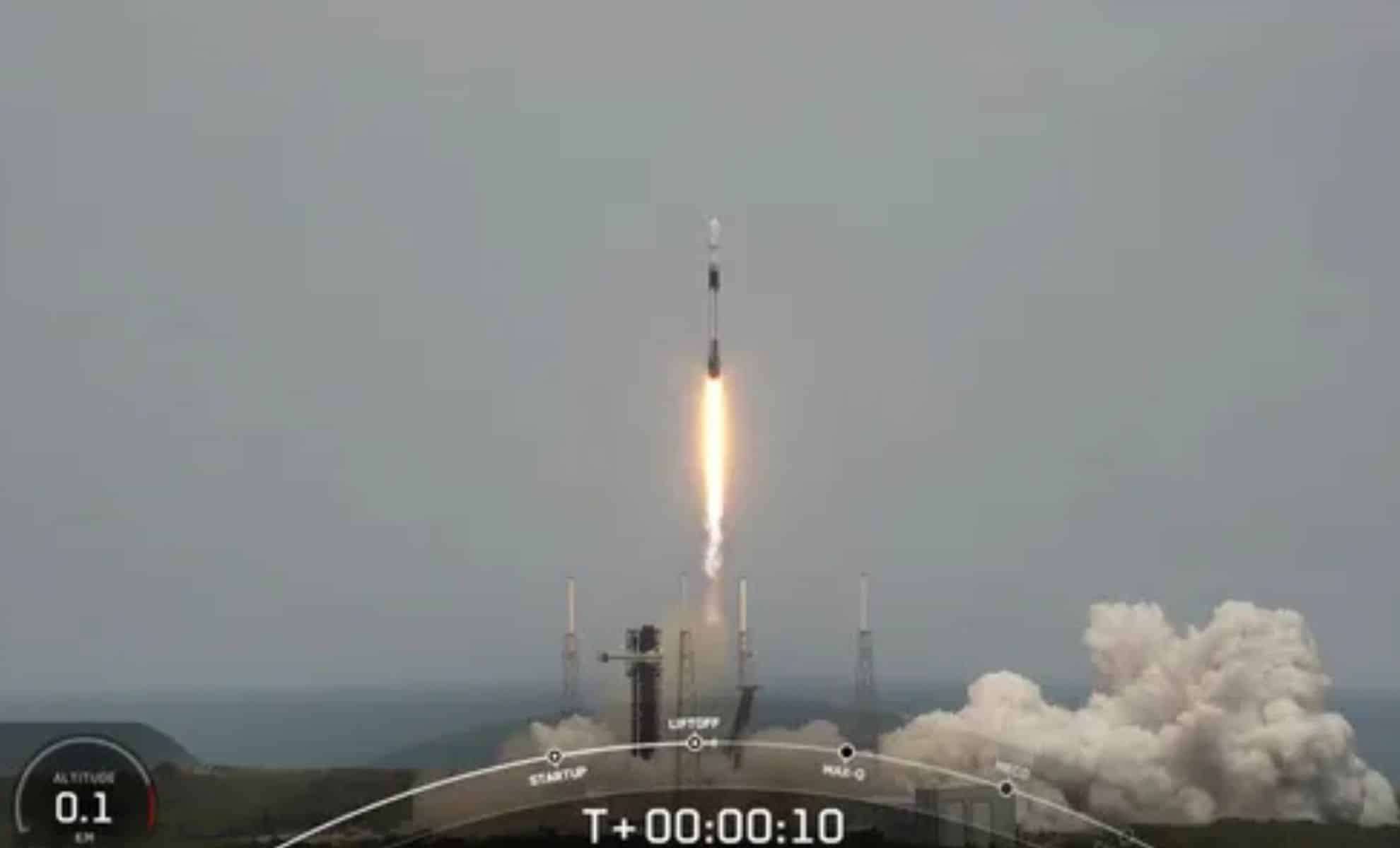
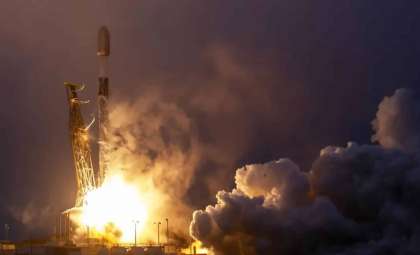
On March 24, 2025, SpaceX achieved a pivotal launch milestone by deploying a classified reconnaissance satellite for the United States, coinciding with the 19th anniversary of its maiden flight. At precisely 1:48 p.m. EDT, a Falcon 9 rocket soared skyward from Cape Canaveral Space Force Station, successfully delivering the NROL-69 payload for the National Reconnaissance Office (NRO). This accomplishment follows SpaceX’s early challenges with its Falcon 1 rockets in 2006, which experienced three consecutive launch failures. Today, SpaceX leads the industry in reusable rocket technology and plays an essential role in supporting critical national security operations, as highlighted by Space.com.
Inside the Classified NROL-69 Mission
Details surrounding the NROL-69 satellite remain under wraps, consistent with the secrecy typical of government space endeavors. The mission’s insignia, depicting an origami-inspired hummingbird over a wetland, symbolizes agility and speed, reflecting the satellite’s purpose in bolstering national security through rapid intelligence collection and response capabilities.
SpaceX kept the satellite’s orbit undisclosed, and the live stream of the launch concluded nine minutes after liftoff, shortly after the Falcon 9’s first stage touched down safely. These measures are routine for sensitive government payloads, helping to shield operational specifics from public view. Notably, this mission marked the second flight of the same Falcon 9 booster, highlighting SpaceX’s ongoing progress in rocket reutilization.

Advancing the NRO’s Distributed Satellite Network
The NROL-69 launch aligns with the NRO’s initiative to establish a “proliferated architecture” comprising numerous smaller, more economical satellites designed to improve reconnaissance resilience and responsiveness. This strategy contrasts with the traditional focus on fewer, larger, and costlier spacecraft.
SpaceX contributes significantly to this vision by offering reliable and cost-effective launch services with its reusable Falcon 9 vehicles. This decentralized satellite deployment increases the NRO’s agility in acquiring intelligence and adapting to shifting security demands.
The satellites in this proliferated network are thought to be adaptations of SpaceX’s mass-produced Starlink broadband units, providing greater deployment flexibility and enabling rapid replacement or augmentation of assets as required.
Showcasing Reusable Rocket Excellence
The NROL-69 mission also served as a demonstration of SpaceX’s expertise in rocket reusability. The Falcon 9’s first stage achieved a successful touchdown at Cape Canaveral, underscoring the company’s dedication to driving down space mission expenses via vehicle recovery and reuse.
By reusing rockets, SpaceX has substantially reduced launch costs, facilitating more frequent and economical access to orbit. This innovation not only promotes broader space exploration but also enhances the capability to execute critical national defense missions efficiently. SpaceX’s Falcon 9 stands as a benchmark in the aerospace sector, paving the way for the future of cost-conscious spaceflight.
- Categories:
- News







0 comments
Sign in to Comment