
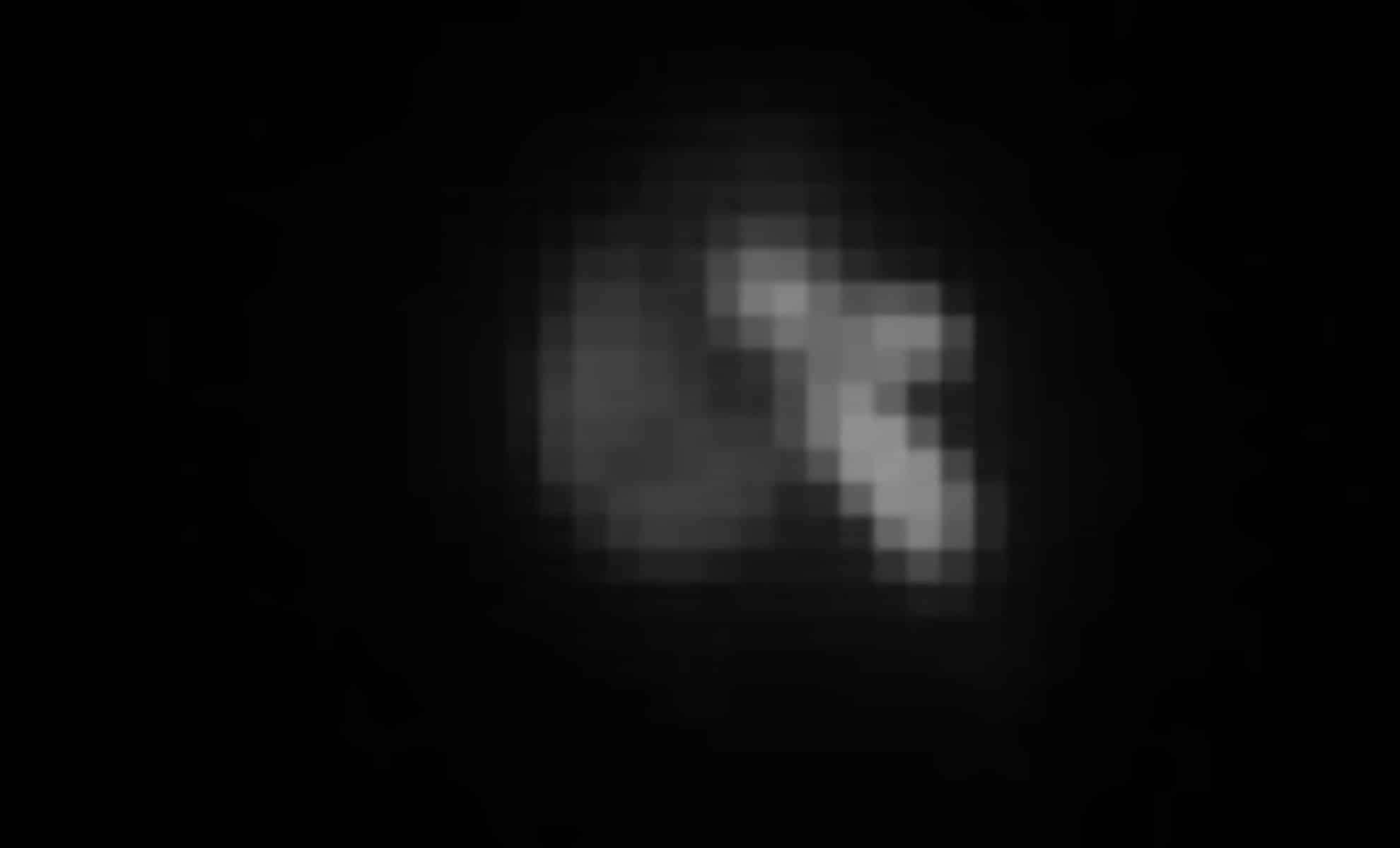
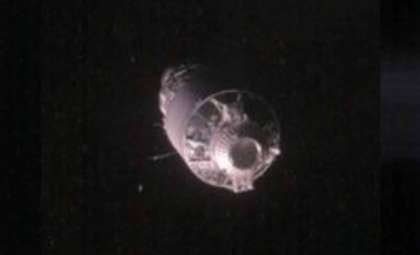
An Austrian hobbyist astronomer, Felix Schöfbänker, has achieved a remarkable feat by photographing highly classified US spy satellites with his self-crafted telescope. These satellites, operated by the National Reconnaissance Office (NRO), include the Future Imagery Architecture (FIA) and KH-11 Kennen series. Schöfbänker’s findings offer new insights into the design and functionality of these covert spacecraft, often shielded from public scrutiny.
Exploring FIA Radar Satellites: Inside Synthetic Aperture Radar Technology
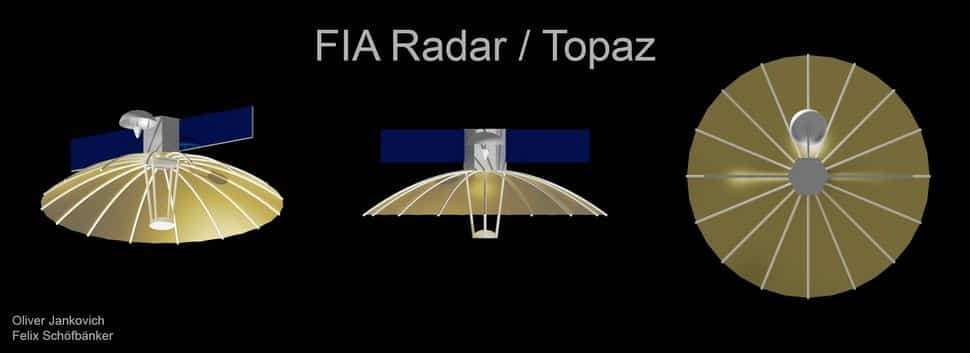
The Future Imagery Architecture (FIA) satellites, also referred to as Topaz, represent a fleet of United States reconnaissance satellites that utilize Synthetic Aperture Radar (SAR) technology. These satellites emit radar pulses to produce detailed images of Earth’s surface, capable of penetrating through clouds, vegetation, and shallow soil layers. Between 2010 and 2018, several of these satellites were launched, and Schöfbänker’s 14-inch Dobsonian telescope images captured intricate features of their construction and capabilities.
In an interview with Space.com, Schöfbänker described his observations, stating, “From my images, I conclude that these satellites have a parabolic mesh antenna which is roughly 12 meters [39 feet] in diameter, and two solar panels with roughly 10 meters [33 feet] of wingspan.” These dimensions indicate that the SAR satellites are built for long-term missions, capable of capturing images regardless of weather or lighting conditions.

One notable observation was the consistent orientation of the satellite’s SAR antenna. Over 28 observation sessions, the antenna pointed right 22 times and left only 6 times. Schöfbänker suggests this directional preference correlates with the satellite’s operational requirements, adjusting antenna positioning to optimize imaging based on orbit and target.
KH-11 Optical Satellites: Advanced Real-Time Earth Surveillance
Beyond the FIA radar fleet, Schöfbänker also snapped images of the KH-11 Kennen satellites, a class of optical reconnaissance spacecraft outfitted with electro-optical sensors. Developed by Lockheed Martin, the KH-11 satellites resemble the Hubble Space Telescope in design but focus their gaze on Earth rather than distant celestial bodies. Since their debut in 1976, four active KH-11 satellites orbit Earth, with the newest launched in 2021.
Schöfbänker’s analysis revealed their impressive imaging capability: “The KH-11s are somewhat similar to the Hubble Space Telescope, but optimized to look down to Earth, instead of studying space,” he said. He also examined mirror sizes across satellite generations, finding older third-generation models sported 2.4-meter (8-foot) mirrors, while newer fourth-generation units possess larger 3-meter (10-foot) mirrors, enabling the capture of details as fine as three inches from orbit.
He emphasized the KH-11’s real-time intelligence feature: “The KH-11 was the first to provide real-time intelligence of officials,” a capability pivotal during crises like the Cuban Missile Crisis and the Six-Day War. This immediate data access empowers agencies to swiftly respond to global events, cementing the KH-11 as a key asset in modern surveillance.
USA 290: A Mysterious Satellite with an Unconventional Blueprint
Among Schöfbänker’s most compelling discoveries is the enigmatic satellite known as USA 290, which diverges significantly from FIA or KH-11 designs. Suspected to be part of a different classified program, USA 290 features a roughly 5-meter rectangular panel—a contrast to the cylindrical shape of KH-11 satellites.
During a Space.com interview, Schöfbänker remarked, “In July, I managed to get a look at a satellite called ‘USA 290’ which is suspected of possibly being another KH-11. But my image shows a different kind of design, which doesn’t look like a typical KH-11.” This unusual configuration, combined with its non-synchronous orbit, suggests USA 290 may fulfill functions distinct from conventional optical reconnaissance.
Schöfbänker proposed several theories for the mysterious rectangular panel, speculating it might be a radiator for an infrared imaging system or a phased array antenna for signal intelligence operations. He deemed it unlikely a solar panel, since it appeared fixed and unable to track the Sun efficiently. The satellite’s unique design and orbit keep its exact mission a subject of ongoing speculation.
Amateur Astronomers and Their Role in Revealing Secret Spacecraft
Despite dealing with ultra-classified satellites, Schöfbänker believes his observations are unlikely to alarm the governments involved. He reasons that major space-capable nations possess far more advanced imaging tools than available to amateur astronomers. As he explains, “I don’t think that most countries would be too concerned about amateurs like me imaging their spacecraft, since most big countries have their own observatories dedicated to this kind of imaging.”
Nonetheless, Schöfbänker’s work emphasizes the valuable contributions amateurs can make to space science. Utilizing accessible equipment, he has successfully imaged some of the most secretive and sophisticated satellites in orbit and provided detailed data on their size and functions. His images open a rare window into the technology behind contemporary space-based surveillance.
Through his efforts, the public gains an unprecedented look at intelligence-gathering tools orbiting Earth. As space surveillance advances, the endeavors of amateur astronomers like Schöfbänker will remain vital to uncovering the secrets of classified satellite missions.
- Categories:
- News






0 comments
Sign in to Comment