
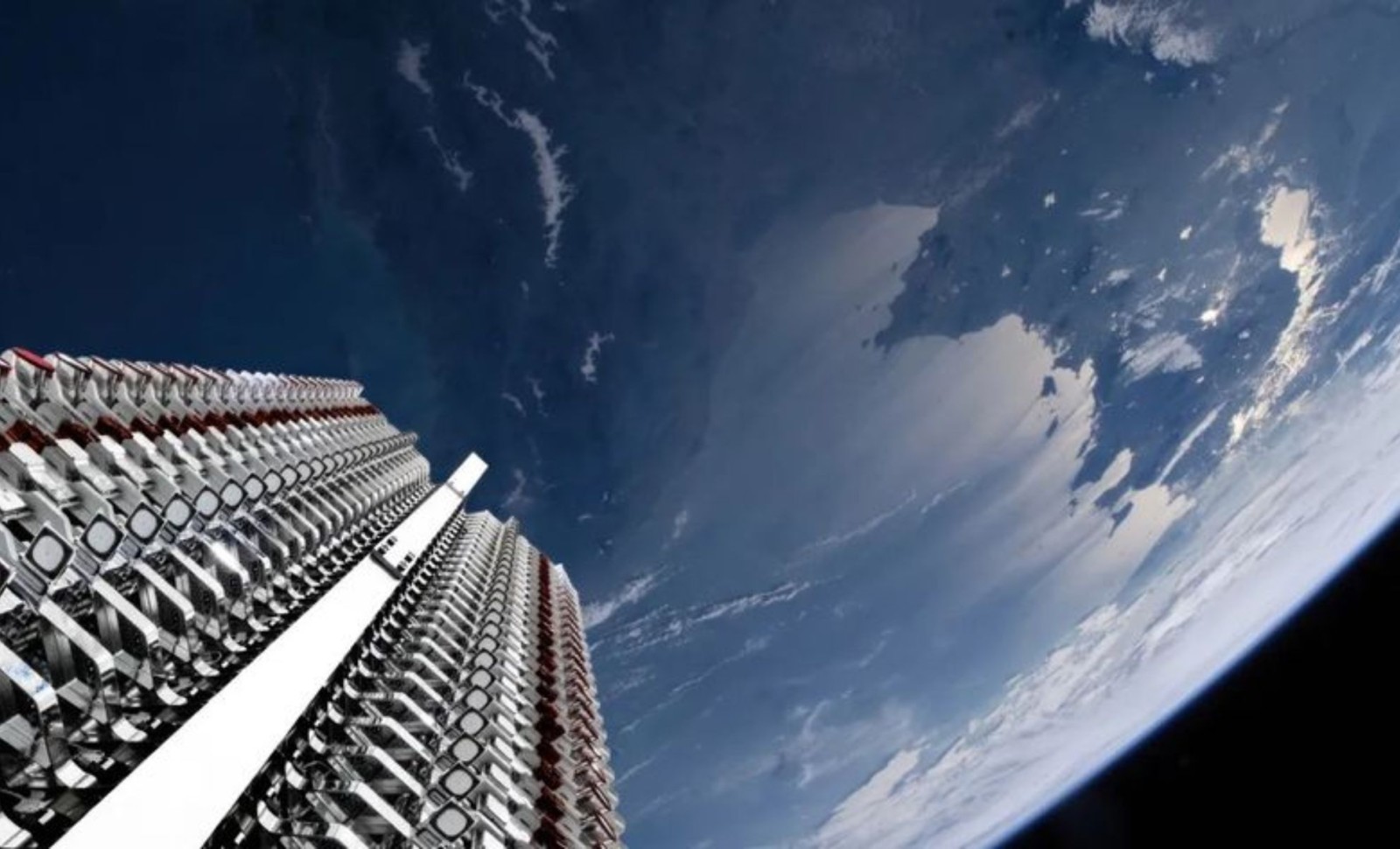
A SpaceX Starlink satellite has started its descent back to Earth after suffering partial destruction in orbit, confirmed by the company. The affected spacecraft is currently spinning uncontrollably and is anticipated to disintegrate completely during atmospheric reentry within weeks.
The event occurred on December 17 and involved Starlink satellite 35956, part of SpaceX’s extensive broadband satellite network. The malfunction led to a communication blackout and an unexpected release from its propulsion tank, causing a rapid drop in orbit. SpaceX is coordinating the response with NASA and the U.S. Space Force.
Control Lost on Starlink Satellite 35956 After Anomaly
A social media update indicated the issue started when the satellite was orbiting at about 418 kilometers (260 miles). The company described this as an “anomaly” that led to communication loss and subsequent venting of the propulsion tank, reducing the satellite’s altitude by roughly 4 kilometers. This event also resulted in the release of several trackable debris pieces.

The satellite remains mostly intact but is tumbling as it moves lower. Despite this, representatives from Starlink emphasized:
“The satellite is largely intact, tumbling, and will reenter the Earth’s atmosphere and fully demise within weeks. The satellite’s current trajectory will place it below the @Space_Station, posing no risk to the orbiting lab or its crew.”
SpaceX Advances Software to Enhance Satellite Safety
In a statement shared with Space.com, SpaceX reiterated its “strong commitment to space safety” and confirmed ongoing investigations into the cause of the anomaly. The company is also developing software updates aimed at avoiding similar failures going forward.
Boasting nearly 9,300 operational satellites, Starlink accounts for about 65% of all active satellites around Earth. Each satellite is designed for planned deorbiting after roughly five years in service. This recent malfunction occurred prematurely, though it's still unclear if it was due to technical flaws or external factors.
Collision Avoidance Practices Vary Among Satellite Operators
The Starlink fleet employs autonomous systems to avoid collisions, which SpaceX reported were activated 145,000 times in just the first half of 2025. This averages to roughly four evasive maneuvers per satellite each month, highlighting the complexity of traffic management in low Earth orbit.
However, not all satellite operators adhere to similar coordination measures. Mere days before the December 17 malfunction, a Chinese satellite reportedly passed within 200 meters of Starlink-6079 without proper communication. Michael Nicolls, Starlink’s engineering vice president, noted that the Chinese satellite was launched without “any deconfliction with existing satellites.”
Nicolls voiced concerns on X, quoted by Space.com:
“Most of the risk of operating in space comes from the lack of coordination between satellite operators — this needs to change.”
- Categories:
- Space




0 comments
Sign in to Comment