
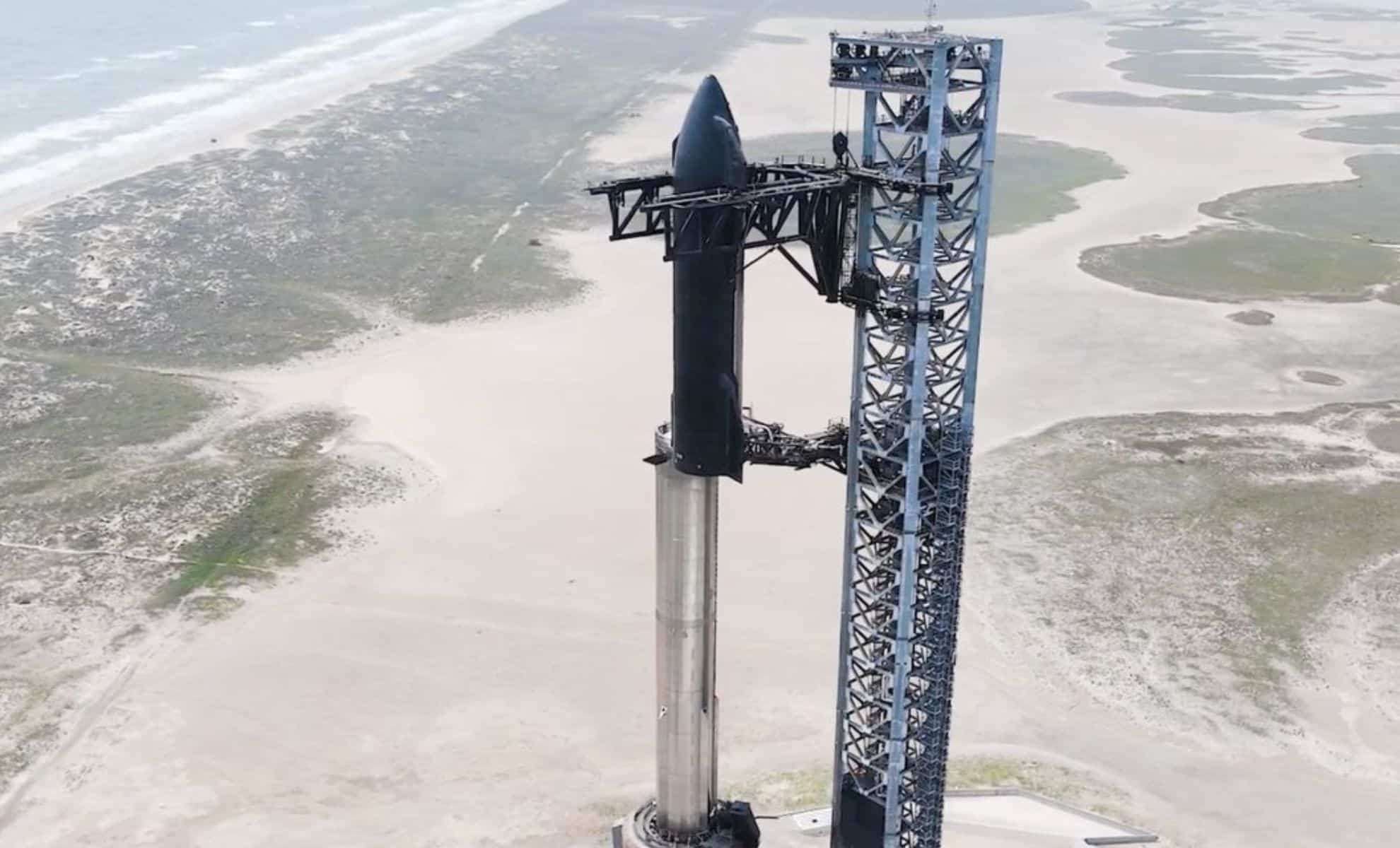
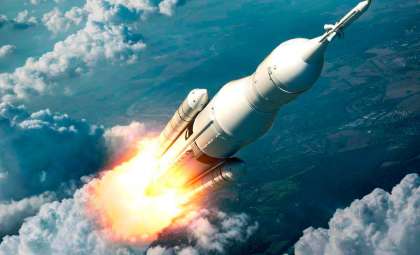
SpaceX is steadily progressing with the fourth launch attempt of its Starship super heavy-lift rocket by assembling its upper stage atop the Super Heavy booster at the Starbase facility in South Texas.
This milestone is essential as it supports the ongoing efforts to develop the Starship system aimed at transforming space transportation.
Successful Assembly and Testing Completed by SpaceX Crew
SpaceX engineers recently finalized the integration of the Starship’s upper stage on the Super Heavy first-stage booster for its fourth test flight. Utilizing the giant launch tower’s "chopstick" arms at Starbase, this critical stacking operation was captured in photos and video footage released by SpaceX.

The fully assembled rocket stretches approximately 400 feet in height, making it the tallest and most potent launch vehicle ever built. Prior to stacking, SpaceX successfully conducted static fire tests on Raptor engines of both the upper stage and booster to confirm their operational capabilities.
Upcoming Wet Dress Rehearsal and System Checks
Following the completion of rocket stacking, SpaceX has moved into a series of integrated tests, including partial propellant loading. A comprehensive Wet Dress Rehearsal (WDR) is anticipated soon, potentially as early as May 18. This involves fueling the entire vehicle and running a full countdown simulation to verify all systems are working correctly.
These rehearsals are vital for validating both the rocket and supporting infrastructure, ensuring readiness for launch. SpaceX has conducted similar WDRs for previous Starship tests, incrementally enhancing launch pad and tank farm functionality to boost dependability and safety.
Expanding Starship Infrastructure and Ambitions
Beyond preparing for the imminent flight, SpaceX is also progressing with its broader Starship initiatives. Work is underway on a second launch tower at Starbase alongside facility upgrades at the Cape Canaveral launch site in Florida, reflecting SpaceX’s goal to achieve frequent Starship launches.
The FAA is currently reviewing an updated Environmental Impact Statement (EIS) for operations at Launch Complex 39A (LC-39A) which, if approved, would allow up to 44 Starship launches annually. This reflects SpaceX’s vision to establish Starship as the centerpiece of future space exploration and transportation missions.
Insights from Past Test Flights Fuel Improvements
Previous Starship test flights have progressively improved. The inaugural April 2023 flight ended early due to a stage separation issue, while the second November 2023 flight successfully completed stage separation and doubled flight duration. In March 2024, the third flight lasted nearly 50 minutes but concluded with the upper stage breaking apart on reentry.
Each mission has supplied invaluable data, informing design tweaks and operational procedures. The fourth flight, expected in the coming weeks, seeks to build on these gains and further validate Starship’s performance.
Implications for the Future of Spaceflight
Starship’s advancement is central to SpaceX’s visionary projects, including colonizing Mars, conducting lunar expeditions, and enabling fast Earth-to-Earth travel. A fully operational Starship will revolutionize space access with its unmatched payload capacity and reusability.
This progress promises reduced launch costs and supports ambitious space missions previously deemed unattainable. As SpaceX continues to test and optimize Starship, the global aerospace community eagerly watches, recognizing the enormous potential of this innovative architecture to reshape humanity’s presence in space.
The continuous cycle of testing and refinement underscores the vital role of iterative development in achieving transformative technological success. With each flight, SpaceX draws closer to making space travel more affordable and sustainable, ushering in a new era of exploration and discovery.
- Categories:
- News ,
- Space ,
- Aircraft ,
- Evolution






0 comments
Sign in to Comment