
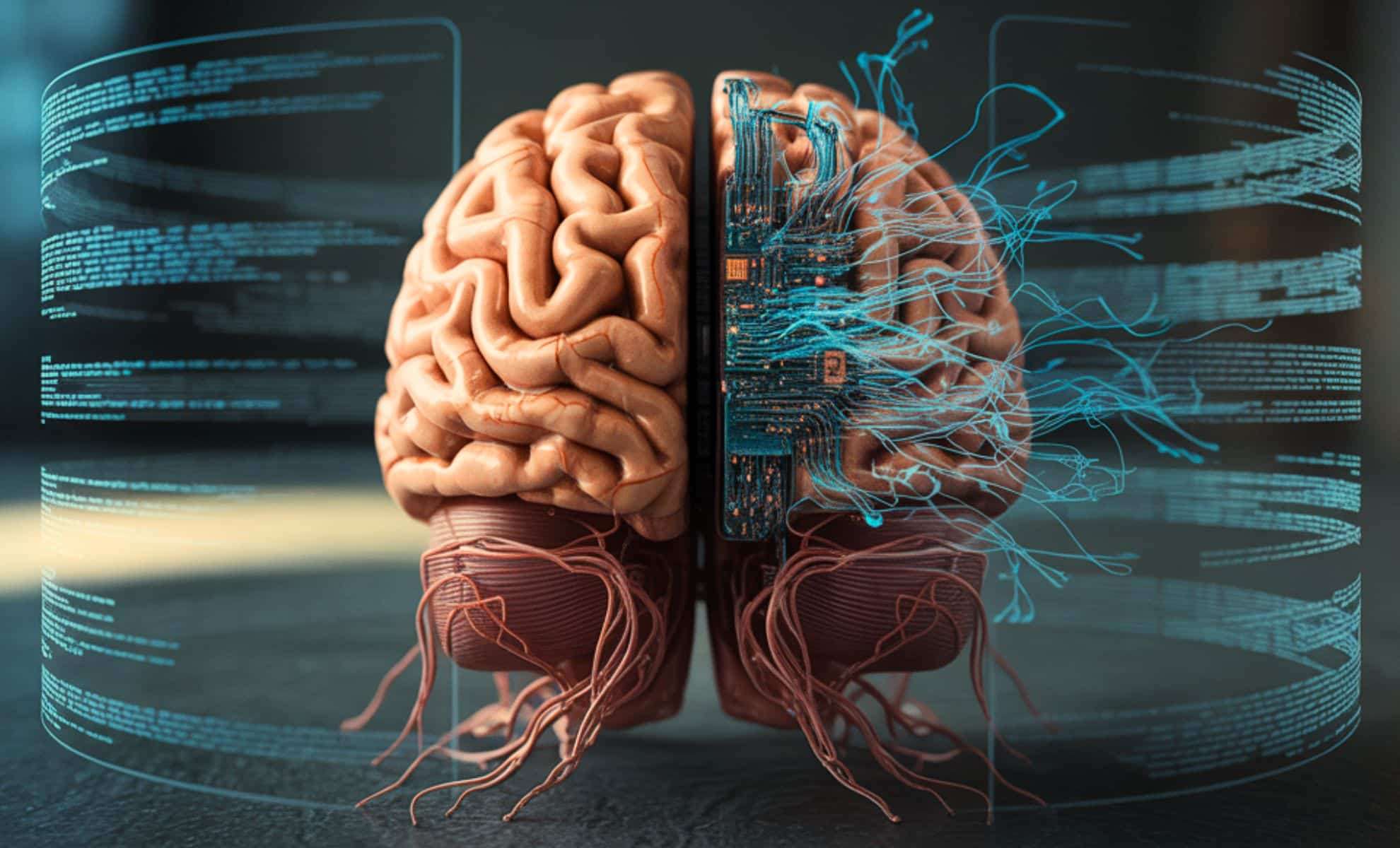
A Singapore-based startup has introduced a groundbreaking AI framework that surpasses leading large language models like OpenAI’s GPT-4 and Anthropic Claude on a challenging intelligence test, all while consuming a fraction of the typical computational power.
Researchers at Sapient revealed their innovation: the Hierarchical Reasoning Model (HRM). As detailed in their peer-reviewed preprint on arXiv, HRM reached an impressive 40.3% accuracy on the Abstraction and Reasoning Corpus (ARC-AGI), a benchmark assessing general problem-solving capabilities without task-specific tuning. For context, OpenAI’s o3-mini-high scored 34.5%, Claude 3.7 managed 21.2%, while Deepseek R1 was at 15.8%.
Strikingly, HRM operates with only 27 million parameters, approximately 1,000 times fewer than popular models, and was trained using just 1,000 examples. This was achieved with neither pretraining, reinforcement learning, nor extensive fine-tuning on massive datasets.

Drawn from Neuroscience, Not Buzzwords
Instead of scaling up data or computational power, Sapient’s team emphasized model architecture. HRM is inspired by the brain’s capability to process information over varying time intervals.
“The design contains two components,” the authors describe in the arXiv publication. “A strategic high-level planner oversees abstract decision-making, while a fast-acting low-level unit manages detailed calculations.” These modules interact cyclically, refining reasoning without relying on the widely-used Chain-of-Thought (CoT) approach common in language models.
While CoT dissects problems into sequential steps and has become a prevalent technique, it demands huge datasets, adds latency, and can yield fragile outputs. In contrast, HRM performs tasks in a single forward pass, enhancing speed and efficiency.
Excelling in Logic and Complex Reasoning
Unlike many AI systems focused on text or image generation, HRM demonstrates exceptional prowess in logic-intensive challenges such as Sudoku and maze solving. It reportedly tackles intricate puzzles with remarkably high accuracy.
The model’s success signals a potential paradigm shift in artificial general intelligence (AGI) development. Rather than indefinitely expanding model size, the team advocates that architectural ingenuity may be the key to superior reasoning.
Nevertheless, skepticism remains. Independent replications of Sapient’s ARC-AGI results suggest that the hierarchical framework contributed minimally; instead, a novel refinement training technique—only briefly outlined in the original work—played a larger role.
This has prompted calls for greater clarity within the AI community. “The outcomes are promising, yet the underlying mechanisms remain unclear,” an ARC evaluator told Cosmo Herald. “More insight into these breakthroughs is necessary.”
Potential for Sustainable AI Advancement
If HRM’s effectiveness is confirmed, it could revolutionize AI by reducing reliance on enormous computational budgets, like those needed by GPT-4 and Claude, which also heavily impact energy consumption. Compact, biologically-inspired models such as HRM might provide a greener and more cost-effective path forward—faster to develop, cheaper to operate, and potentially superior in reasoning.
Still, HRM is an emerging concept. Sapient’s findings are yet to undergo comprehensive peer review, and no public version of the model exists for independent verification. The technology sector awaits further validation to determine if this innovation will reshape AI or remain a fleeting idea amid the ongoing competition.











0 comments
Sign in to Comment