
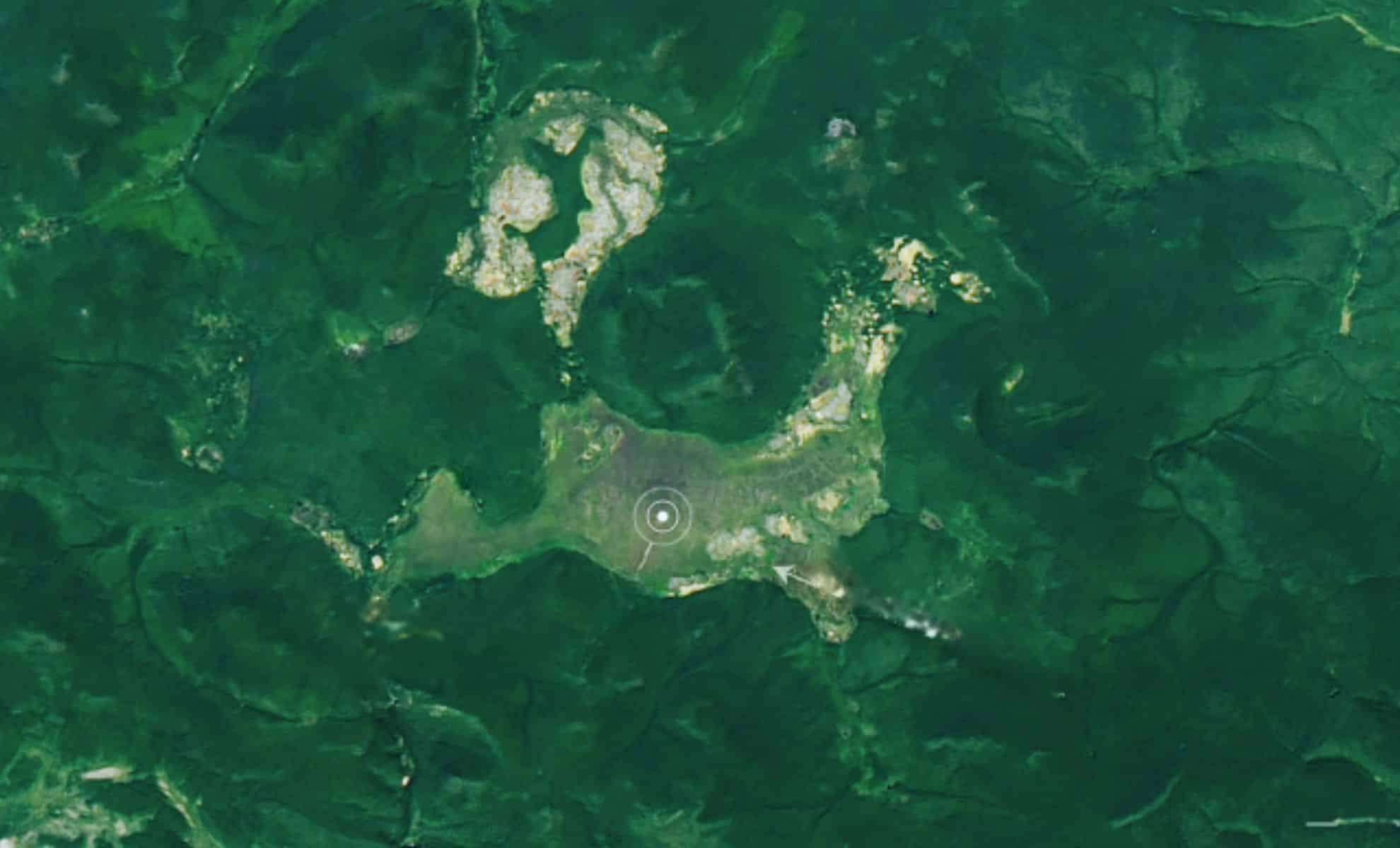
On the morning of June 30, 1908, a massive detonation illuminated the skies above Eastern Siberia, unleashing energy on par with 10 to 15 megatons of TNT. Known as the Tunguska event, it remains the most significant explosion caused by an extraterrestrial object in recorded history. Newly released NASA Earth Observatory satellite images, captured by the Operational Land Imager (OLI) aboard Landsat 8, have shed light on the present-day Tunguska impact zone. Despite the immense blast that flattened thousands of square miles of forest over a hundred years ago, these images reveal a landscape with little visible damage, deepening the enigma surrounding the event.
The Tunguska Blast: A Defining Moment in Earth's Cosmic Encounters
The Tunguska explosion took place at dawn on June 30, 1908. Witnesses described a blazing fireball shooting across the sky at an astonishing velocity close to 60,000 miles per hour. It was followed by massive explosions and searing waves of heat. Some locals reported feeling the force of the shockwaves physically; one individual was reportedly thrown nearly 20 feet from his porch due to the blast’s intense pressure.
The detonation devastated an expanse exceeding 830 square miles of Siberian taiga, marking it as the largest asteroid-induced explosion ever documented. Remarkably, unlike typical meteorite impacts, no crater was formed, which has puzzled scientists for generations. Today, the area largely appears undisturbed, though clues remain: many trees show bark stripped away, and others lie toppled in a distinct radial formation.

What Caused the Tunguska Explosion? Asteroid or Comet?
The scientific community continues to deliberate over the explosion’s exact origin, with the prevailing theory pointing toward an asteroid or comet as the culprit. Experts believe the space object disintegrated in midair, triggering an enormous airburst that unleashed energy equivalent to hundreds of Hiroshima bombs, leveling forest over vast areas. However, the absence of a crater or identifiable fragments has led some researchers to favor the comet hypothesis.
Evidence such as rock fragments, traces of shocked quartz, and unusual tree ring patterns lend support to the asteroid explanation. Nonetheless, no unanimous agreement has emerged, leaving the object's identity ambiguous. The adjacent Lake Cheko has sparked debate as well; some scientists theorize it formed from debris linked to the explosion, but this remains controversial without conclusive proof.
Tracking Near-Earth Objects: Lessons from Tunguska
In response to the Tunguska incident, the international scientific community intensified monitoring of near-Earth objects (NEOs)—asteroids and comets that approach or cross Earth's orbit and pose impact risks. NASA's catalog now comprises over 38,000 NEOs, with discoveries accelerating thanks to observatories like the Vera C. Rubin Observatory, which reported uncovering more than 2,000 asteroids in June 2025 alone.
While most NEOs present no immediate danger, the prospect of another devastating event similar to Tunguska has spurred the establishment of defense initiatives. Created in 2016, NASA’s Planetary Defense Coordination Office (PDCO) monitors hazardous asteroids and collaborates with international bodies like the International Asteroid Warning Network (IAWN) and Space Mission Planning Advisory Group (SMPAG) to develop strategies aimed at protecting Earth from potential asteroid impacts.
- Categories:
- News









0 comments
Sign in to Comment