

The 1908 Tunguska incident remains one of the most baffling natural phenomena of modern history.
On June 30th of that year, a colossal blast devastated roughly 2,150 square kilometers (830 square miles) of forest near Russia's Podkamennaya Tunguska River.
Despite numerous investigations, the true cause of this event is still unknown. Among the more unconventional theories, some physicists have suggested that a primordial black hole might have passed through Earth, triggering the explosion.

A Dramatic Explosion without Precedent
At approximately 7:14 a.m., a massive detonation rocked the Tunguska area, releasing an estimated energy equivalent to 10-20 megatons of TNT. This was thousands of times more potent than the atomic bomb dropped on Hiroshima and was sensed hundreds of kilometers away from the epicenter.
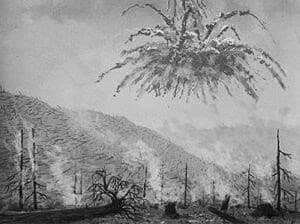
Witnesses recalled seeing a dazzling, sun-like light in the sky followed by intense booming sounds. One individual described it as, “Suddenly, over the mountain where trees had fallen, it became very bright, as if a second sun had appeared… It resembled what Russians call lightning, immediately followed by powerful thunder.”
The shockwaves were so forceful that they toppled people and caused damage as far away as Europe. The mystery deepened due to the absence of any impact crater, prompting a variety of scientific theories over time.
The Primordial Black Hole Theory: A Radical Perspective
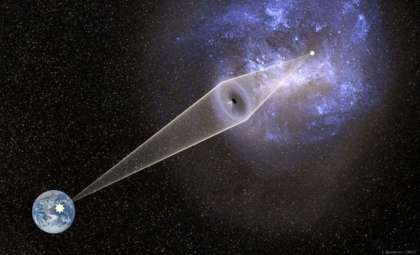
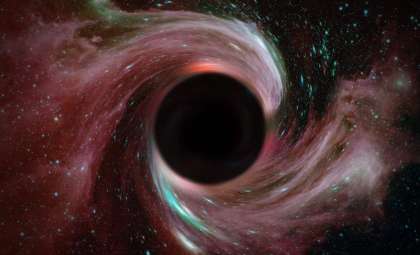
The Tunguska incident’s lack of impact crater inspired several hypotheses, including one particularly speculative idea introduced in 1973. A group of physicists published a paper in Nature proposing that a primordial black hole could have traversed Earth and caused the explosion. These theoretical black holes, thought to have formed in the universe’s infancy, might vary in mass from extremely light to exceeding solar mass.
According to this proposal, a black hole similar in mass to a large asteroid could explain why no impactor debris was found at Tunguska. The black hole would have passed through Earth without triggering an underground seismic event, due to the hardness of the surrounding rock.
This theory also attempted to explain the blue glow reported by observers, suggesting the shock front’s radiation was absorbed and re-emitted at longer wavelengths. Researchers recommended searching for an "exit wound" in the North Atlantic to support their claim, but no such sign has surfaced.
More Conventional Explanations Take Precedence
Despite the allure of the black hole hypothesis, the prevailing view attributes the Tunguska blast to a large asteroid or comet exploding in the atmosphere about 10 to 14 kilometers (6 to 9 miles) overhead. This airburst scenario accounts for the massive energy release and the absence of a crater, as the object would have disintegrated before reaching the ground.
Evidence supporting this model includes the unique pattern of fallen trees at the site. Trees directly beneath the explosion lost branches but stayed upright, while those farther out were toppled in a circular arrangement. This distribution aligns with the effects of a powerful aerial detonation.
Continuing Investigations and Their Significance
The Tunguska explosion continues to fascinate both scientists and the public. Although the black hole theory remains intriguing yet uncertain, it underscores the importance of exploring rare cosmic events. The incident highlights the risks posed by near-Earth objects and the necessity for vigilant monitoring to understand their behavior and protect our planet.
Ongoing and future studies might focus on detailed geological analyses of the Tunguska region and improvements in detecting and characterizing near-Earth objects. These efforts could eventually unravel the mystery surrounding one of the most powerful explosions ever observed.
- Categories:
- Astronomy ,
- News ,
- Space







0 comments
Sign in to Comment