
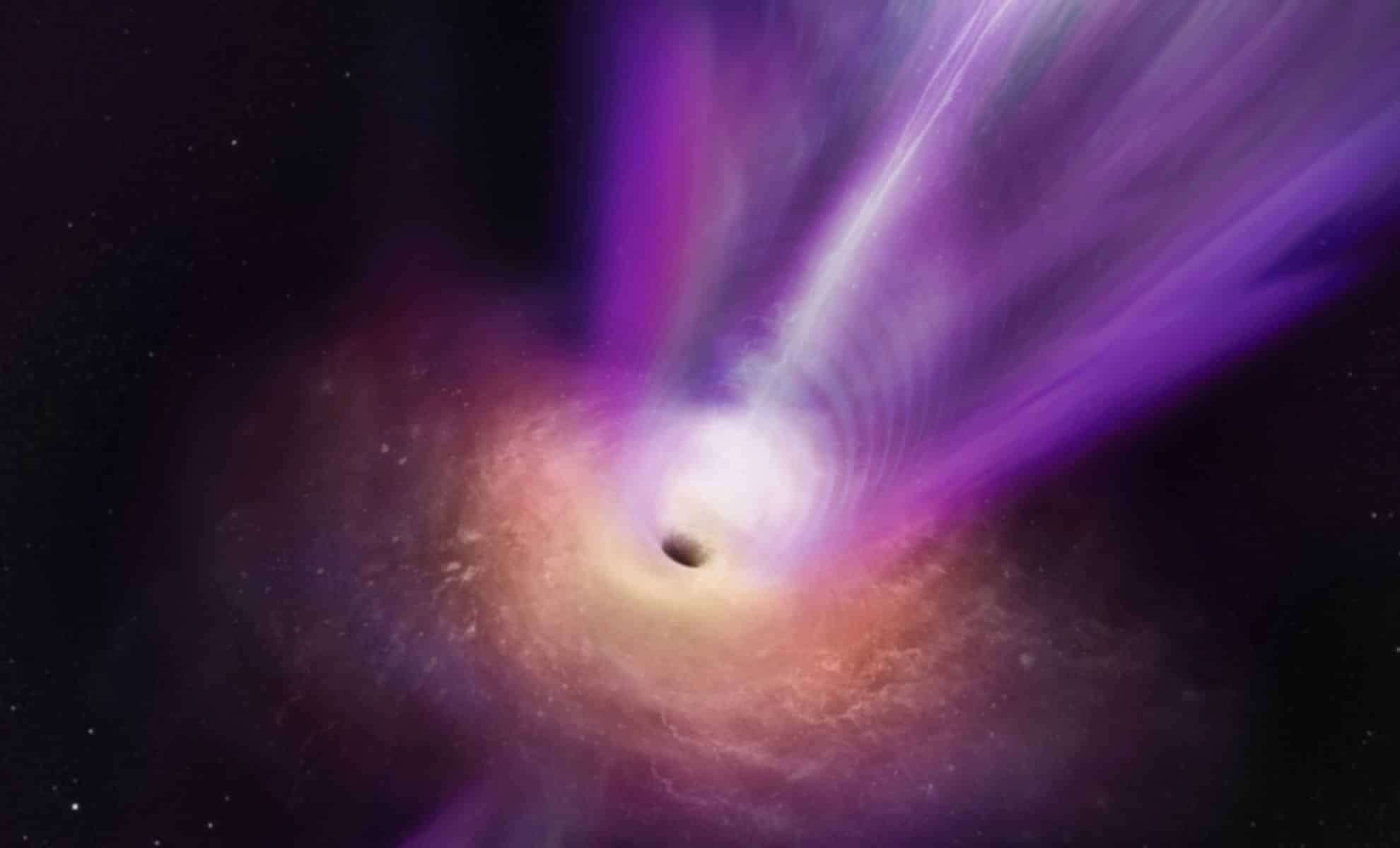
Black holes remain one of the most fascinating and mysterious phenomena in the cosmos, with the supermassive black hole at the heart of Messier 87 (M87) drawing significant attention. Situated about 55 million light-years away in the Virgo Cluster, this black hole became globally recognized in 2019 after the Event Horizon Telescope (EHT) captured the first direct image of such an object.
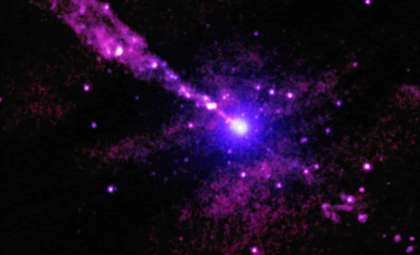
Recently, this colossal black hole has stunned the scientific community once more. A powerful eruption near M87’s black hole unleashed an immense surge of energy, reigniting enthusiasm among researchers. Jets of particles accelerated to speeds approaching that of light, combined with complex interactions of magnetic forces and matter, have prompted fresh investigations into how these extreme cosmic displays are powered.
An Unprecedented Energy Display
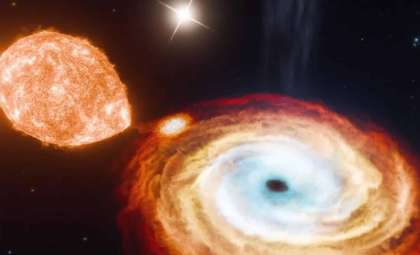
This latest outburst from M87 is a remarkable sight to behold. Streams of particles shooting out from the accretion disk—the hot, swirling mass of gas and dust spiraling down the black hole—propel jets nearly at light speed. These highly energetic jets, composed of electrically charged particles, represent some of the universe's most intense natural phenomena, yet the exact processes behind their formation are still not fully understood.

“Their speeds are close to that of light, and uncovering where and how they acquire this energy is a major goal,” explained Weidong Jin, an astronomer from the University of California, Los Angeles and a contributor to the research.
Scientists tracked the explosion using an array of optical, radio, and X-ray telescopes to capture the event across multiple wavelengths. This comprehensive analysis dissected the emitted energy, revealing the detailed spectral make-up of the jets.
“By dispersing the light into a spectrum, kind of like a rainbow, we measure the energy present at each wavelength,” Jin said. This detailed breakdown provided crucial insights into the intense magnetic fields and forces near the black hole’s event horizon generating the jets.
The Significance of This Phenomenon
Supermassive black holes such as M87’s are not only extraordinary cosmic bodies but also profoundly influence the development of their galaxies. Their immense gravitational pull and energetic output shape how stars are born, how gas moves, and ultimately how galaxies evolve over time.
The detection of this explosion leads to pivotal questions:
- What energizes the jets? Understanding the acceleration of particles to relativistic speeds remains a challenging astrophysical puzzle.
- What role do magnetic fields play? While magnetic fields are believed to be key in jet generation and acceleration, their precise influence and structure are still subjects of ongoing research.
- How does this affect galaxy evolution? Investigating events like this sheds light on how black holes interact with their cosmic neighborhoods, impacting galactic formation and behavior.
This eruption presents an invaluable chance to deepen our understanding of black hole physics and the extreme environments shaping them.
M87’s Continuing Impact on Astrophysics
Since the Event Horizon Telescope’s landmark image confirmed the existence of the event horizon—a boundary beyond which no light or matter escapes—the black hole in M87 has remained central to contemporary astrophysical studies.
The recent burst adds a new dimension to M87’s astrophysical importance by illustrating the active, sometimes unpredictable nature of supermassive black holes, providing a vivid example of their immense forces at work.
“We are witnessing rare and powerful phenomena,” noted a participating scientist. “The black hole in M87 continues to challenge our understanding and opens new frontiers in cosmic exploration.”
Insights Gained from Observations
The research team combined radio, optical, and X-ray measurements to gain a multi-faceted perspective on the jets’ emission across the electromagnetic spectrum.
Highlights from the findings include:
- Jet Speed: The particles in the jets accelerate to velocities nearly equal to the speed of light, emphasizing the extreme conditions close to the black hole.
- Energy Characteristics: Spectral data offered clues about how particles gain energy and the dynamics fueling the jets.
- Magnetic Influence: The observations pointed to strong magnetic fields as key drivers behind particle acceleration, acting like natural cosmic accelerators.
Looking Ahead: Research Directions
The explosive activity in M87 underscores the importance of viewing supermassive black holes as dynamic entities rather than static objects. Each discovery enriches our knowledge of these complex cosmic phenomena and their role in the universe.
Upcoming research will aim to:
- Investigate Magnetic Field Interactions: Study how magnetic fields interact with the accretion disk and jet formation process.
- Maintain Ongoing Observation: Continuous monitoring of M87 will help capture future events and refine models of black hole activity.
- Employ Advanced Instruments: Utilize cutting-edge telescopes like the James Webb Space Telescope for even more precise data collection.
- Categories:
- News








0 comments
Sign in to Comment