

During a fossil hunt on Mount Carmel, a 13-year-old boy stumbled upon a much older artifact. Yair Whiteson found a bronze ring dating back approximately 1,800 years, bearing an image later identified as the Roman goddess Minerva.
While exploring an ancient quarry with his father, Whiteson noticed a small green object partially buried in the ground. Initially mistaken for a corroded scrap of metal, closer inspection at home revealed it was actually an ancient ring.
The artifact was subsequently analyzed by the Israel Antiquities Authority (IAA), where experts confirmed it originated from the Late Roman Period. They identified the carved depiction as Minerva, the Roman goddess representing war, military tactics, and wisdom, equivalent to Athena in Greek lore.

From a Suspected Rusted Bolt to an Ancient Treasure
Yair Whiteson, who has a passion for collecting fossils and minerals, naturally paid close attention to the terrain during his hike.
“I am curious about fossils and rocks and love to collect them,” he said, as quoted in a press release published by the Israel Antiquities Authority. “While hiking, I noticed a small green item and picked it up. It was corroded, and at first, I thought it was just a rusty bolt. I thought about heating it, but then, fortunately, I understood it was a ring.”
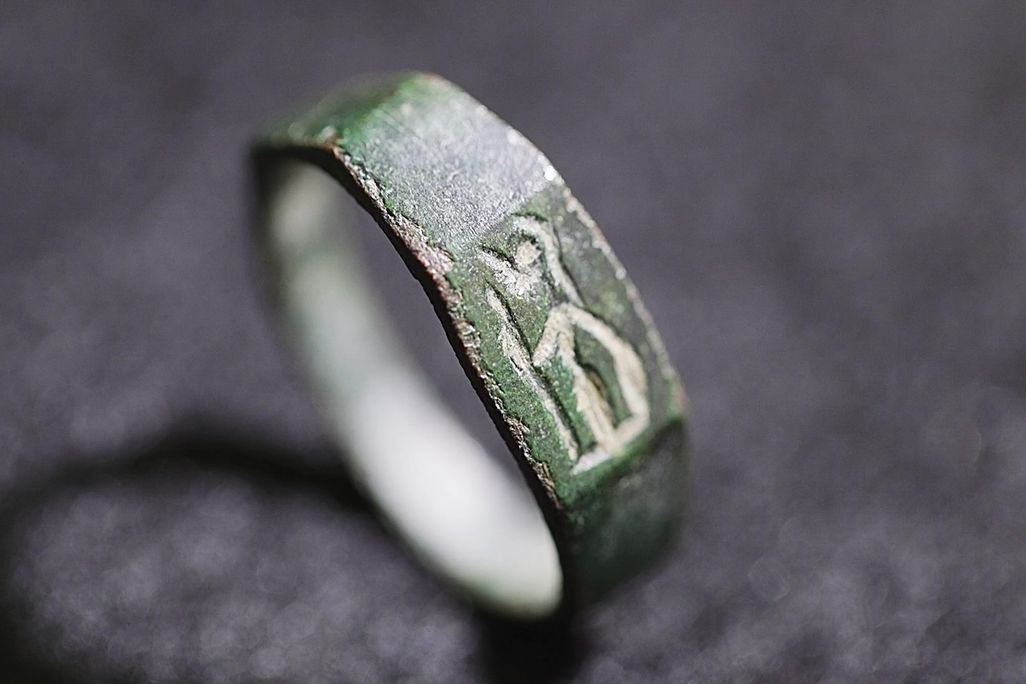
Once home, Whiteson noticed an intricate figure etched onto the ring’s surface resembling a warrior. His family alerted the Israel Antiquities Authority, whose National Treasures Department authenticated the piece as approximately 1,800 years old and remarkably intact.
Small Engraving Depicts the Roman Deity Minerva
Detailed analysis by archaeologists revealed the figure to be Minerva. Researchers Nir Distelfeld and Dr. Eitan Klein explained the carving portrays "a helmeted nude figure" holding a shield and spear. Whiteson’s original thought of a warrior closely matches the expert evaluation.
“Yair’s identification of the figure as a warrior is very close to reality. The figure is — apparently, the goddess Minerva from Roman mythology, known also as Athena in Greek mythology,” they said.
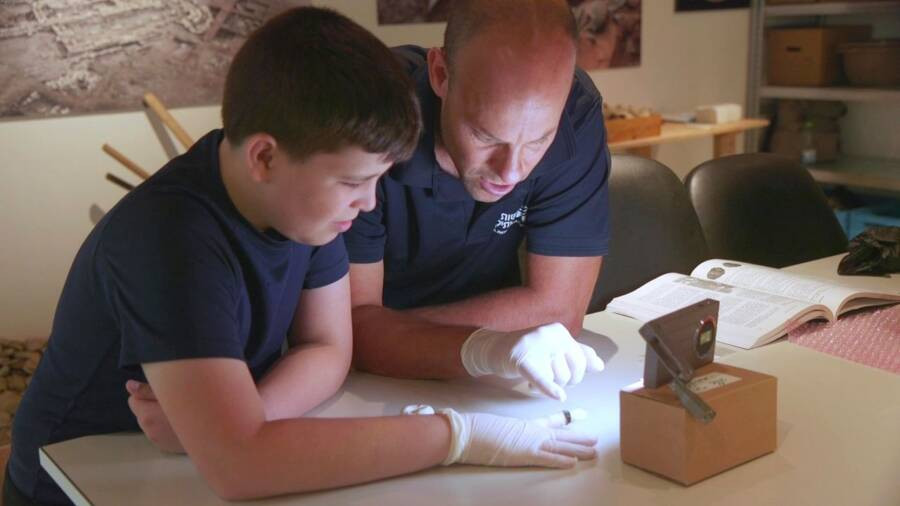
The authority noted that Minerva enjoyed widespread veneration in the Roman period across the Land of Israel. Recognized not only for her association with war and strategy, she was equally revered as the goddess of intellect.
The Original Owner’s Identity Remains Unknown
Scholars theorize the bronze ring was likely owned by a female inhabitant from the second or third century C.E. The find’s location near an ancient quarry, a Roman-era farmstead, and burial caves offers various explanations for its presence.
“The ring may have belonged to a woman who lived on this farm,” Distelfeld and Klein said. “Or, it might have fallen from a quarry worker, or it may have been a burial offering from these nearby graves. There are many possibilities.”
Whiteson’s choice to report his find instead of keeping it private earned praise. In recognition of his honesty and assistance in preserving a vital piece of history, the Israel Antiquities Authority awarded the teenager a commendation for civic responsibility.
- Categories:
- News








0 comments
Sign in to Comment