
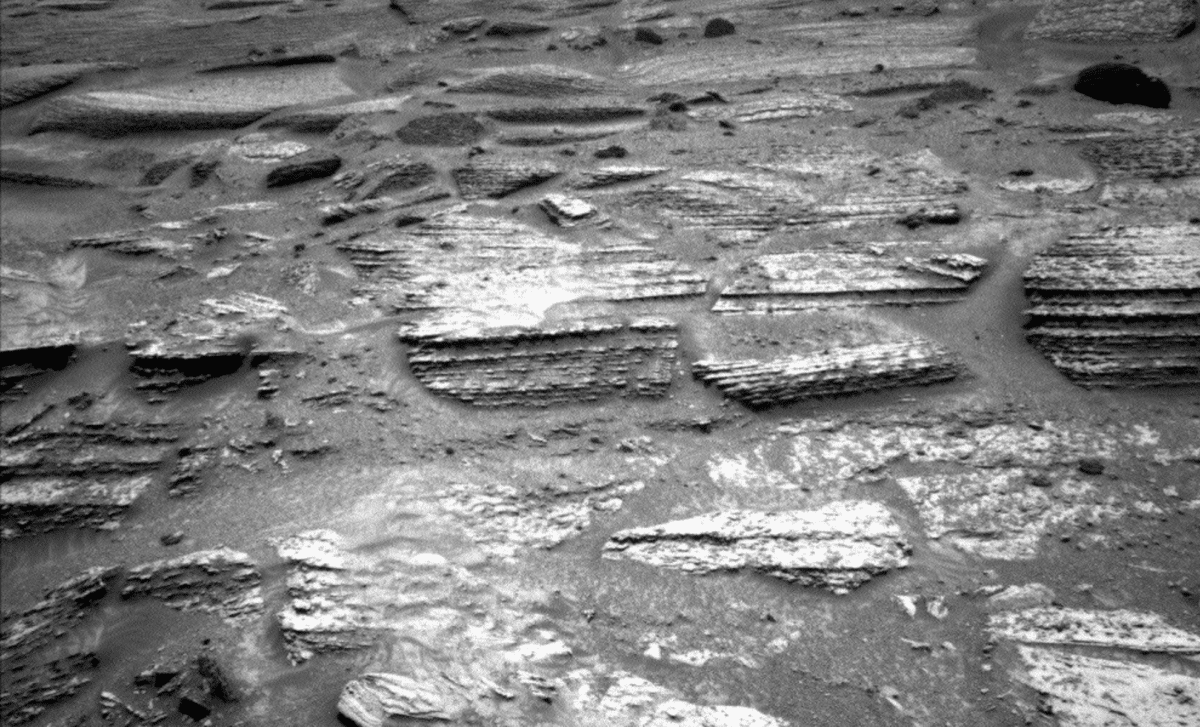
NASA’s Curiosity rover has encountered a distinctive geological boundary on Mars, uncovering striped rock formations that may shed light on the planet’s ancient geological narrative. The rover’s recent findings in Gale Crater highlight an area where contrasting geological layers converge, offering fresh insights into Mars' surface evolution over billions of years.
Curiosity Encounters a Dynamic Martian Terrain Shift
Curiosity has entered a zone where the landscape shifts sharply from smooth sandy expanses to rugged bedrock exposures. This transition region has become a focal point for researchers aiming to decode the formation and transformation of Mars’ geological strata over time.
Throughout this phase, the rover employed its suite of scientific tools to scrutinize the environment, capturing high-detail photographs of rock layers, examining surface compositions, and recording structural features that narrate the complex history preserved within Gale Crater.

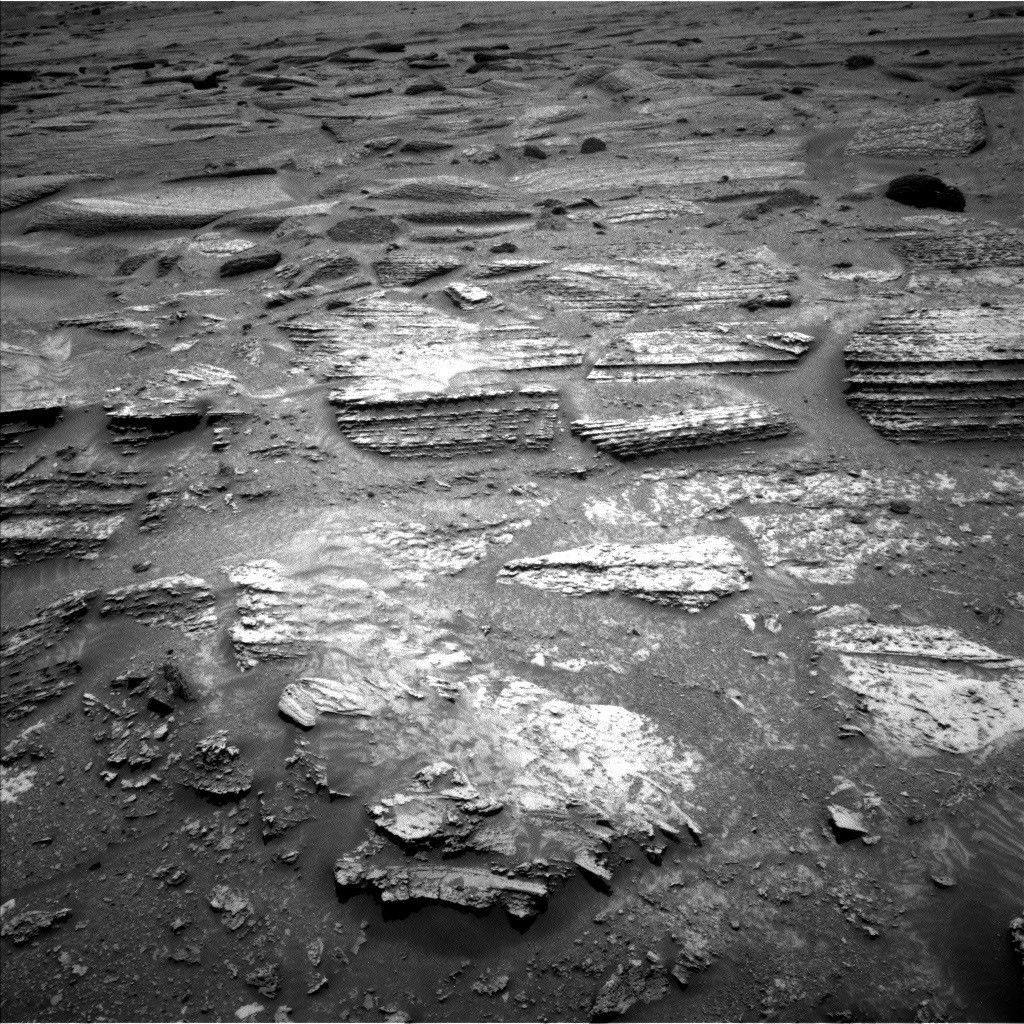
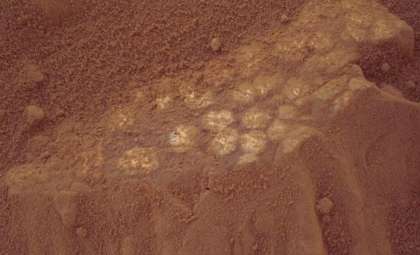
A standout observation includes a cluster of rocks exhibiting striking striped patterns. Termed pinstriped rocks by mission scientists, these features contrast vividly with their surroundings due to their unique layering.
The rover’s arrival followed a journey across sedimentary deposits believed to chronicle ancient environmental shifts influenced by historic water presence on Mars.
This find offers an exceptional opportunity to explore Mars' shift from a watery world to the arid planet known today.
Advanced Instrumentation Probes Martian Rock Characteristics
NASA detailed how Curiosity utilized multiple instruments to analyze these distinct formations and adjacent geological targets. Combining detailed imaging with thorough chemical assessments helped decode their composition and genesis.
The ChemCam instrument employed laser pulses to unveil the chemical properties of selected rocks, including samples named Kunturiri and Toconce that revealed essential details about local materials.
Using the Alpha Particle X-ray Spectrometer (APXS), Curiosity studied rock samples such as Malpartida and Pico Del Tunari, enabling comparison across diverse types and identifying mineralogical differences.
The Mars Hand Lens Imager (MAHLI) provided close-range images capturing surface textures and structures invisible from afar, helping clarify the formation and alteration processes of these rocks.
This integrative approach enriches knowledge about Mars’ geological development and the ancient environmental conditions that once prevailed.
Examining Sediments, Dunes, and Potential Meteorite Findings
In addition to the striping phenomena, Curiosity has been surveying sand dunes, exposed strata, and sediment layers within Gale Crater, targeting regions that might unravel the history of sediment deposition.
Key investigation sites like Laguna Fea and Laguna Lejia were explored after utilizing the Dust Removal Tool to clear surface debris and expose underlying rock.
The rover also studied the Hornillos target through laser examination and detailed imaging, despite the inability to brush the surface there, yielding valuable geological insights.
Off to the side, Curiosity observed dark rocks near the Cordillera butte, investigating boulders potentially displaced by past geological activity. These samples could provide clues about ancient climatic shifts, possibly related to ice-driven processes.
Alongside rock studies, the rover kept monitoring atmospheric phenomena such as dust storms, clouds, and possible dust devils, enhancing understanding of Mars’ current environmental dynamics.
Continuing to Unravel Mars’ Geological Legacy
Since touching down in 2012, Curiosity has significantly advanced our grasp of Gale Crater, examining locations that once held water and might have supported life-friendly conditions.
The identification of these banded rock formations marks a new chapter in Curiosity’s ongoing exploration. Each discovery contributes vital data about Mars’ fluctuating climate, geological activity, and ancient habitats.
Looking ahead, Curiosity plans to expand its geological surveys, continue detailed landscape imaging, and maintain atmospheric observations. Investigations will soon target a prominent dark boulder suspected to be a meteorite, opening fresh avenues for analyzing Martian surface materials.
As the rover advances, it remains dedicated to piecing together the extensive geological story embedded in Mars’ terrain, with the striped rocks serving as a significant clue in this cosmic puzzle.
- Categories:
- News





0 comments
Sign in to Comment