
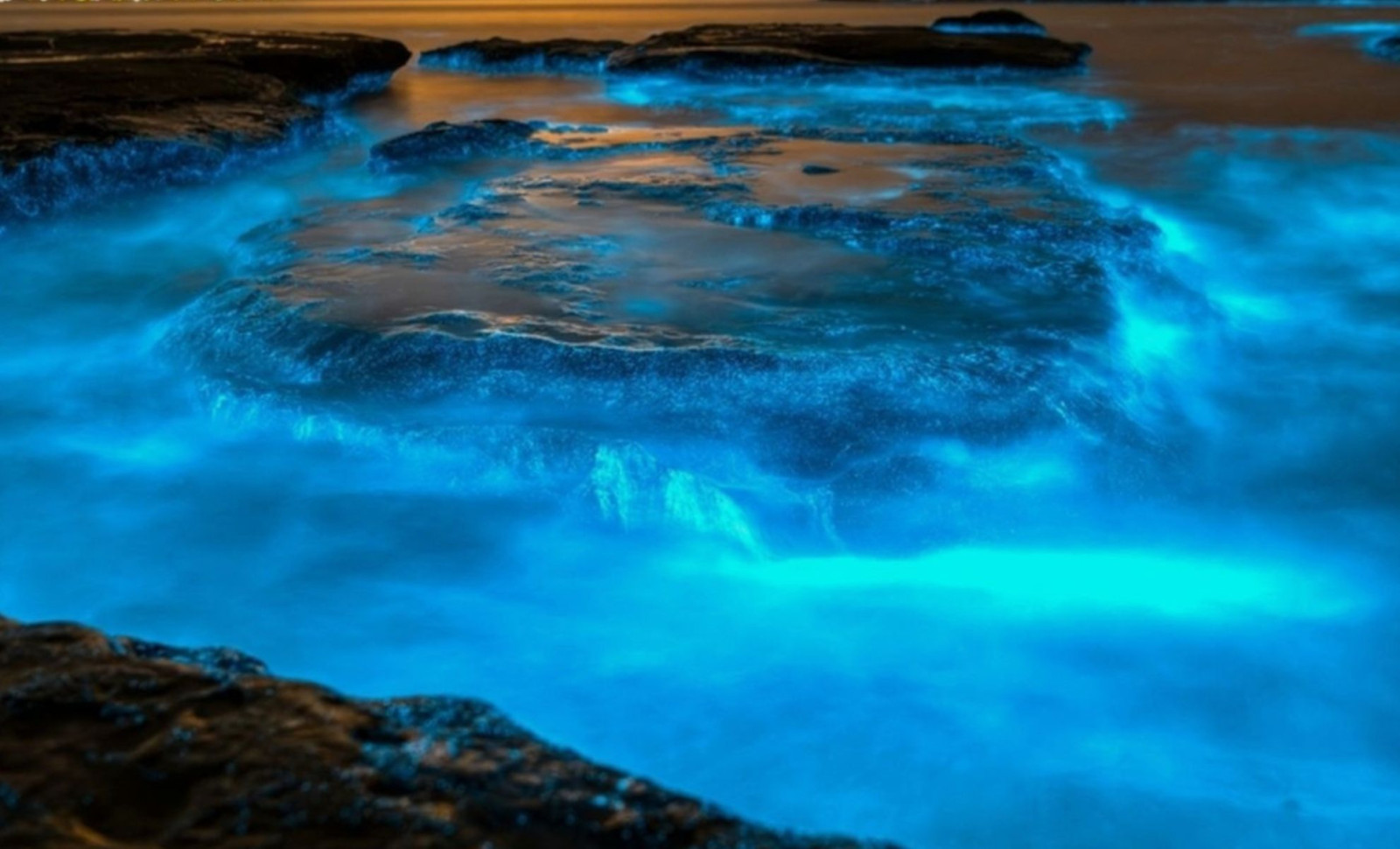
For hundreds of years, mariners have encountered expansive glows illuminating the ocean after dark. These occurrences, known as milky seas, remain an enigma: scientists have pinpointed the light-producing bacteria but still lack a clear explanation for their vast, mesmerizing spread.
Covering the majority of Earth, oceans harbor many secrets, with milky seas standing out as a captivating puzzle. They merge age-old sailor tales with new scientific investigations, gradually shedding light on how these luminous waters come into existence.
According to Popular Mechanics, experts are combining centuries of recorded sightings with satellite technology to map and analyze when and why these glowing expanses emerge.

What Causes the Ocean’s Nighttime Radiance?
Researchers have documented nearly 400 accounts of milky seas spanning over 400 years. These glowing stretches, unlike coastal bioluminescence flashes, typically occur far from shorelines and can span immense distances.
The descriptions have remained remarkably consistent through time. In 1849, the captain of the Moozuffer described sailing through a glowing area in the Arabian Sea as sailing over “an endless field of snow or a silver sea.” Decades later, a U.S. Navy crew member compared the phenomenon to “glow-in-the-dark star stickers children often use,” as reported by Popular Mechanics.
The phenomenon even inspired Jules Verne, who referenced luminous seas in 20,000 Leagues Under the Sea, attributing the glow to tiny glowworm-like creatures. Though later proven incorrect, this shows how longstanding the fascination with milky seas has been.
Identifying the Light-Emitting Microorganisms
A significant advancement occurred in 1985 when a scientific expedition sailed through a milky sea and collected water samples. These samples revealed abundant presence of the bioluminescent bacterium Vibrio harveyi, which is now considered key to producing the ocean's glow.
Despite pinpointing the bacteria, the reason they aggregate over such extensive oceanic regions remains unknown. Justin Hudson, a PhD candidate at Colorado State University and co-author of a 2025 publication, remarked:
“Milky seas could be a sign of something like a very good, healthy ecosystem. They could be a sign of an unhealthy ecosystem, and we just don’t know.”
He further highlighted that accurate predictions of where these glows might occur could provide valuable insights into their ecological significance.
Satellite Technology Extends Our Vision
Modern studies no longer rely solely on rare spontaneous sightings at sea. A report in Earth and Space Science confirms that milky seas are frequently observed in the Arabian Sea and around Southeast Asia, suggesting a connection to climate patterns such as the Indian Ocean Dipole and El Niño Southern Oscillation.
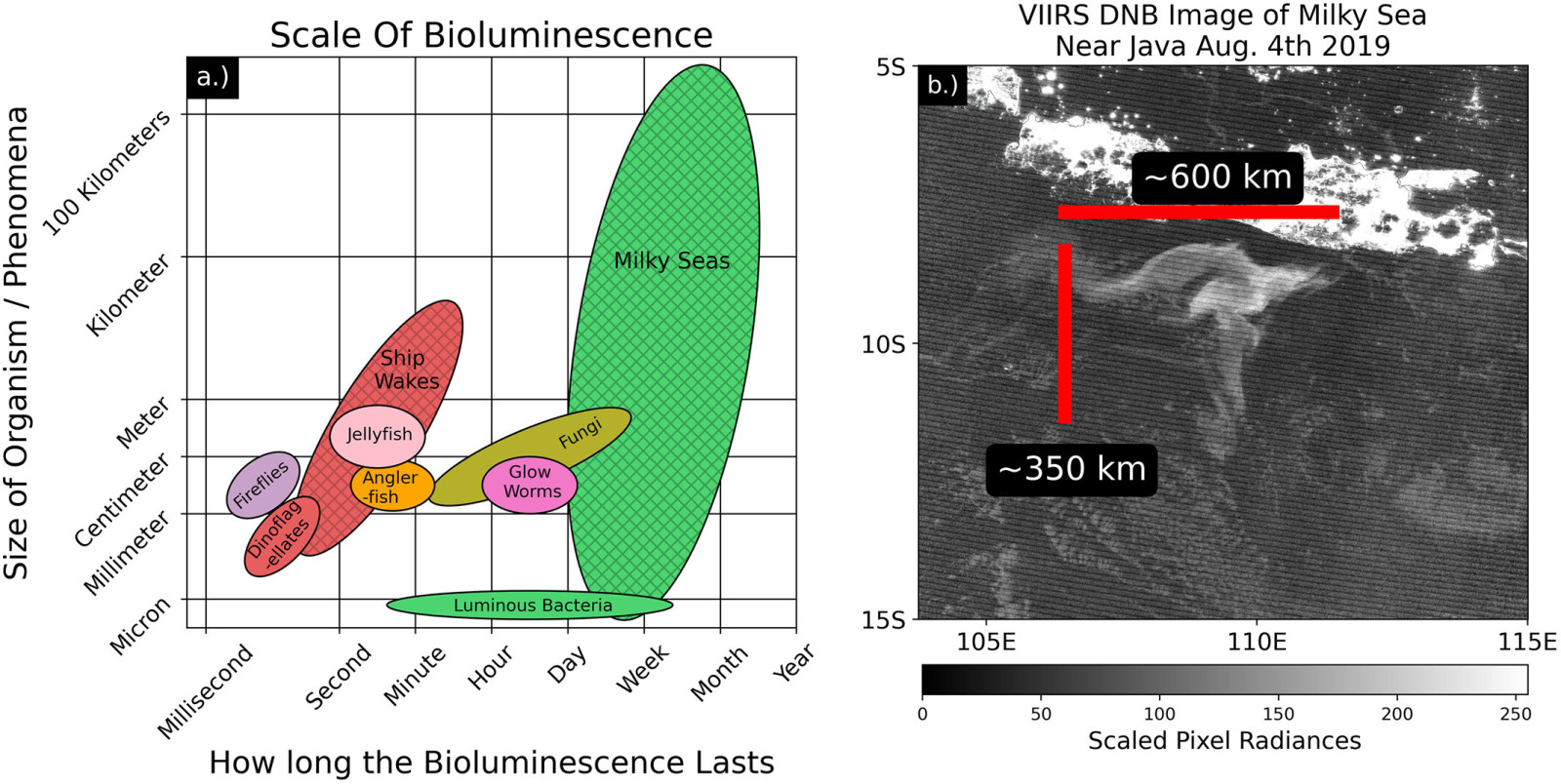
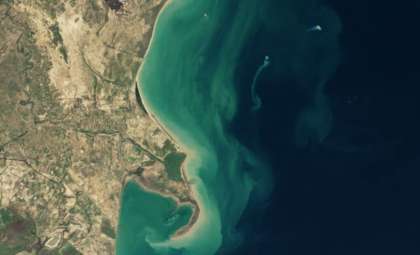
Scientists employ the Visible Infrared Imaging Radiometer Suite (VIIRS) on satellites operated by NOAA and NASA to detect these glowing patches from orbit, enabling discovery of events ships might miss.
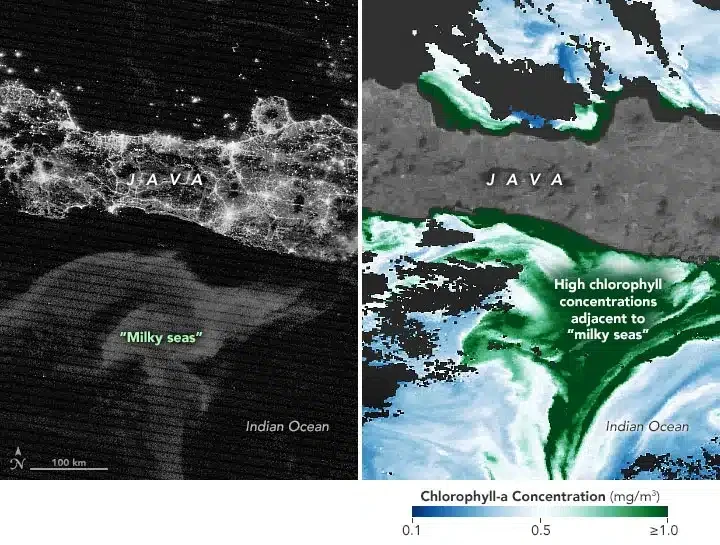
Research published in Scientific Reports documented 12 milky sea occurrences from 2012 to 2021, including a vast 2019 event rivaling the size of Iceland.
“Where do they fit into nature? What can they tell us about life in the ocean?” explaine Steven Miller in a NASA press release. “Bacteria are a very simple form of life and bioluminescence is thought to have been an essential function of some of the first life forms.”
Scientists anticipate these findings will help place milky seas within the broader context of Earth’s marine ecosystems, deepening our understanding of early life forms and their environmental interactions.
- Categories:
- Science









0 comments
Sign in to Comment