
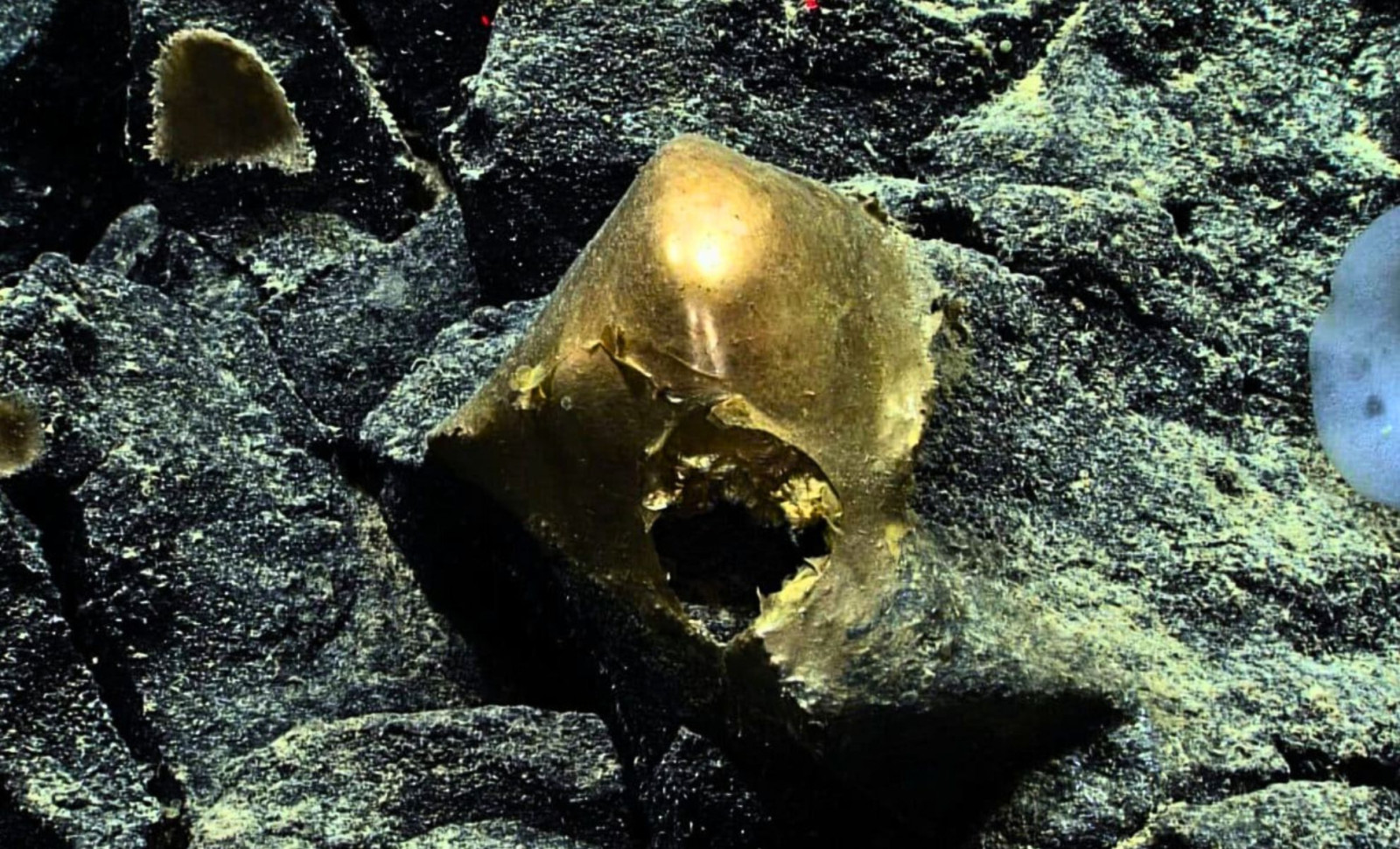
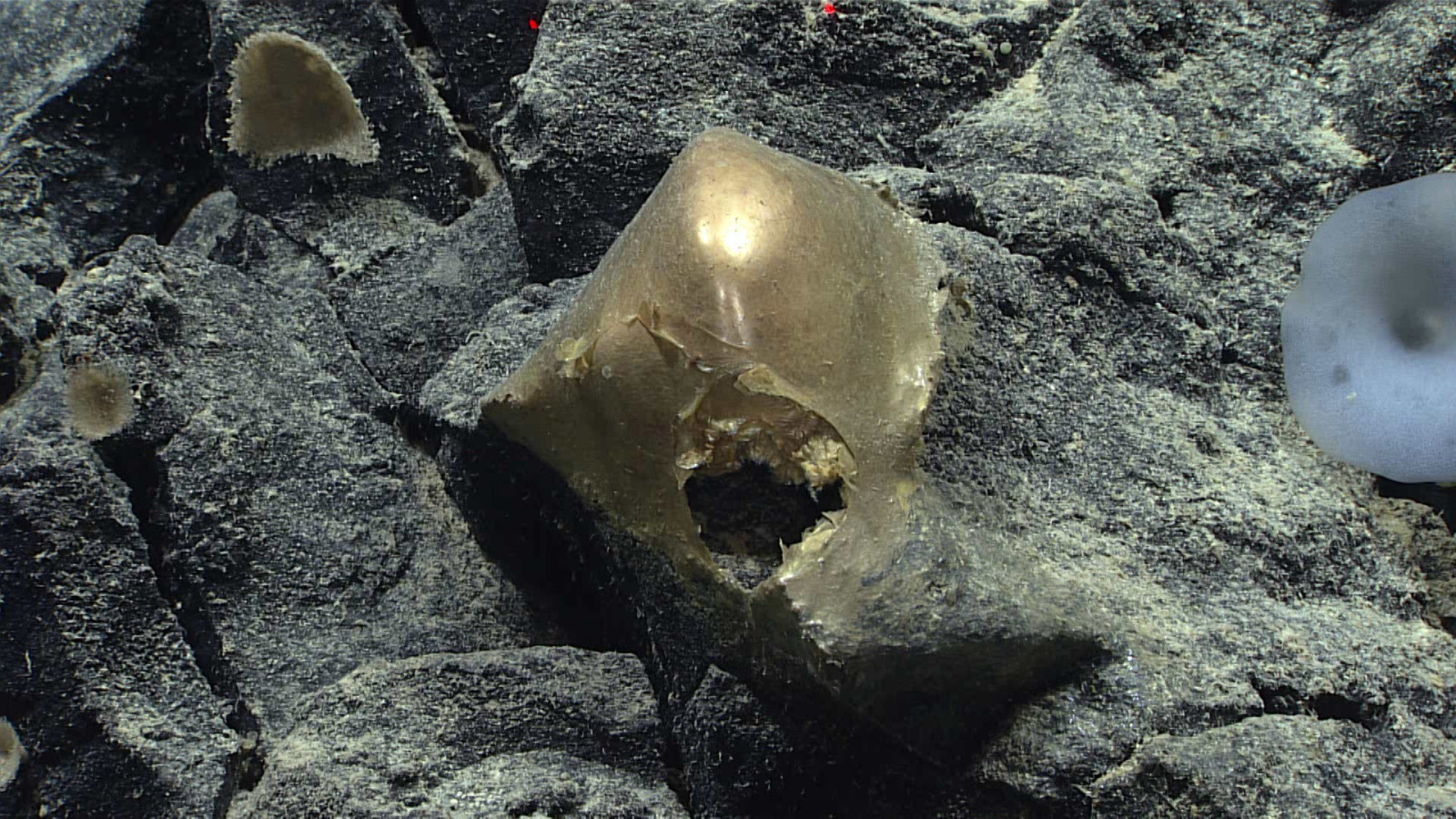
On August 30, 2023, NOAA's remotely operated vehicle Deep Discoverer explored about 3,300 meters beneath the waves in the Gulf of Alaska when its lights illuminated a strange sight: a smooth, dome-like object shimmering with a faint golden hue on the seafloor.
Measuring roughly 10 centimeters wide and featuring a single opening near its base, the formation was firmly attached to the ocean bed and unlike anything the research team had encountered before. "It's hard to determine what this is," one scientist remarked during the live transmission. "I just hope nothing unexpected happens if we disturb it—it feels like the start of a scary movie."
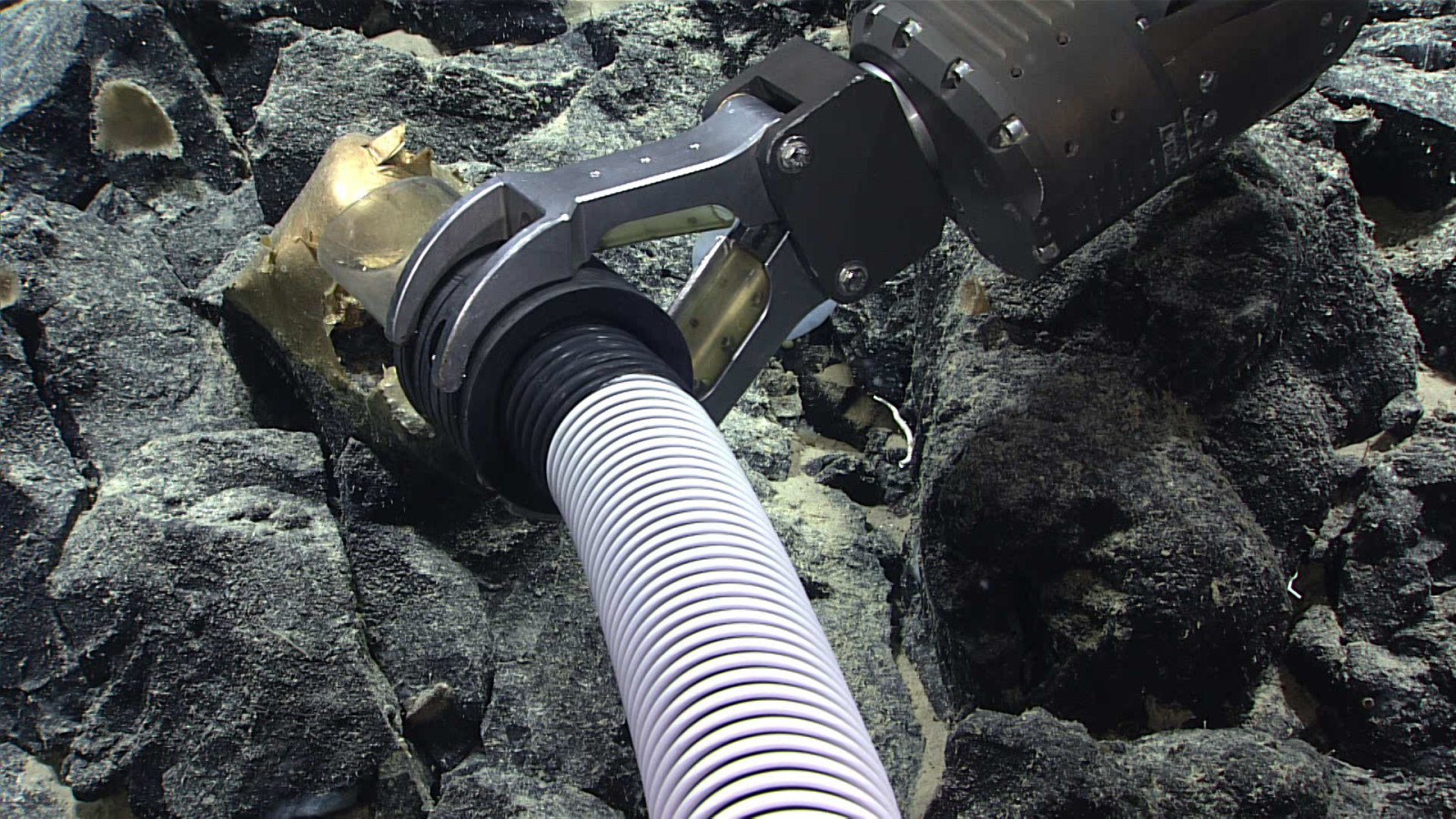
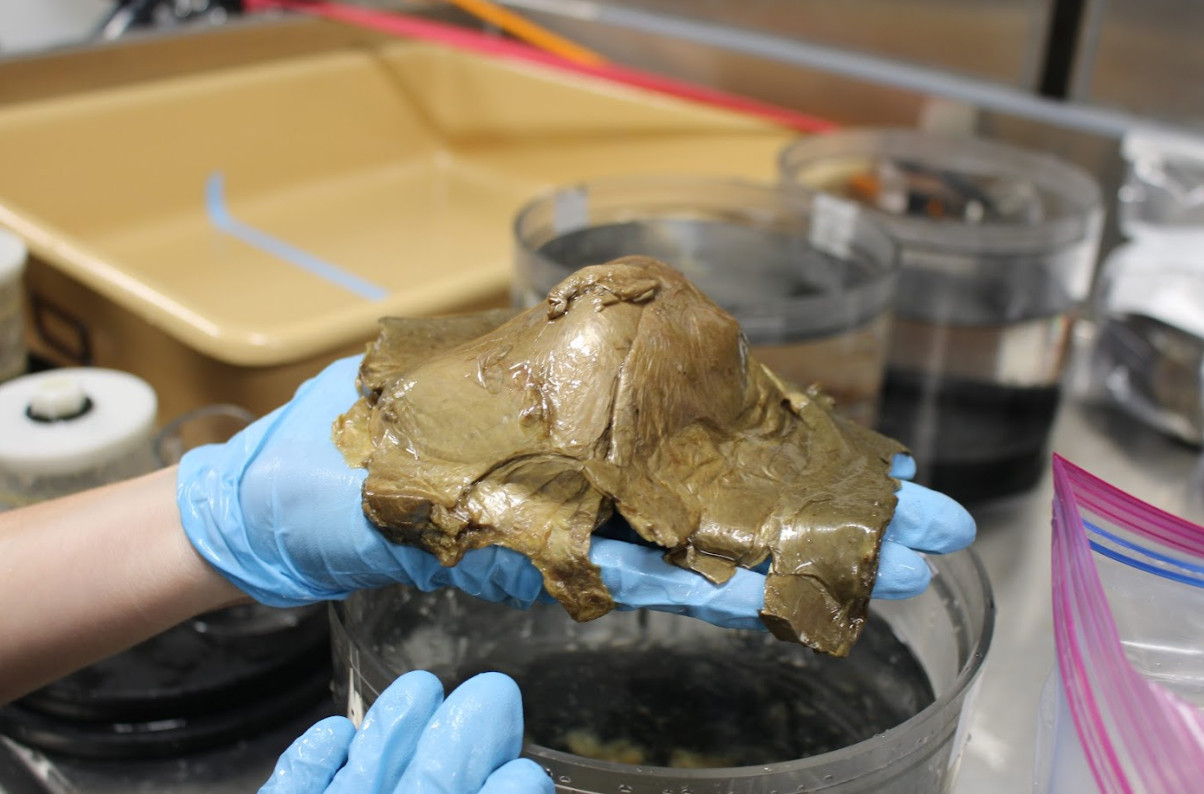
The orb was collected by the ROV’s manipulator arm and transported to the Smithsonian Institution’s National Museum of Natural History. After nearly three years, NOAA announced that the object is actually a cuticle—a shed outer layer from Relicanthus daphneae, an enormous deep-sea anemone with tentacles extending beyond two meters. This conclusion was reached via whole-genome sequencing after conventional DNA testing failed, with the data published as a preprint on bioRxiv.

Why Initial DNA Analysis Was Inadequate
The team anticipated a swift identification. Allen Collins, a zoologist directing NOAA Fisheries’ National Systematics Laboratory, explained that his group routinely processes hundreds of samples, assuming the orb would be no different. Early observations revealed no clear internal organs. Under magnification, it appeared as a fibrous, multi-layered mass devoid of distinctive features to aid classification.
Initial attempts at DNA barcoding yielded no clear result since the orb was heavily colonized by microscopic life forms, whose genetic signatures overshadowed the target species’. Collins noted that resolving this mystery required a blend of morphological, genetic, deep-sea, and bioinformatics expertise.
The researchers then employed whole-genome sequencing and successfully filtered out contaminants, allowing a singular species to emerge. Comparisons with mitochondrial genomes confirmed a close genetic match to a known R. daphneae sequence.
Stinging Cells Reveal Cnidarian Origin
During the genetic investigations, a structural feature helped refine the classification. Lab scientist Abigail Reft identified the orb as packed with spirocysts, specialized stinging cells unique to the Hexacorallia group, which encompasses corals and anemones. Their presence verified that the specimen derived from this particular lineage.
These spirocysts stood out for their remarkable size, ranking among the largest recorded in deep-sea cnidarians. This characteristic aligns with R. daphneae, which bears notably large adhesive stinging cells thought to trap sizable prey. The physical clues pointed firmly towards the same species well before genetic confirmation.
Appearance of the Living Anemone
The cuticle looks nothing like the creature that produced it. A live Relicanthus daphneae is pale pink to reddish-purple, with a column diameter that can grow up to one meter and slender tentacles reaching about two meters in length. This species typically anchors to basalt rocks near hydrothermal vents, manganese nodule deposits, and cold seeps between 2,400 and 4,400 meters deep.
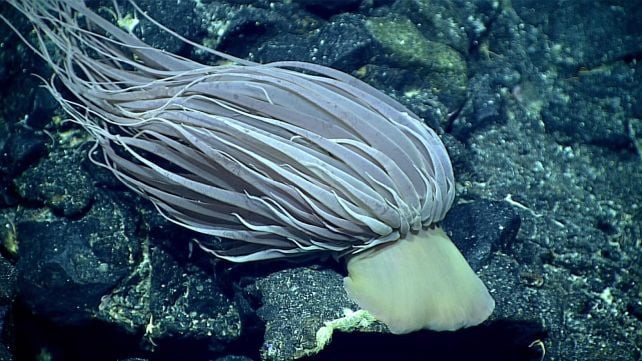
Initially documented from the East Pacific Rise in 2006, the species gained its own genus in 2014. A January 2025 publication in the Journal of the Marine Biological Association, led by Dalhousie University scientist Monika Neufeld, expanded its known habitat to the Indian Ocean and released the first direct footage of the anemone capturing prey, with a tentacle curling around a shrimp to secure its catch.
Cuticle as a Discarded Skin or Reproductive Remnant
The cuticle represents a thin, multi-layered exoskeleton secreted by certain anemones from their surface cells. Comprised primarily of chitin, the same durable polymer found in beetle exoskeletons and fungal walls, intact cuticles from R. daphneae are rarely observed, implying the animal sheds this outer layer while moving, leaving it behind as the rest of the organism migrates.
Another hypothesis considers the potential of asexual reproduction known as pedal laceration, where an anemone abandons a portion of its base, which then regrows into a new polyp. The orb’s central aperture and fibrous interior could be residual evidence of an incomplete laceration event. However, whether R. daphneae reproduces this way has not yet been confirmed.
Even as discarded tissue, the cuticle seems ecologically beneficial. The dense microbial communities discovered on the orb before laboratory analysis suggest these abandoned skins act as localized hotspots of microbial activity on the deep ocean floor. In a nutrient-poor environment, chitin-rich remnants help fuel the nitrogen cycle and support bacterial life over long durations.
- Categories:
- Science






0 comments
Sign in to Comment