
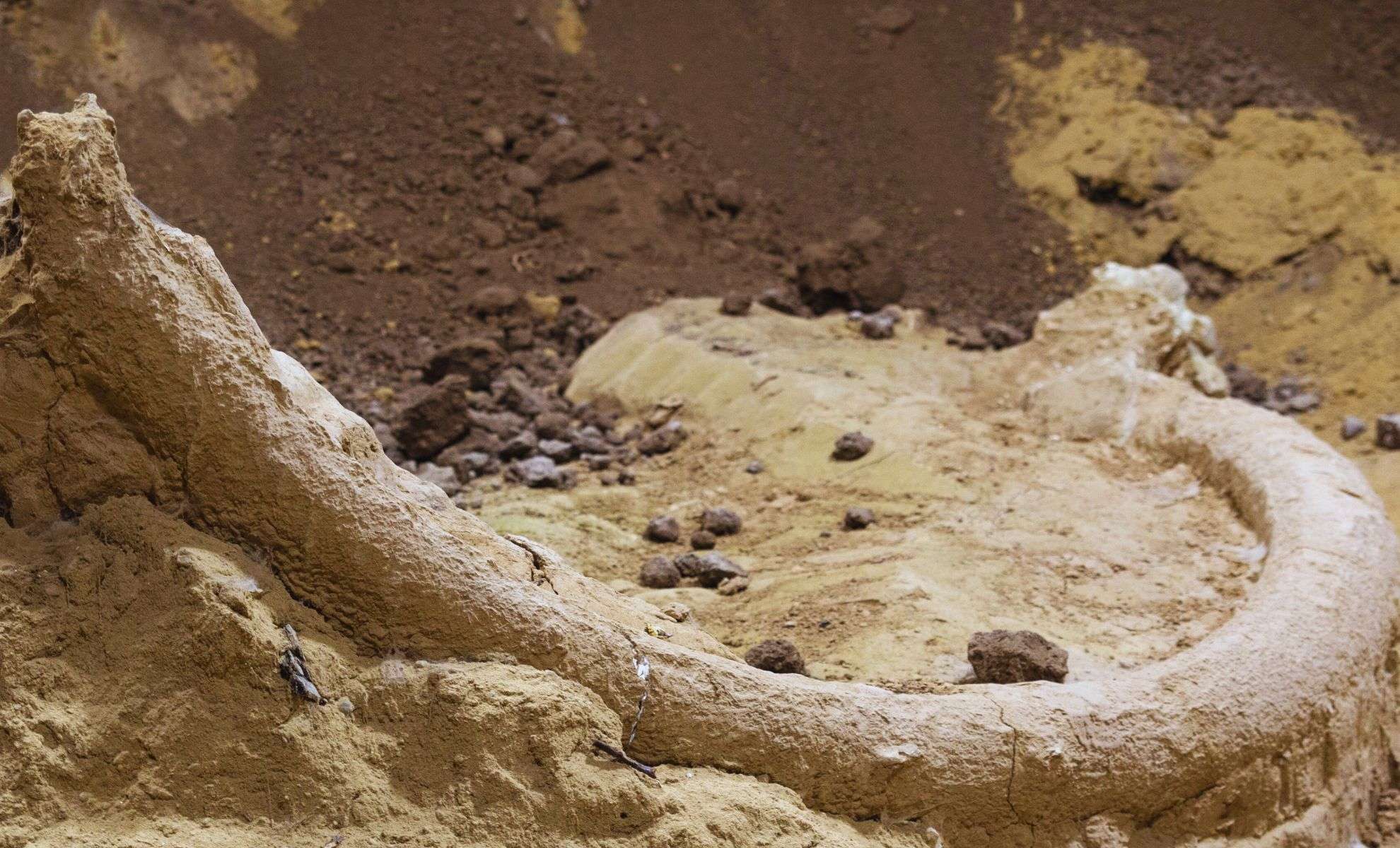
Hidden beneath a Gascon field is a 12-million-year-old secret. In 2016, a local farmer uncovered a remarkable four-tusked skull from a prehistoric creature previously unknown to science. This extraordinary fossil is now exhibited at the Muséum d’Histoire naturelle of Toulouse.
Initially mistaken for elephant remains, the discovery soon revealed itself to be far more extraordinary. Neither elephant nor mammoth, the fossil presented a challenge for paleontologists that took years to solve, culminating in the identification of a newly recognized species.
An Unexpected Find Amid Gascon Farmland
The remarkable find began during a routine digging project. David, a farmer in L’Isle-en-Dodon, was expanding facilities for his cattle when he and his brother-in-law stumbled upon something hard buried underground—shards of fossilized teeth and large tusk fragments. Recalling the moment in an interview with La Dépêche, he shared:

“We couldn’t make sense of it. The teeth were ten centimeters by ten.”
At the time, nobody realized these fragments belonged to an animal extinct for over twelve million years. The initial belief that it was elephant remains was soon disproven by further study, exposing an astonishingly rare discovery.
A Skull Unlike Any Other
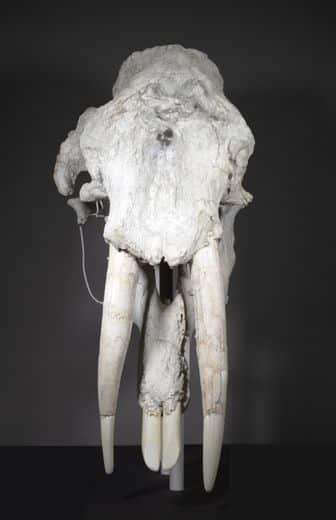
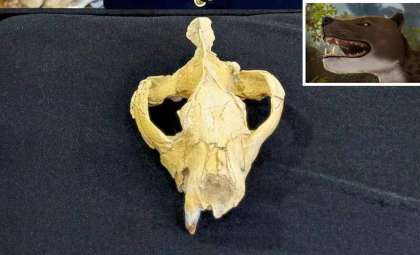
The centerpiece of the find is a complete skull distinguished by an extraordinary feature: four tusks instead of the typical two. This unusual trait instantly set it apart from all known elephant-like species. Experts determined it did not fit within any existing classification.
The fossil was transferred to the Muséum d’Histoire naturelle of Toulouse. There, researchers confirmed it represents a newly identified species, offering vital insights into the megafauna of the Miocene epoch.
Choosing Preservation Over Profit
Instead of selling the fossil to private collectors, David made the conscious choice to preserve it for science. “I could’ve sold it to a collector,” he said, but instead reached out to experts to ensure the specimen was properly studied and made available to the public.
“The pride is there,” he said. “In the decision to give it to the museum, to help research move forward. It wasn’t about money. It just happened to us, that’s all.”
Now secured at the Toulouse museum, the skull not only deepens our understanding of prehistoric life but has also become a prized exhibit. Scientists continue detailed analyses of this exceptional specimen, advancing knowledge of southern France’s ancient biodiversity.
- Categories:
- News



0 comments
Sign in to Comment