

An intriguing development in Earth orbit has surfaced following the observation of an unidentified object seemingly deployed by China’s Shenlong spaceplane, a highly secretive project within the nation’s aerospace efforts. This discovery, initially reported by Space.com, has reignited curiosity about the mission’s undisclosed goals and the increasing significance of monitoring space traffic as countries broaden their presence beyond Earth.
Unexpected Object Spotted by Orbital Tracking Systems
Commercial space surveillance firm LeoLabs played a critical role in uncovering the object near the Shenlong craft. This reusable vehicle began its fourth mission on February 6, 2026, launched via a Long March 2F rocket from China’s Jiuquan Satellite Launch Center situated in the Gobi Desert. Like previous Shenlong flights, official statements about its mission objectives and activities from Chinese authorities have been scarce.
Using its worldwide radar network, LeoLabs detected the object and made its findings public with the following announcement:

“At 02:30 UTC on 22 June 2026, LeoLabs detected an unknown object in the vicinity of the Chinese Shenlong reusable space plane,” LeoLabs posted to X. “This object did not correlate to any other object in our catalog. It was first observed by our Tracker radar in New Zealand.”
At 02:30 UTC on 22 June 2026, LeoLabs detected an unknown object in the vicinity of the Chinese Shenlong reusable spaceplane.
This object did not correlate to any other object in our catalog. It was first observed by our Tracker radar in New Zealand. pic.twitter.com/AEf4gbyJPr— LeoLabs (@LeoLabs_Space) June 22, 2026
The unidentified object’s detection drew immediate attention from the space observation community because it did not match any known debris, satellites, or cataloged objects currently tracked in orbit. Given that modern monitoring systems continually observe tens of thousands of orbital items, the emergence of an uncataloged object is particularly striking. Experts quickly began investigating whether the object had been intentionally released, accidentally abandoned, or was linked to a different mission entirely.
This incident also highlights rapid advancements in commercial space monitoring. Private companies have become indispensable partners in tracking orbital traffic, supplementing government data with independent verification. As more countries deploy sophisticated spacecraft, these tracking technologies become vital for discerning real-time happenings in orbit.
Data Indicates Object Originated From Shenlong Spacecraft
After further radar observations collected from various global locations, LeoLabs refined their analysis, concluding with high certainty that the unidentified object was released from the Chinese reusable space vehicle itself.
“Following additional observations across our global network and analysis via LeoLabs Delta, we have independently cataloged this object and assessed with high confidence that it was released from the Chinese space plane,” the company added in the post. “This activity is consistent with sub-satellite deployments conducted by the space plane in previous missions.”
This confirmation suggests that such releases may be a routine aspect of Shenlong’s operations. Previous flights exhibited similar behavior, implying the spacecraft can deploy smaller payloads while in orbit. The specific role of these payloads—whether scientific experiments, technological demonstrations, military applications, or other operational objectives—remains undisclosed.
The U.S. Space Force has reportedly cataloged the object as well, lending it official recognition. Although its precise function is still uncertain, growing tracking evidence favors the interpretation that the deployment was deliberate rather than accidental.
The persistent absence of detailed disclosures from Chinese officials only adds to the intrigue, with each new detection offering a rare window into one of the most secretive space programs worldwide.
USSF has cataloged a new object (69673) released from the Chinese spaceplane CSSHQ4 (2026-024A) which has been in orbit since Feb 7. Previous missions of the spaceplane have also released such objects, which may be small subsatellites such as cubesats
— Jonathan McDowell (@planet4589) June 23, 2026
What Keeps Shenlong at the Forefront of Space Surveillance Interest?
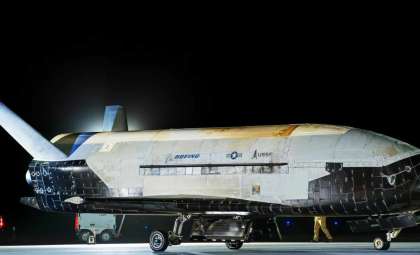
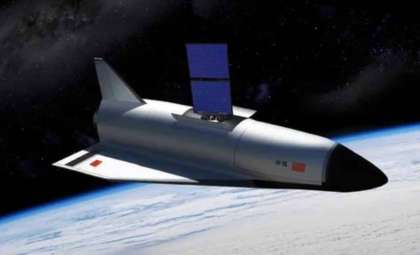
The reusable spaceplane Shenlong—its name meaning “Divine Dragon”—is one of the most elusive spacecraft currently active. The vehicle launches vertically via rocket and returns to Earth by runway landing, resembling the operational approach of the U.S. Space Force’s X-37B orbital test platform.
Visual documentation of Shenlong is extremely limited, with most images captured by amateur and professional astronomers using terrestrial telescopes. These observations offer limited but valuable insight into its design and capabilities, though many aspects remain unclear.
Historical mission reports suggest Shenlong has previously released payloads in orbit. During a 2024 sortie, observers noted what appeared to be either a small satellite release or hardware ejection near mission end. Initial observations hinted at multiple simultaneous releases, but subsequent analysis attributed some detections to launch debris.
Experts have also reported signs the vehicle might contain deployable components such as solar panels. Such features would enable longer missions and more advanced orbital maneuvers, increasing the spacecraft’s functional range beyond initial assumptions.
The Rising Significance of Sophisticated Orbital Operations
This recent sighting arrives amid a growing emphasis worldwide on complex spacecraft maneuvering capabilities. As noted by Space.com, earlier Shenlong missions have exhibited behaviors consistent with rendezvous and proximity operations (RPOs), involving approaching and operating near other orbiting craft.
RPO technology can enable tasks such as satellite servicing, inspection, repairs, refueling, and debris mitigation. Defense analysts watch these developments closely due to their potential military applications. The precision to approach spacecraft in orbit represents advanced technological progress and evolving strategic importance.
Similar activities by other nations have likewise grabbed attention. Russia has demonstrated missions where satellites maneuver notably close to each other, showcasing refined orbital control. The United States is actively developing related capabilities within both military and civilian sectors.
In this context, any novel Shenlong activity is scrutinized intensively. Though the newly detected object may ultimately be routine, it underscores the limited understanding of China’s reusable spaceplane program. Until more information is released, this mysterious object near Shenlong will remain one of the most watched enigmas circling our planet.
- Categories:
- News









0 comments
Sign in to Comment