
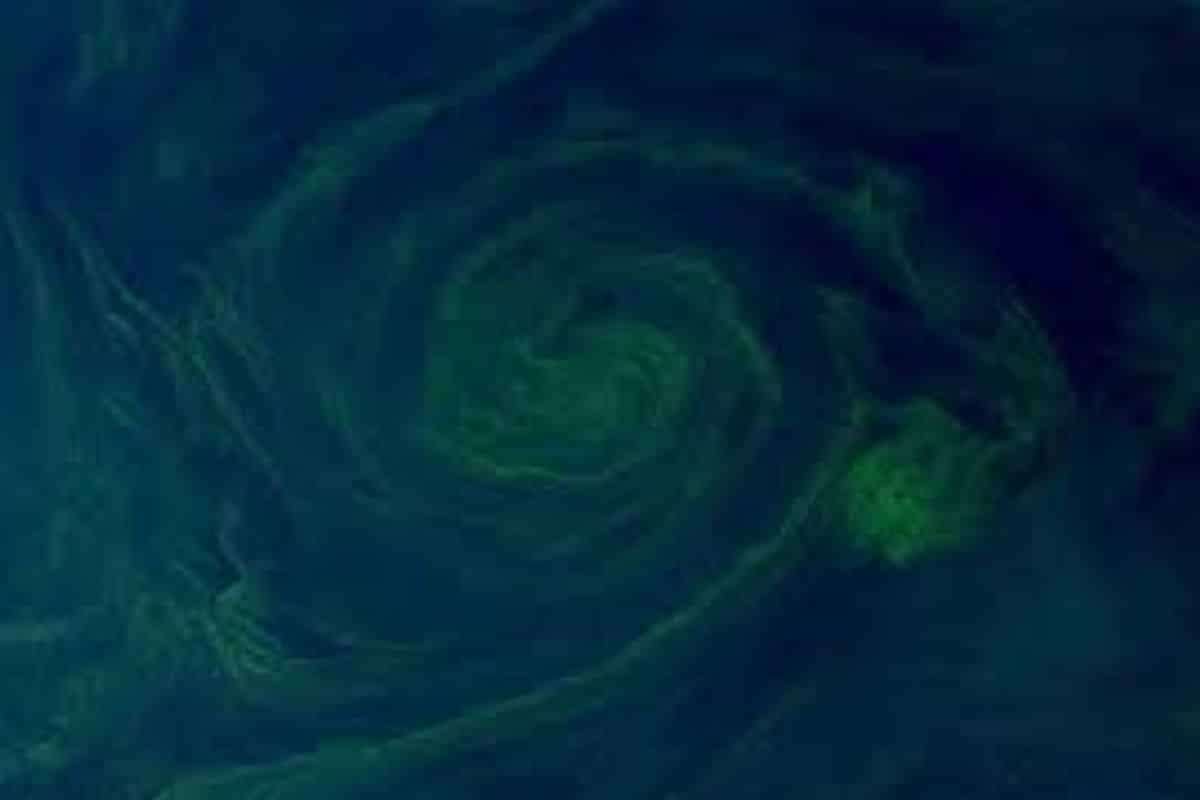
A vivid green shimmer visible even from outer space has captured worldwide attention—not for its allure, but as an urgent environmental warning. The Gulf of Oman is experiencing increasingly frequent phytoplankton blooms fueled by seasonal monsoon winds, with the emergence of Noctiluca scintillans highlighting a severe disruption to marine life.
Monsoon Currents and Satellite Observations
As reported by SciTechDaily, the region witnesses two main bloom periods annually: from January to March and June to August. During these phases, monsoon-driven upwelling brings nutrients to the ocean's surface, encouraging rapid phytoplankton growth. These microscopic plants form the foundation of aquatic food chains and usually indicate a thriving ecosystem. Visible from space, their extensive green patches are documented by satellites such as NASA’s Landsat 8 and the PACE mission's Ocean Color Instrument (OCI). However, recent blooms have been increasingly dominated by a disturbing species.
The Proliferation of Noctiluca Scintillans
The standout organism within these blooms is Noctiluca scintillans, a bioluminescent dinoflagellate known for its nighttime glow. Ecologically, it contrasts sharply with classic phytoplankton like diatoms. While diatoms require plentiful nutrients and support diverse marine populations, Noctiluca thrives in layered, nutrient-poor waters.

Previously a minor component, Noctiluca now dominates many blooms throughout the Gulf of Oman and the adjacent Arabian Sea, displacing diatoms and disrupting local food networks.
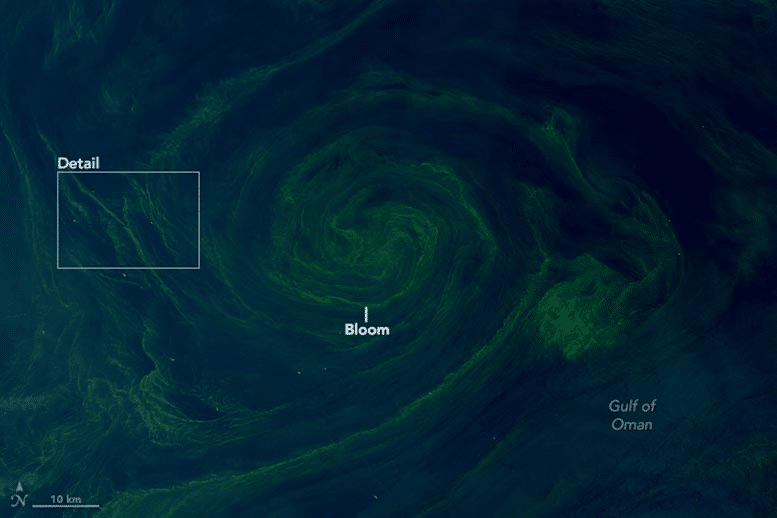
The Gulf of Oman’s phytoplankton outbreaks reveal more than vibrant color—they reflect a marine ecosystem increasingly overwhelmed by oxygen-depleting Noctiluca scintillans.
Underwater Repercussions
As Noctiluca blooms perish, they sink and decompose, consuming substantial oxygen and triggering hypoxic zones that suffocate marine organisms. This process has resulted in regular fish die-offs and damaged habitats.
Over recent decades, the transition from diatom-rich to Noctiluca-dominated systems has caused ripple effects: declines in copepod populations (a primary fish food source), surges in jellyfish and salps, and drops in economically vital finfish species. This threatens local fisheries and food security for the region's populations.
The Strategic Importance of the Gulf of Oman
Situated between Iran and Oman and feeding into the Strait of Hormuz, the Gulf of Oman functions as a vital maritime corridor and ecological hotspot. The growth of oxygen-poor areas not only imperils biodiversity but risks disrupting shipping and fisheries, adding an environmental dimension to regional geopolitical tensions.
What might appear as a dazzling green carpet from above conceals a mounting ecological crisis. This change in phytoplankton bloom composition signals more than a shift in ocean coloration—it reflects a decline in marine ecosystem health.
With intensifying climate effects and increased stratification, experts warn that Noctiluca scintillans could be the first sign among many of a deeper marine crisis. They emphasize that intervention must happen well before the seas start to darken, not merely when they turn green.
- Categories:
- News










0 comments
Sign in to Comment