
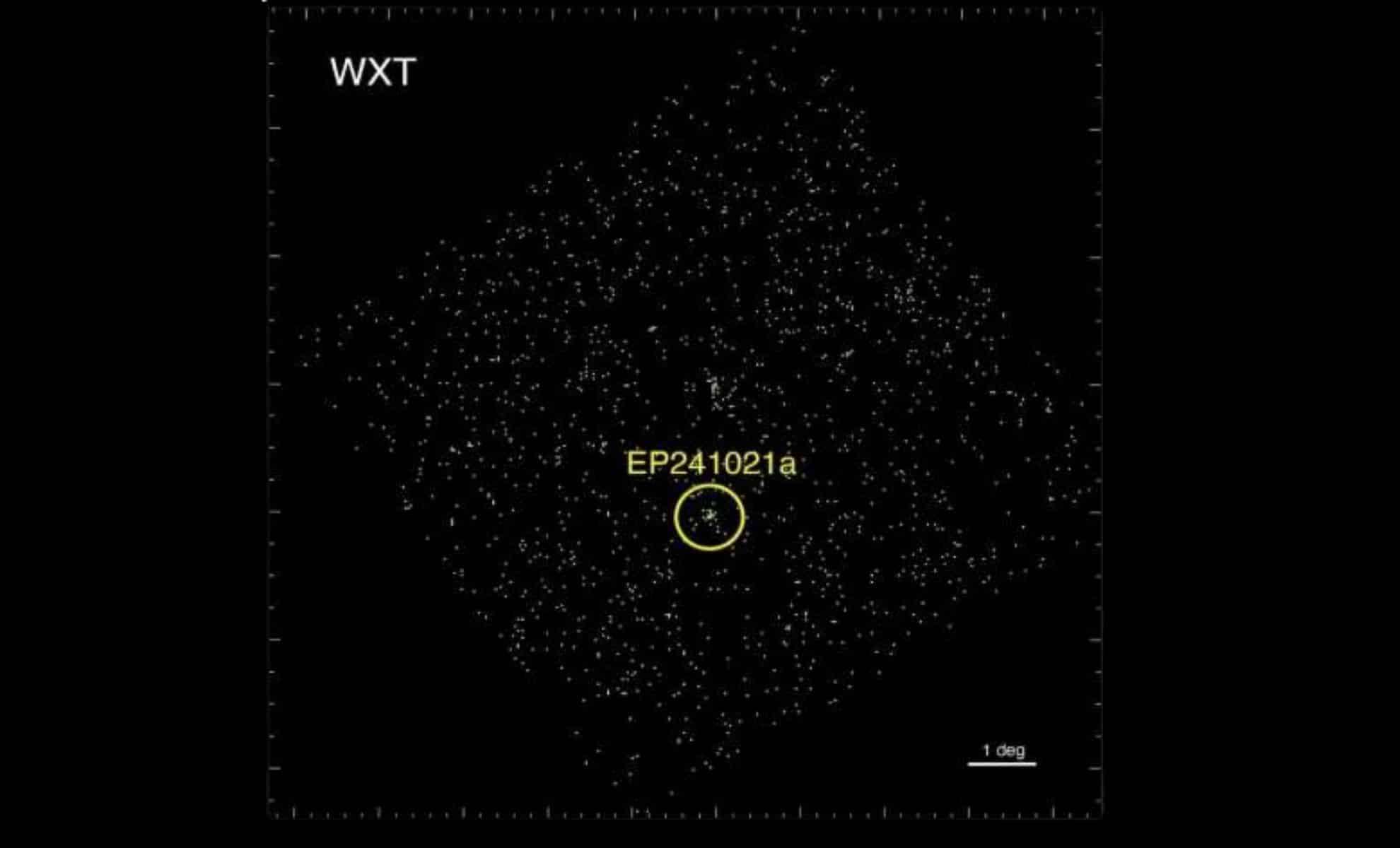
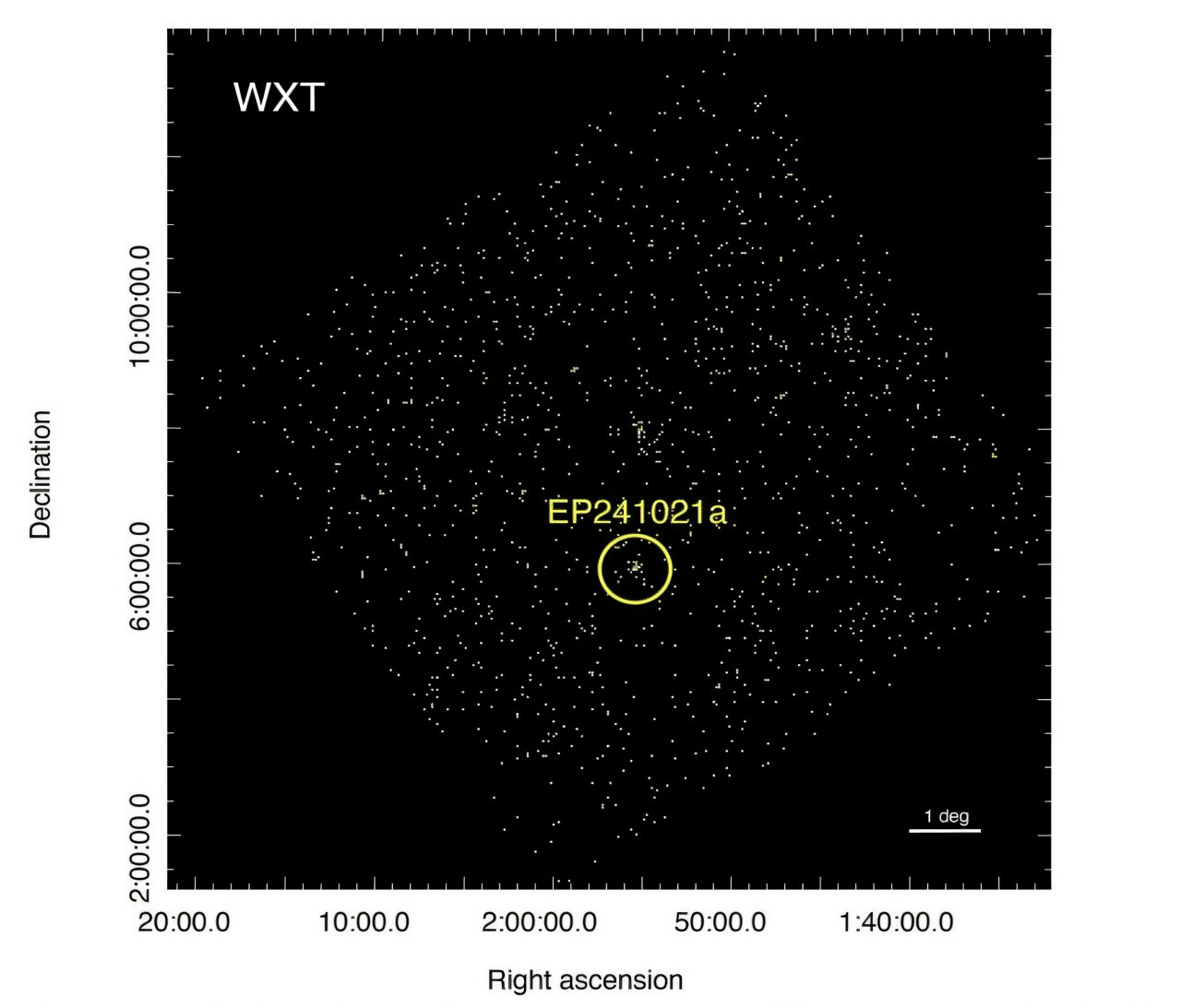
A global collaboration of astronomers operating the Einstein Probe has identified an extraordinary, rapidly evolving X-ray transient named EP241021a. Their findings, shared in a recent paper on the arXiv preprint server, describe a remarkable X-ray emission that endures far longer than previously observed and challenges existing classifications. Deployed in early 2024, the Einstein Probe (EP) specializes in surveying broad regions of the sky to capture fleeting X-ray phenomena, offering valuable data on their changing spectral and temporal characteristics. EP241021a distinguishes itself by exhibiting an exceptionally extended emission phase and a complex array of signals across multiple wavelengths, pushing the limits of our current understanding of transient X-ray events.
An Unusual Transient Featuring an Exceptionally Long X-Ray Emission
As detailed by the scientists, “The detection of a distinctive X-ray transient, EP241021a, was made by EP/WXT on October 21, 2024, with follow-up studies in X-ray, optical, and radio wavelengths.” Initially, the Einstein Probe’s wide-field X-ray telescope (WXT) captured a bright flare lasting about 92 seconds, reaching a luminosity on the order of one quindecillion erg per second, characterized by a relatively hard X-ray spectrum with a photon index of 1.8. Most notably, its X-ray brightness remained nearly constant over the first seven days, forming a plateau phase, before sharply diminishing over the subsequent 30 days and eventually fading below detection capabilities. This sustained plateau duration is unprecedented for extragalactic fast-evolving X-ray transients (FEXTs), which generally exhibit much shorter emission periods. The prolonged high-energy output suggests that complex astrophysical mechanisms are maintaining the emission well beyond what is typical for phenomena like stellar flares, supernova shock breakouts, or gamma-ray bursts.
Insights from Multiwavelength Follow-Up Observations
Following the initial X-ray outburst, the team performed detailed monitoring that revealed emissions in other parts of the electromagnetic spectrum. Optical signals connected to EP241021a emerged roughly 1.8 days after the X-ray flare, likely representing the afterglow phase. Meanwhile, radio emissions were detected about 8.4 days after the flare began, suggesting relativistic jets or interactions with surrounding material. These multiwavelength signatures are crucial for deciphering the physical processes driving the transient, as the simultaneous presence of X-ray, optical, and radio waves can imply jet activity, shock fronts, or ongoing central engine effects. The persistence of these emissions over several weeks points to a multifaceted source structure with various components contributing to the overall emission, distinguishing EP241021a from more typical fast transient phenomena.

Exploring Potential Origins: Magnetar or Jetted Tidal Disruption Event
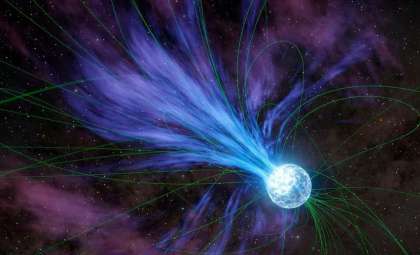
“Multiple explanations have been examined for EP241021a’s origin, with a magnetar-driven source or a jetted tidal disruption event (TDE) emerging as likely candidates, although neither fully explains all observations,” the researchers concluded. A magnetar, an intensely magnetized neutron star, could potentially supply the steady energy output needed to sustain the lengthy X-ray plateau. Alternatively, a jetted TDE—where a star is torn apart by a supermassive black hole, producing directional jets—might account for the multiwavelength emissions and extended activity period. Yet, neither model perfectly matches the unique light curve shape, spectral hardness, or timing of optical and radio signals. This uncertainty underscores EP241021a’s complexity and may point to new or combined astrophysical processes, inviting further observational and theoretical work to clarify the nature of such rapid X-ray transients.
Einstein Probe’s Impact in the Field of Transient Astronomy
Since its deployment, the Einstein Probe has transformed how astronomers detect and study fast-developing X-ray transients. Equipped with its wide-field and sensitive X-ray instrumentation, EP captures the swift temporal and spectral shifts of these phenomena like never before. EP241021a stands out as one of the most notable discoveries to date, emphasizing the probe’s capacity to reveal enigmatic events that defy current astrophysical theories. The unusual duration and diverse multiwavelength features of this transient highlight the rich variety of fast transient sources still not fully understood. As the Einstein Probe continues its sky surveys, it is expected to uncover more extraordinary objects that will deepen knowledge about the energetic processes and extreme conditions present in our cosmos.
- Categories:
- News









0 comments
Sign in to Comment