
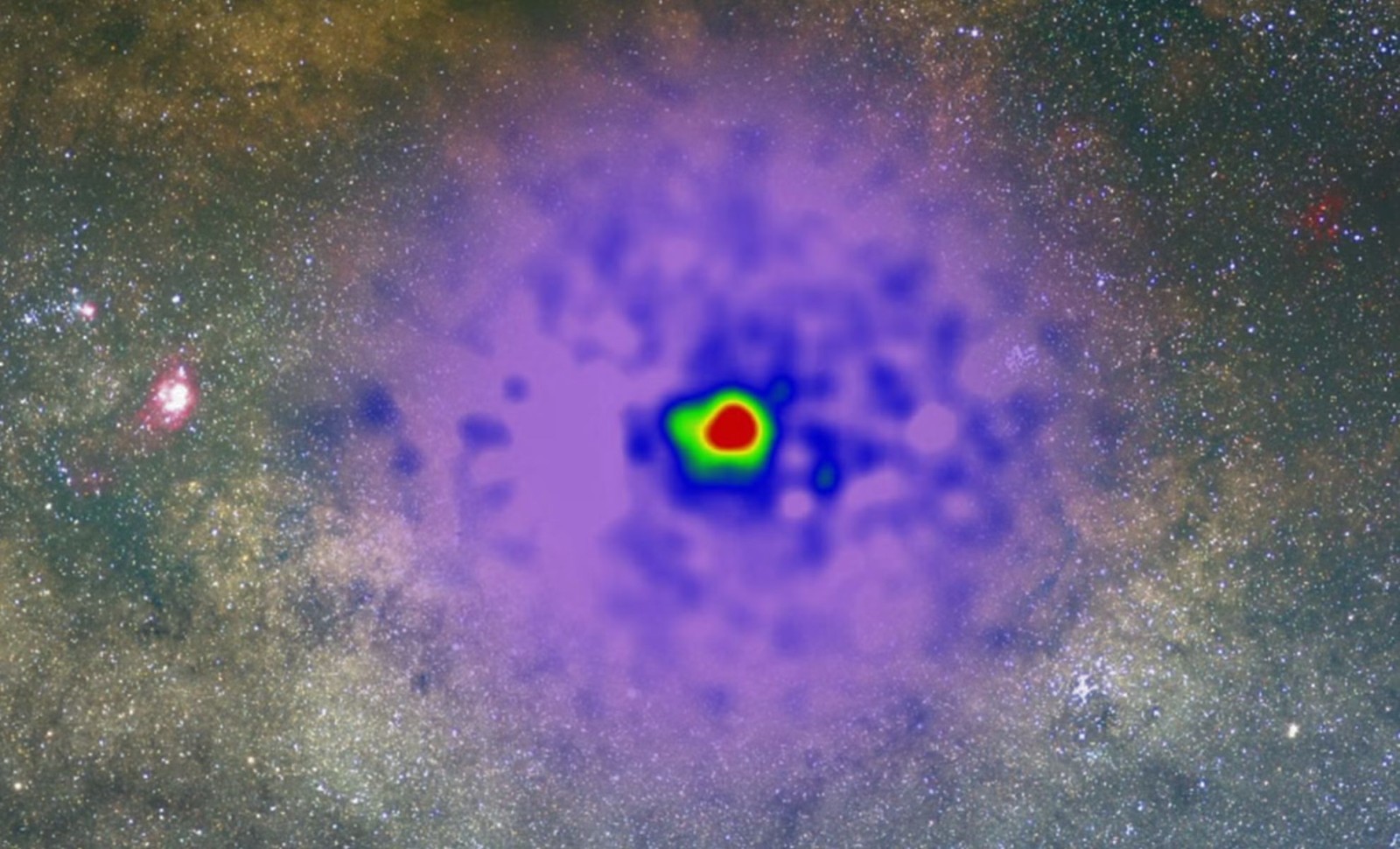
For more than ten years, the Fermi Gamma-Ray Space Telescope has detected an unusual surplus of gamma-ray emissions emanating from the central region of the Milky Way. This enigmatic radiation extends across thousands of light-years but does not correspond with any established cosmic sources. Consequently, scientists propose two leading contenders to explain the phenomenon: either the gamma rays originate from dark matter, the invisible matter believed to make up most of the universe’s mass, or they result from a dense collection of pulsars, the highly magnetized, rapidly spinning remnants of collapsed stars.
A recent article in Physical Review Letters brings new perspectives to this debate, demonstrating that both scenarios remain plausible though subtle distinctions may soon reveal the true cause.
Could Dark Matter Be Responsible?
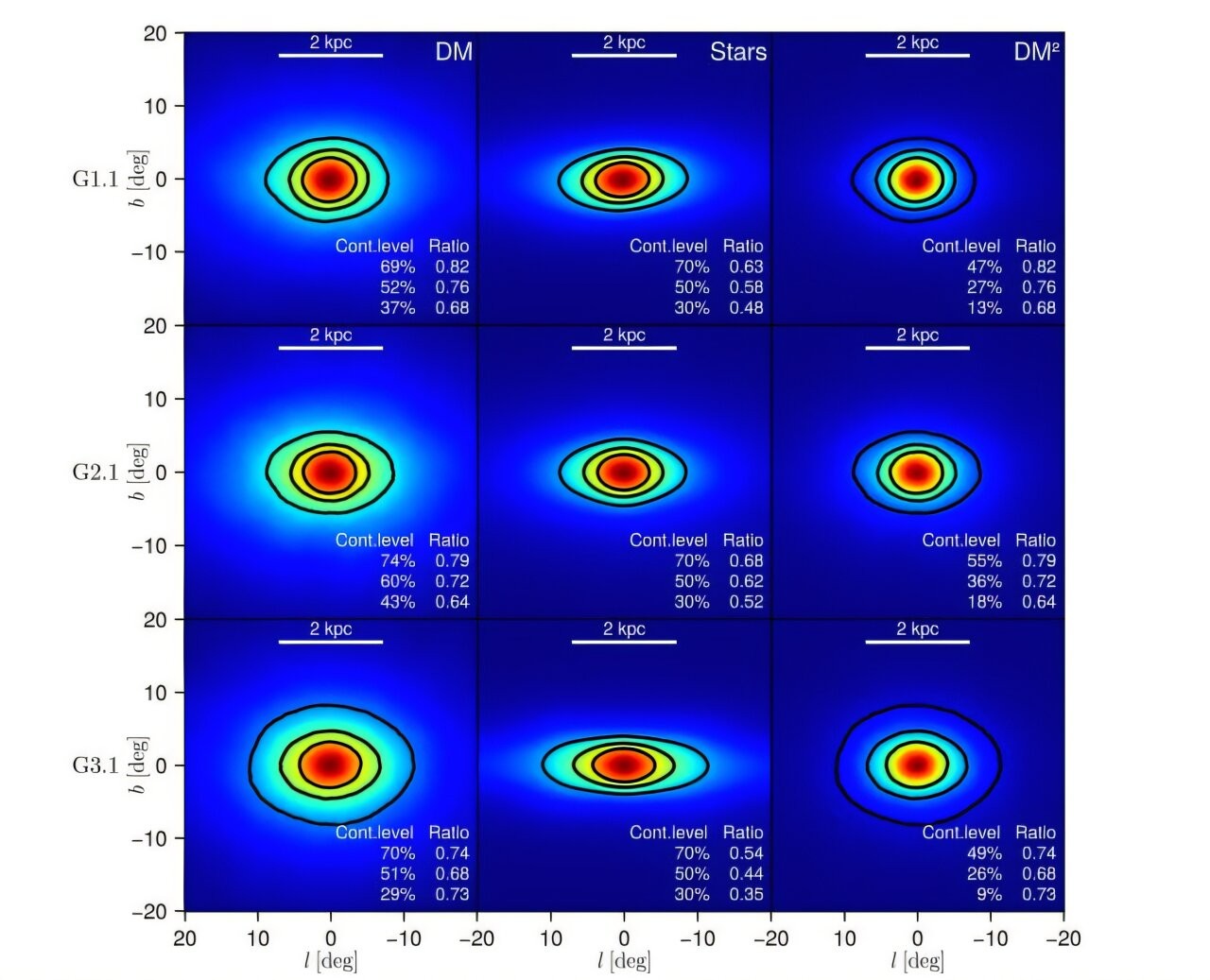
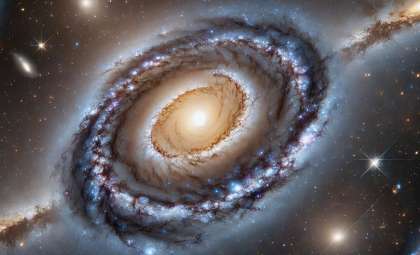
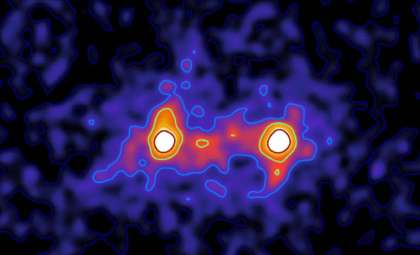
Dark matter has long defied direct detection, only inferred through its gravitational influence on observable matter. Astrophysicist Moorits Mihkel Muru of the Leibniz Institute for Astrophysics Potsdam reports that advanced simulations indicate the peculiar gamma-ray signature could stem from the Milky Way’s dark matter halo. This halo, shaped by previous galaxy collisions, might produce the distinctive gamma-ray profile observed by Fermi.

Muru and team’s models reveal how the asymmetry in the galaxy’s dark matter distribution could account for the gamma-ray excess in the inner galactic region.
The study highlights that since dark matter neither emits nor blocks electromagnetic radiation, detecting it via gamma-rays would mark a transformative breakthrough in understanding the cosmos. Despite its promise, Muru cautions that dark matter’s interaction with regular matter remains largely speculative and unconfirmed.
Are Pulsars the Source of the Glow?
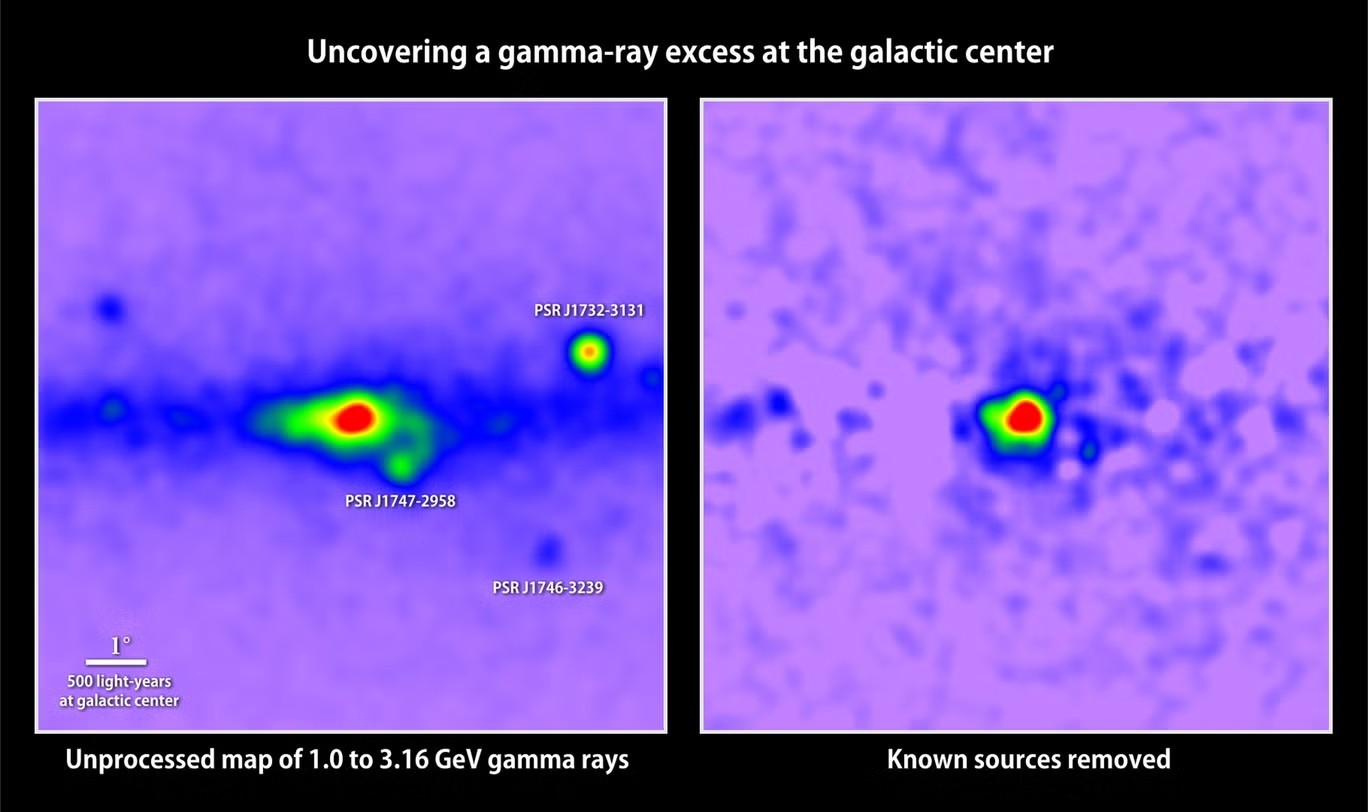
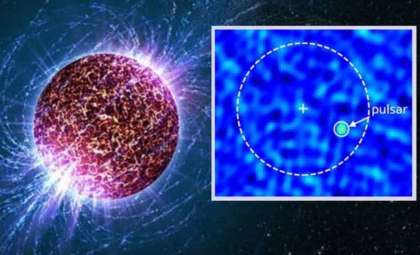
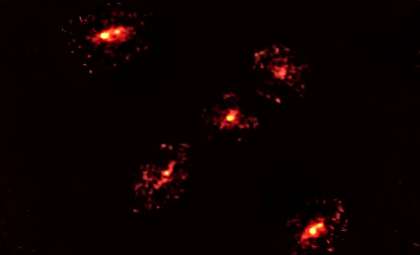
Pulsars are established emitters of high-energy gamma-rays, but the challenge lies in accounting for the observed intensity and distribution originating from the core of our galaxy. Observations so far indicate there might be too few pulsars in this region to produce the gamma-ray excess measured. If pulsars are responsible, one would expect the radiation to be localized around many individual sources rather than a smooth, continuous glow seen by astronomers.
Muru’s research suggests pulsars remain a feasible explanation only if an undiscovered population of pulsars exists in much larger numbers near the galactic center. Yet, the comparatively small detected pulsar count makes this scenario difficult to reconcile with the data. Notably, pulsars would likely manifest as concentrated clusters of gamma-ray points, contrasting with the broad, uniform glow observed.
Advancing the Search with the Cherenkov Telescope Array
In an effort to resolve the origin of the gamma-ray surplus, astronomers are eagerly anticipating data from the forthcoming Cherenkov Telescope Array Observatory (CTAO). This next-generation instrument promises significantly enhanced gamma-ray imaging capabilities, surpassing existing observatories.
By offering sharper spatial resolution of the gamma-ray emissions, the CTAO could reveal if the source is a smooth background glow or comprised of distinct point sources.
Muru’s team emphasizes that such detailed observations will be key to validating either the dark matter or pulsar interpretation. With CTAO poised to illuminate these high-energy regions, the longstanding puzzle of the Milky Way’s gamma-ray excess may soon be unraveled.
- Categories:
- Physics





0 comments
Sign in to Comment