

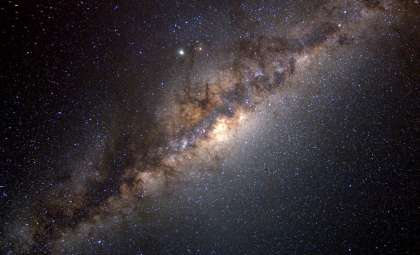
Scientists have identified a vast magnetic halo encircling the Milky Way, reshaping how we comprehend galaxy formation and evolution.
A team at the National Institute for Astrophysics (INAF) in Italy has detected extensive magnetized formations extending well beyond the plane of our galaxy, shedding light on the mechanisms driving galactic development over time.
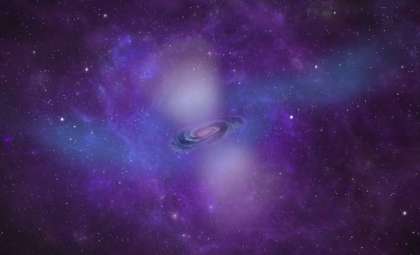
Their research, utilizing data from more than ten all-sky surveys and detailed in Nature Astronomy, uncovers a broad and intricately organized magnetic field reaching over 16,000 light-years above and below the Milky Way. This magnetic halo not only represents a remarkable structural feature but also gives valuable insights into the origin of energetic outflows, potentially linked to the explosive deaths of stars within the galaxy.

Dimensions and Formation of the Magnetic Halo
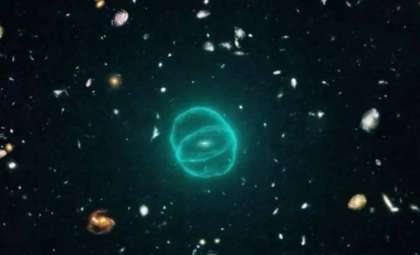
The magnetic halo consists of long, delicate filaments that stretch across vast distances. These structures are tied to the eROSITA Bubbles, huge gas formations first detected in 2020 by the eROSITA X-ray telescope on the Spectr-Roentgen-Gamma (SRG) mission. Spanning a wide area of the sky, these bubbles are fueled by powerful outflows of hot gas and energy originating in the galaxy’s core. Remarkably, the magnetic fields within these bubbles display a highly ordered arrangement. These filaments, which extend roughly 150 times the apparent size of the full moon, reveal an unexpected complexity to the Milky Way’s magnetism.

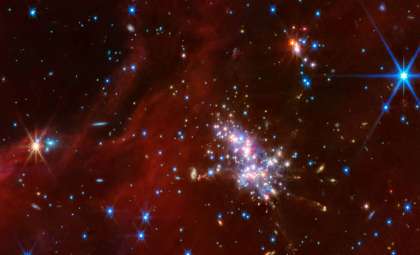
“The magnetic ridges we’ve mapped are closely associated with regions where stars are actively forming,” said He-Shou Zhang, lead investigator from INAF. The evidence points to these magnetic fields being sculpted by energetic flows of gas generated in star-forming areas at the edges of the Galactic Bar, a prominent structure at the Milky Way’s center harboring dense clouds of gas and stars. These outflows are mostly powered by supernovae, intense explosions marking the demise of massive stars, which eject material into the galactic halo and subsequently influence the formation of new stars.
The Influence of Galactic Outflows on Evolution
This work underscores the pivotal role of galactic outflows—hot gas streams expelled from the galaxy’s core—in shaping the Milky Way’s magnetic environment. The study offers the first direct connection between these outflows and the star-forming ring located at the Galactic Bar’s end, a region bustling with forming stars emerging from dense molecular clouds. "Intense star formation in this ring appears to be a major driver of the broad, multifaceted outflows we observe," Zhang explained.
Understanding this star formation-outflow link is vital for grasping how galaxies like ours develop. The energy unleashed by supernovae not only sparks new star formation but also pushes material from the galaxy’s disk into its halo, where it interacts with magnetic fields, influencing both the halo’s shape and the galaxy’s overall behavior. Gabriele Ponti, INAF researcher and co-author, added, "While it's well known that active galaxies can produce strong outflows due to black hole activity or starburst events, seeing our relatively calm Milky Way doing so is truly exciting."
This finding contests the long-held view that galactic outflows stem mainly from extreme events such as supermassive black hole activity or intense starburst phenomena. Instead, it highlights that a seemingly tranquil galaxy like the Milky Way can generate significant outflows, driven by typical star formation and supernova processes. This insight has substantial implications for the concept of galactic feedback, which involves galaxies self-regulating their evolution through complex interactions between stars, gas, and magnetism.
Reevaluating Galactic Feedback and Magnetism
The research offers fresh perspectives on the importance of magnetic fields in galaxies’ life cycles. Martijn Oei, a Caltech cosmologist who was not involved in the study, noted, "We’re now realizing that galaxy halos are fundamentally magnetic, and these magnetic fields significantly influence galactic evolution." Although galactic magnetism has been recognized for decades, its precise role in shaping galaxy structures remained ambiguous. This study, by providing detailed magnetic measurements in the Milky Way’s halo, establishes clear links between magnetic phenomena and star formation-driven feedback.
Employing a broad set of multi-wavelength observations—spanning radio waves to gamma rays—the researchers carefully mapped how galactic outflows and magnetic fields intertwine. This multidisciplinary approach gave them an unprecedented view of the Milky Way's magnetic halo's extensive structure.
“Our findings represent the first comprehensive mapping of magnetic fields within the Milky Way’s X-ray halo and reveal new ties between star formation hotspots and galactic winds,” Zhang emphasized. Their study reinforces how star-forming zones at the galactic bar's tips influence the outflows that sculpt galactic magnetism.
Looking Ahead: Impacts and Future Studies
The revelation of the Milky Way’s magnetized halo opens exciting avenues for understanding spiral galaxies overall. By directly associating galactic outflows with star formation, this research enriches our grasp of galactic transformation processes across cosmic time. Further analysis of the eROSITA bubbles and their magnetic features promises to advance knowledge of galaxy dynamics even more.
“This study is timely, marking the first thorough, multi-wavelength investigation of the eROSITA Bubbles since their initial detection in 2020. It heralds new explorations into the galactic halo and deepens our comprehension of the Milky Way’s vigorous star-forming environment,” Zhang concluded.
By untangling the relationships among star formation, supernova explosions, galactic outflows, and magnetic structures, this study enhances our understanding of our own galaxy and offers a model for exploring the evolution of galaxies throughout the universe.
- Categories:
- Astronomy ,
- News ,
- Space ,
- Physics







0 comments
Sign in to Comment