

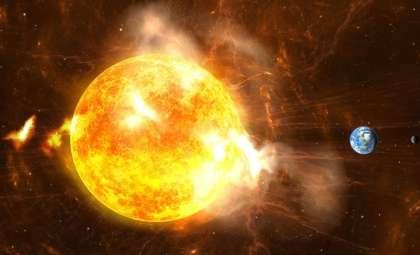
Experts are alerting that Earth may be impacted by a significant solar storm this week, triggered by recent intense eruptions on the Sun.
The National Oceanic and Atmospheric Administration (NOAA) reports a 60% likelihood that this storm will reach Earth on Tuesday, May 14, with chances dropping slightly on the following day.
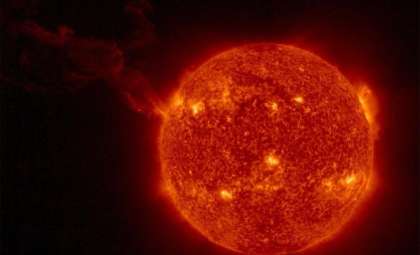
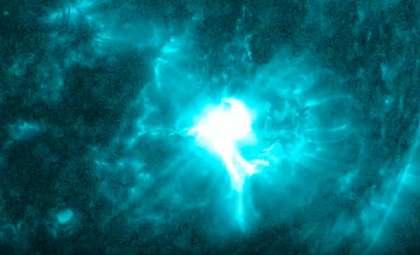
NASA Sun and Space’s official Twitter account also confirmed the eruption of an M6.6-class solar flare on May 13, which, although less intense than previous events, remains notable.

Another one! ☀️ 💥
An M6.6-class solar flare erupted on Monday, May 13. (Not as strong as some of the others we’ve had in the past week, but it sure is pretty!)
This week, we’re answering popular questions about solar storms and their impacts on Earth. Stay tuned! pic.twitter.com/EPgHa9D4Er
— NASA Sun & Space (@NASASun) May 13, 2024
This period coincides with the Sun’s active phase in its 11-year cycle, during which it releases substantial amounts of charged particles propelled by complex magnetic fields on its surface.
The NOAA has classified this event as a G2-level geomagnetic storm, describing it as of “Moderate” intensity. Such storms typically occur around 600 times within one solar cycle and can affect power systems at higher latitudes by damaging transformers or triggering voltage warnings.
Elevated radiation levels from the charged particles also pose risks to astronauts and can interfere with electrical infrastructure.
Last week’s solar activity generated awe-inspiring auroras visible worldwide, showcasing vibrant shades of pink, green, and purple in the night skies.
From the northern reaches of Europe to southern regions of Australia, observers captured remarkable images of this rare spectacle.
NOAA predicts that the upcoming solar storm will again produce dazzling auroras for skywatchers.
The storm on Friday recorded geomagnetic conditions rated at level five—the highest severity— followed by G3 to G5 levels on Saturday, with expectations for G4 or greater on Sunday.
What Causes Solar Storms?
Solar storms originate when the Sun releases continuous streams of charged particles, which eventually travel through space and reach Earth.
A solar storm begins with a powerful eruption on the Sun’s surface, known as a solar flare, capable of releasing energy equivalent to billions of nuclear detonations.
These flares often accompany coronal mass ejections (CMEs), enormous bursts of charged plasma racing through space at millions of miles per hour. When these CMEs collide with Earth, they can instigate geomagnetic storms that disrupt satellites and energy grids.
The spectacular Northern Lights, or aurora borealis, result from charged particles expelled by the Sun interacting with Earth’s atmospheric gases.
When these particles strike oxygen and nitrogen atoms in the upper atmosphere, they excite these gases, causing them to emit light.
Oxygen produces the familiar green hues, the predominant color seen in the Northern Lights, while nitrogen creates shades of purple, blue, and pink.
How Do Solar Storms Impact Technology?
Although solar storms don’t directly harm people on Earth, they can cause significant disturbances to electronic systems around the globe. NASA notes that while the Earth’s atmosphere shields us from harmful solar radiation, these storms can still considerably affect technology.
Intense solar activity can disrupt the upper atmosphere, interfering with the transmission of GPS signals, communications, and other satellite-dependent services. These interruptions can lead to outages or reduced performance in navigation and power networks, highlighting the critical importance of monitoring solar phenomena to mitigate technological risks.






0 comments
Sign in to Comment