
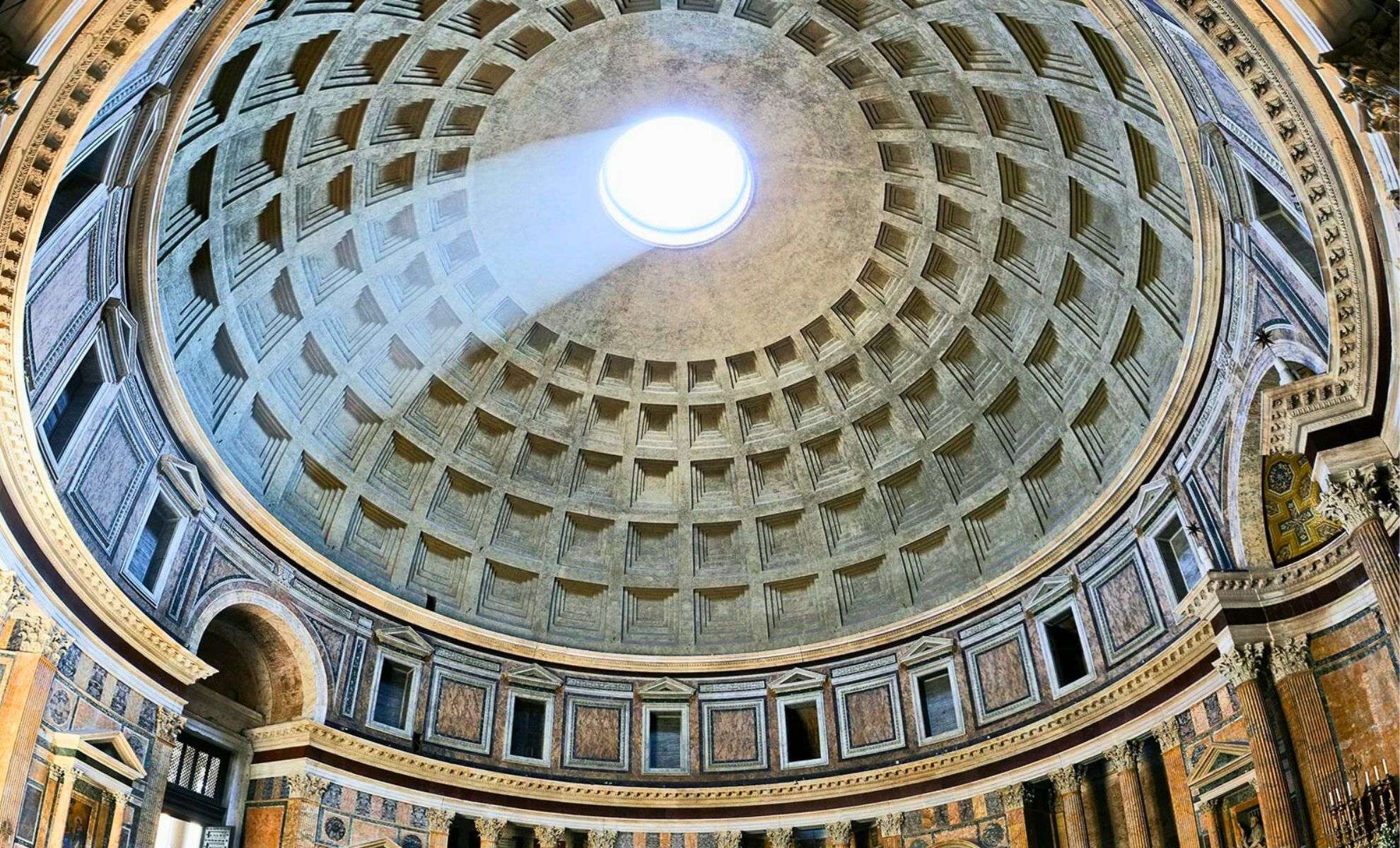
Rome’s iconic Pantheon has withstood nearly two millennia, featuring the in the world. Numerous other Roman feats of engineering, including aqueducts and coastal barriers, have survived wars, seismic events, and centuries of wear far better than many modern structures. The secret to this incredible longevity has traditionally been attributed to pozzolanic concrete, a blend of volcanic ash and lime.
Recent discoveries, however, indicate that there’s more to the story. A research team from the Massachusetts Institute of Technology (MIT) has uncovered evidence that ancient Roman builders employed an innovative process called hot mixing. This technique not only enhanced the strength of the concrete but also endowed it with the ability to self-repair.
Decoding Clues Embedded in Ancient Roman Concrete
For years, scientists believed that Roman concrete was produced by combining slaked lime—resulting from mixing quicklime (calcium oxide) with water—with volcanic ash, resulting in a resilient, water-resistant building material.

When examining concrete samples dating back 2,000 years from Privernum, Italy, researchers made a curious observation: tiny white lime fragments scattered throughout the otherwise uniform mix.
Previously regarded as signs of careless mixing, these lime clasts caught the attention of Admir Masic, a materials scientist at MIT, who suspected there was more than meets the eye.
“If the Romans put so much effort into making an outstanding construction material, why would they be careless about mixing it?” Masic wondered.
To unravel this enigma, Masic and his colleagues, including civil engineer Linda Seymour from MIT, applied cutting-edge analytical techniques such as electron microscopy, X-ray spectroscopy, and confocal Raman imaging. Their work has rewritten historical understandings.
The Revolutionary Hot Mixing Process
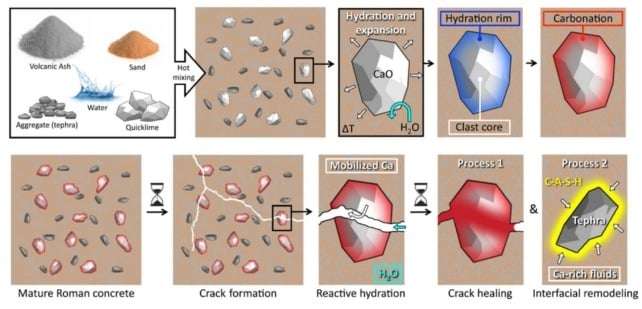
Rather than solely using slaked lime, evidence shows Roman builders added quicklime directly into the mixture, generating intense heat during preparation—known today as hot mixing. This innovation yielded two key benefits:
- Formation of unique high-temperature compounds that reinforced the concrete’s strength.
- Introduction of a surprising capability for the concrete to heal itself over time.
This insight sheds light on why ancient marine structures and other Roman constructions, subjected to harsh environmental conditions for centuries, remain intact while modern concrete deteriorates relatively quickly.
The Concrete That Repairs Its Own Cracks
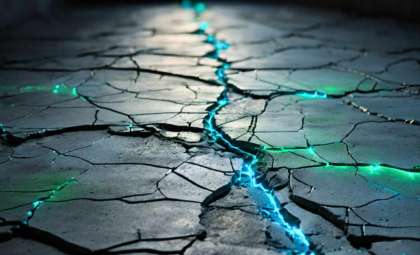
Concrete inevitably develops cracks, but in Roman concrete, cracks tend to grow towards the embedded lime clasts. Upon contact with water, these lime fragments react, creating a calcium-rich solution that crystallizes as calcium carbonate, effectively sealing the fissures.
Such self-healing behavior has been documented in ancient Roman tombs, aqueducts, and seawalls. To validate this, the MIT team fabricated their own batch of Roman-style concrete, employing the hot mixing method, and compared it with modern equivalents.
The results were striking:
- Cracks in the hot-mixed concrete completely sealed within two weeks.
- Control samples made without quicklime showed persistent cracks.
This natural repair capability likely explains why Roman harbors, bridges, and buildings have endured for thousands of years, resisting water damage and extreme weather.
Advancing Sustainable Building Materials
Today’s concrete production contributes nearly 8% of global carbon dioxide emissions. Developing a stronger, self-repairing concrete could dramatically lower maintenance needs and extend infrastructure lifespans.
The MIT researchers are developing commercial applications based on this ancient technique, offering a greener alternative for construction. If realized, their innovation could revolutionize how modern infrastructures, including 3D-printed structures, are built—with enhanced durability and less waste.
“It’s exciting to think about how these more durable concrete formulations could expand not only the service life of materials but also how they could improve the durability of 3D-printed concrete,” Masic said.
The full study is published in Science Advances.
- Categories:
- Science











0 comments
Sign in to Comment