
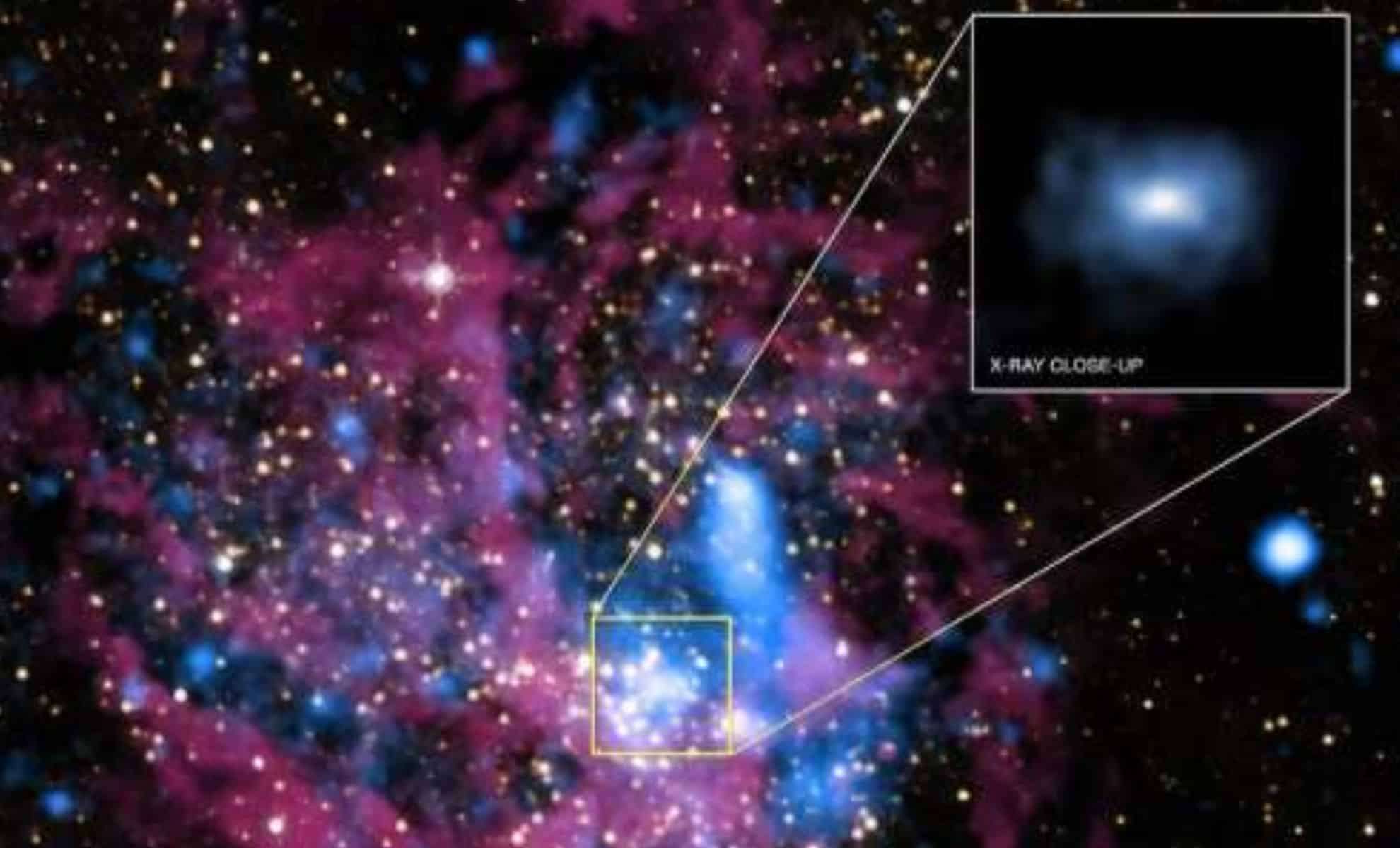
A newly released paper on arXiv reveals a fascinating discovery occurring at the center of our Milky Way Galaxy. This region is alive with a complex chorus of gravitational waves generated by a variety of cosmic actors, including the central supermassive black hole, alongside numerous binary black holes, neutron stars, and white dwarfs. Although these signals are currently beyond the reach of our detection capabilities, upcoming instruments such as the Laser Interferometer Space Antenna (LISA) promise to open a new window into these celestial events. This presents astronomers with the exciting challenge of deciphering this intricate “forest” of gravitational waves to reveal underlying patterns. What does the future hold for actually detecting these elusive spacetime ripples, and how might that deepen our cosmic understanding?
Milky Way’s Core: A Dynamic Source of Gravitational Waves
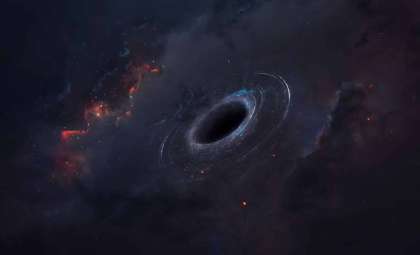
At the core of the Milky Way lies the supermassive black hole known as Sagittarius A*, a dominant force in the region. However, it is surrounded by a rich population of other compact objects such as binary black holes, neutron stars, and white dwarfs. These bodies continuously emit gravitational waves—ripples in the fabric of spacetime generated by their orbital motion and interactions. As they slowly spiral inward and exert gravitational influences on one another, these waves remain extraordinarily subtle and challenging for current technology to pick up.
The true intrigue lies in the potential to use these gravitational waves as a tool to observe the intricate dynamics occurring in these extreme environments. While present-day detectors capture only the dramatic, final “chirps” emitted during merger events, future missions like LISA aim to monitor these signals over much longer durations, tracking the gradual dance of these objects before merger. This extended observation could allow scientists to decipher more intricate details about the astrophysical processes involved.

Decoding a Complex Mix of Gravitational Waves
A major hurdle for future gravitational wave astronomy is the sheer number of overlapping signals expected from these diverse sources. While binary black hole mergers are key focus areas, the gravitational wave background is complicated by emissions from a range of sources near the Milky Way’s central black hole. This includes objects like neutron stars and even brown dwarfs—each producing unique gravitational wave patterns. The amalgamation of these signals creates a dense, noisy environment that risks obscuring isolated events of interest, such as individual black hole mergers.
The study characterizes this situation as a “forest” of gravitational waves, with signals merging and overlapping. Objects closely orbiting Sagittarius A*, like nearby neutron stars, can generate waves that effectively mask the clearer signatures from binary black holes’ final inspirals and collisions. This presents a complex challenge for observatories like LISA, which anticipate delivering prolonged, high-precision gravitational wave data.
Harnessing Advanced Algorithms and Multi-Messenger Approaches
To overcome the difficulties posed by this tangled gravitational wave environment, researchers are investigating advanced strategies. One promising avenue is the integration of machine learning techniques designed to parse and classify the vast datasets produced by next-generation observatories. By training algorithms to differentiate between overlapping waveforms, astronomers could isolate and identify previously hidden gravitational wave sources.
Additionally, the paper discusses the potential of multi-messenger astronomy to aid in this endeavor. Combining gravitational wave observations with complementary electromagnetic data, like radio emissions associated with tidal interactions affecting brown dwarfs, can help cross-verify and attribute specific gravitational wave signals. This coordinated approach may significantly improve the ability to disentangle the mixed signals in regions densely populated with varied gravitational wave emitters.
- Categories:
- News




0 comments
Sign in to Comment