
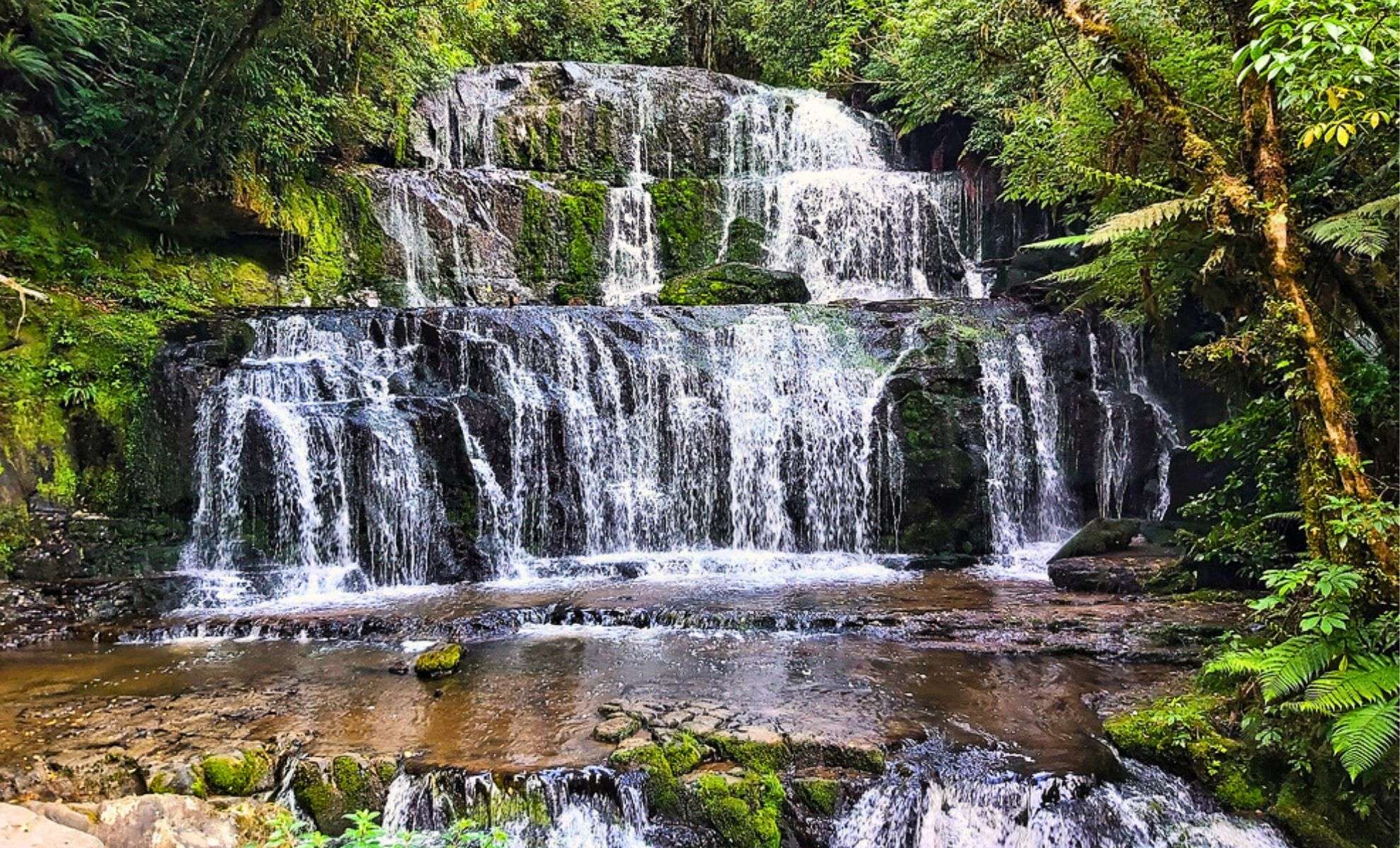
Scientists in Brazil have captured unprecedented footage of thousands of bumblebee catfish (Rhyacoglanis paranensis) scaling waterfalls, showcasing a remarkable behavior never previously recorded in this species. Recorded in November 2024 and recently published in the Journal of Fish Biology, this discovery has sparked considerable interest within the freshwater ecology community.
The breakthrough occurred when military environmental police encountered the phenomenon near the Sossego waterfall, situated in the Aquidauana River basin of Brazil's Mato Grosso do Sul State. Observers witnessed numerous small, striped fish using a blend of suction, fin maneuvers, and persistent effort to ascend vertical rock walls over four meters tall.
A research team promptly arrived to study the event in detail. “This wasn’t just a handful of fish,” explained lead scientist Manoela Marinho. “We saw an extensive, coordinated group unlike anything documented for this genus before.”

Investigating the Motive Behind the Upward Climb
The reasons driving this climbing behavior remain somewhat mysterious, but the timing provides valuable clues. The activity coincided with the start of the rainy season, a period known for triggering migratory spawning migrations in many South American freshwater fishes. The presence of both adult males and females in the group supports the idea that this ascent relates to reproductive activities.
Interestingly, the catfish displayed a distinct daily pattern: they stayed hidden beneath rocks during the hot afternoons and began climbing as dusk approached. “It seems they wait for the ideal light and temperature conditions to move,” Marinho explained.
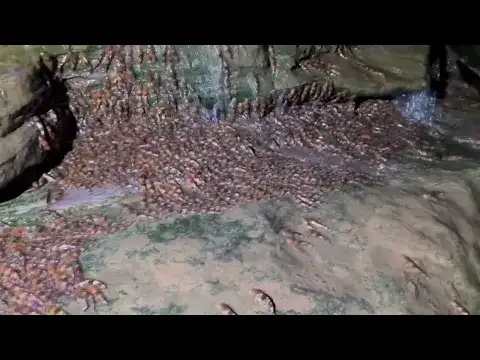
Unlike salmon, these fish do not leap but instead rely on their paired pectoral fins spread wide to grip wet, slippery rocks. Employing cautious, jerky motions powered by tail and lateral muscle contractions, they methodically climb upward. A suction mechanism might also assist in counteracting gravity on the slick surfaces.
Researchers also detected other species, including Hypostomus khimaera and Ancistrus sp., climbing nearby, though none matched the numbers or coordinated effort exhibited by Rhyacoglanis paranensis. Coverage of the discovery appeared in Phys.org, emphasizing the need for field-based observations to understand rare behaviors.
Endangered Species and Environmental Challenges
The Rhyacoglanis paranensis is a modest-sized catfish species belonging to the Pseudopimelodidae family, recognized by its unique orange and black banding that earned it the common nickname "bumblebee catfish." Found primarily in swift, shallow rivers throughout remote South American regions, this elusive fish has long posed challenges for scientific study. Until now, no large-scale migrations or waterfall-climbing activities had been linked to this species.
This new footage sheds light on freshwater biodiversity and draws attention to how the migratory habits of diminutive fish species can be easily overlooked in ecosystem management.
The findings accentuate growing alarm over river fragmentation resulting from dam building and waterway modifications that block or disrupt vital fish migratory corridors. A UNESCO report on aquatic ecosystem fragmentation notes how such developments often neglect the needs of lesser-understood species with complex life cycles.
“Even small, obscure species depend on specific environmental cues to complete their reproductive cycles,” said Dr. Robert Egan, a freshwater ecology expert not involved in the study. “When these conditions are disturbed, reproductive collapses may occur before we fully grasp their significance.”
- Categories:
- News








0 comments
Sign in to Comment