
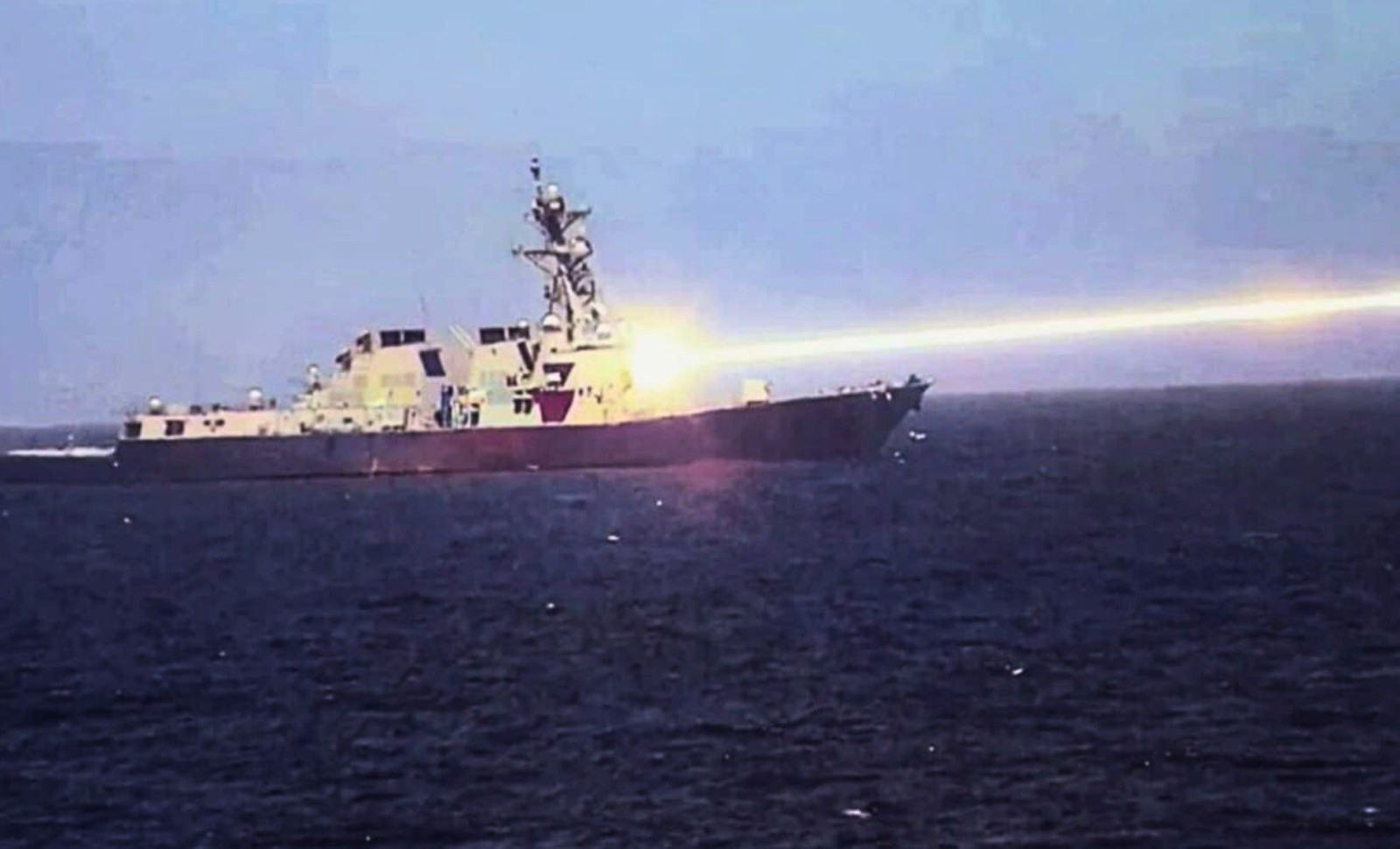
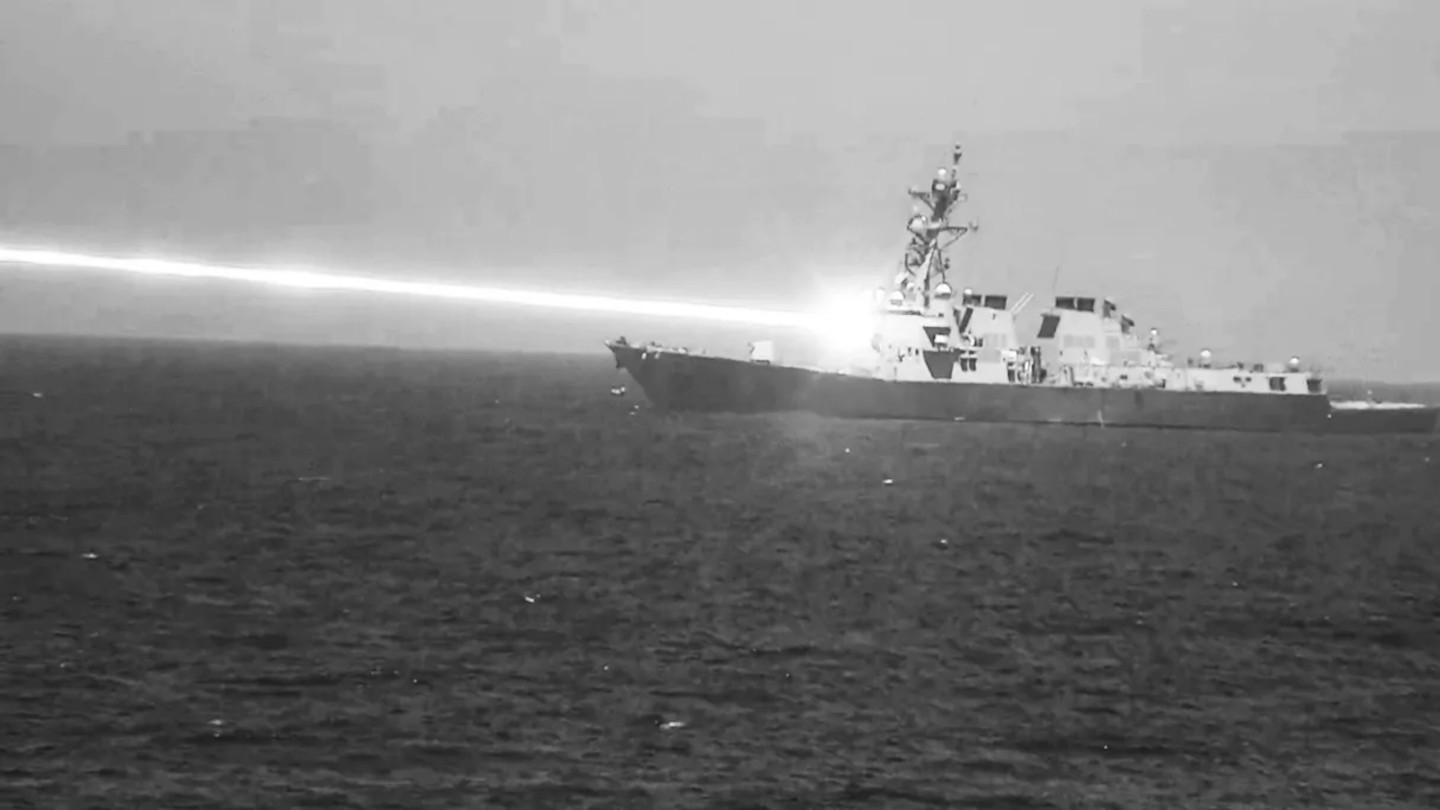
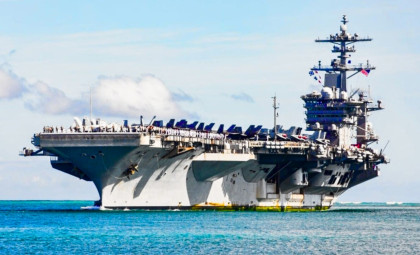
An Arleigh Burke-class guided-missile destroyer demonstrated its readiness without relying on traditional missiles. During a Navy exercise, a powerful laser beam projected from the USS Preble maintained focus long enough to inflict damage rather than simply intimidate. Although this event occurred in 2025, details only emerged publicly in early 2026 after proper documentation was processed alongside released footage.
The timing is significant because it highlights the transition of shipboard laser weapons from controlled environments to operational deployment. After years of testing naval laser systems onshore and pier-side, this marked a near-combat scenario where the vessel’s own sensors and combat networks were fully integrated into the firing sequence.
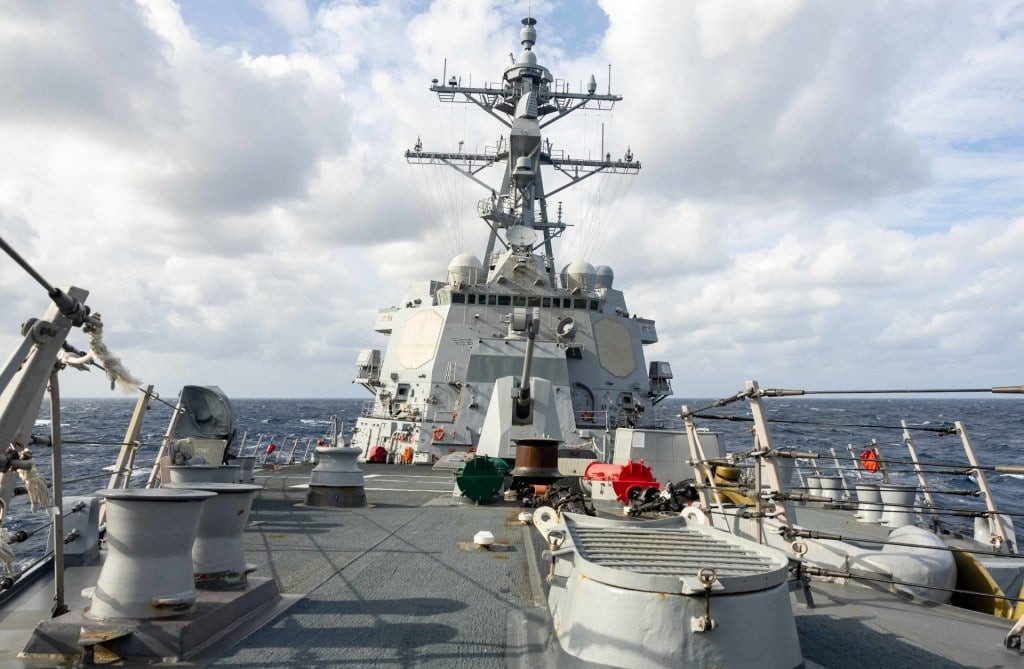
The centerpiece of this advancement is the USS Preble, a Flight IIA Arleigh Burke destroyer equipped with the robust Aegis Combat System. This integration means the laser functions as a native weapon, seamlessly incorporated into Aegis’ sensor and targeting capabilities rather than as an add-on device.

The official confirmation from Lockheed Martin’s report
Details about this milestone came not from a Navy briefing but from Lockheed Martin’s Q4 2025 financial disclosure. The report framed this showing as a key achievement for the laser program funded by the Navy over several years, releasing the information as part of corporate progress updates rather than overt military publicity.
The document included a statement from the company’s CEO: “The HELIOS weapon system successfully destroyed four drone targets during a U.S. Navy counter-UAS demonstration conducted at sea.” This phrasing precisely identifies the target type, the nature of the exercise, and the count of neutralized threats.
These four downed drones represent the first verified in-flight kills by this naval laser during an operational demonstration. The drill was executed in open-sea conditions as a counter-unmanned aerial system (counter-UAS) test, illustrating the laser system’s progression from laboratory and dockside development to active deployment on a surface combatant.
Capabilities and design of the HELIOS laser
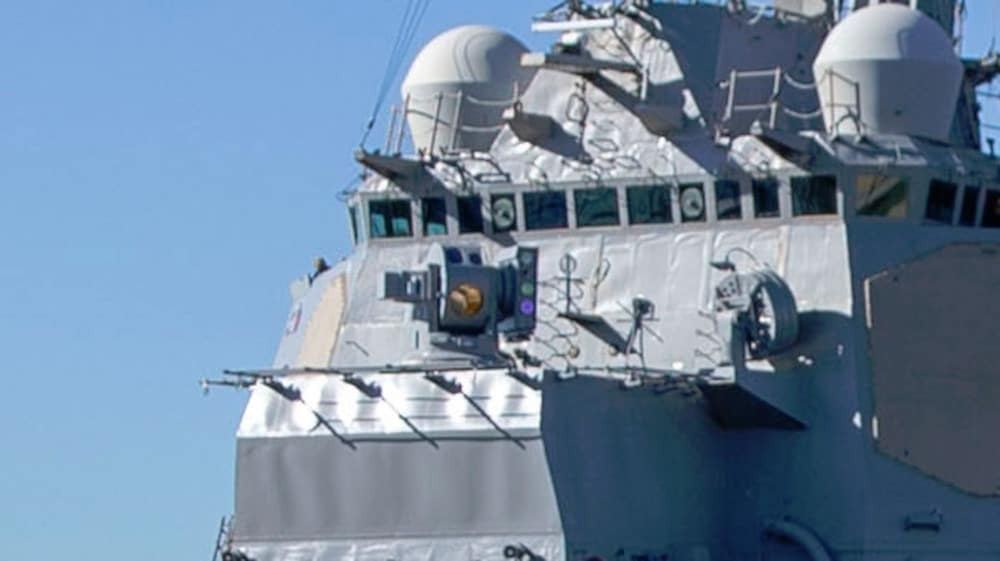
The weapon system responsible is HELIOS (High Energy Laser with Integrated Optical-dazzler and Surveillance), also known as Mk 5 Mod 0 HELIOS. It is a 60 kilowatt-class laser developed by Lockheed Martin, aimed at defeating drones, fast attack boats, and missile threats. The 60 kW specification indicates a scalable laser output rather than a fixed power level.
HELIOS is designed for dual tactical modes. The “soft-kill” option uses an optical dazzler that impairs or blinds enemy sensors without physically damaging targets. In contrast, the “hard-kill” mode applies continuous laser energy to inflict structural damage on hostile threats.
The system’s modular design supports expansion up to 120 kW by adding power and fiber-optic modules. Besides weapon functions, HELIOS features long-range surveillance and intelligence capabilities (ISR), reflected in its full name, blending laser engagement with target detection.
Impact of Aegis integration on laser operations
What distinguishes HELIOS is its full integration with the Aegis Combat System. Rather than operating independently, HELIOS utilizes the ship’s radar and fire-control data to detect, track, and engage targets. This contrasts with other systems like ODIN, deployed on several destroyers as a dazzler without destructive capability.
HELIOS not only offers hard-kill and soft-kill options but also acts as an advanced sensor providing precise targeting data, addressing the complex problem of detecting and neutralizing swarm drones efficiently.
From a logistical perspective, laser weapons don’t require reloading like missiles but depend heavily on the ship’s electrical power and cooling systems. This reliance allows multiple successive firings constrained primarily by the vessel's power management capacity.
Challenges linked to deploying laser weapons at sea
Despite the significant power onboard a destroyer, subsystems compete for limited electrical output. The newer Flight III Arleigh Burke-class ships demand more energy for enhanced radars like the AN/SPY-6, tightening available margins for laser operations. Rear Admiral Ronald Boxall noted that balancing power will require “very aggressive power management” or removal of some systems.
The HELIOS program has benefited from substantial funding, including a $150 million contract awarded in 2018 to develop high-energy lasers for neutralizing drones, fast-attack vessels, and anti-ship missiles. One prototype was designated for land testing, and one was slated for installation on a Flight IIA destroyer. The USS Preble’s initial HELIOS setup was publicly announced in 2019, underscoring the incremental progression leading to the 2025 sea trial.
The weapon’s effective reach is cautiously described, with multiple shots possible up to approximately 6 miles (9.66 kilometers). Meanwhile, higher-power lasers ranging from 150 to 300 kW are under development to counter larger threats such as anti-ship cruise missiles.
Ultimately, this story isn’t simply about the USS Preble firing a laser. It’s about a Navy-operated, at-sea demonstration fully incorporating the weapon into the ship’s combat system, with publicly released corporate documentation confirming the milestone. USS Preble remains the pioneering platform equipped with HELIOS since 2019.
- Categories:
- News










0 comments
Sign in to Comment