
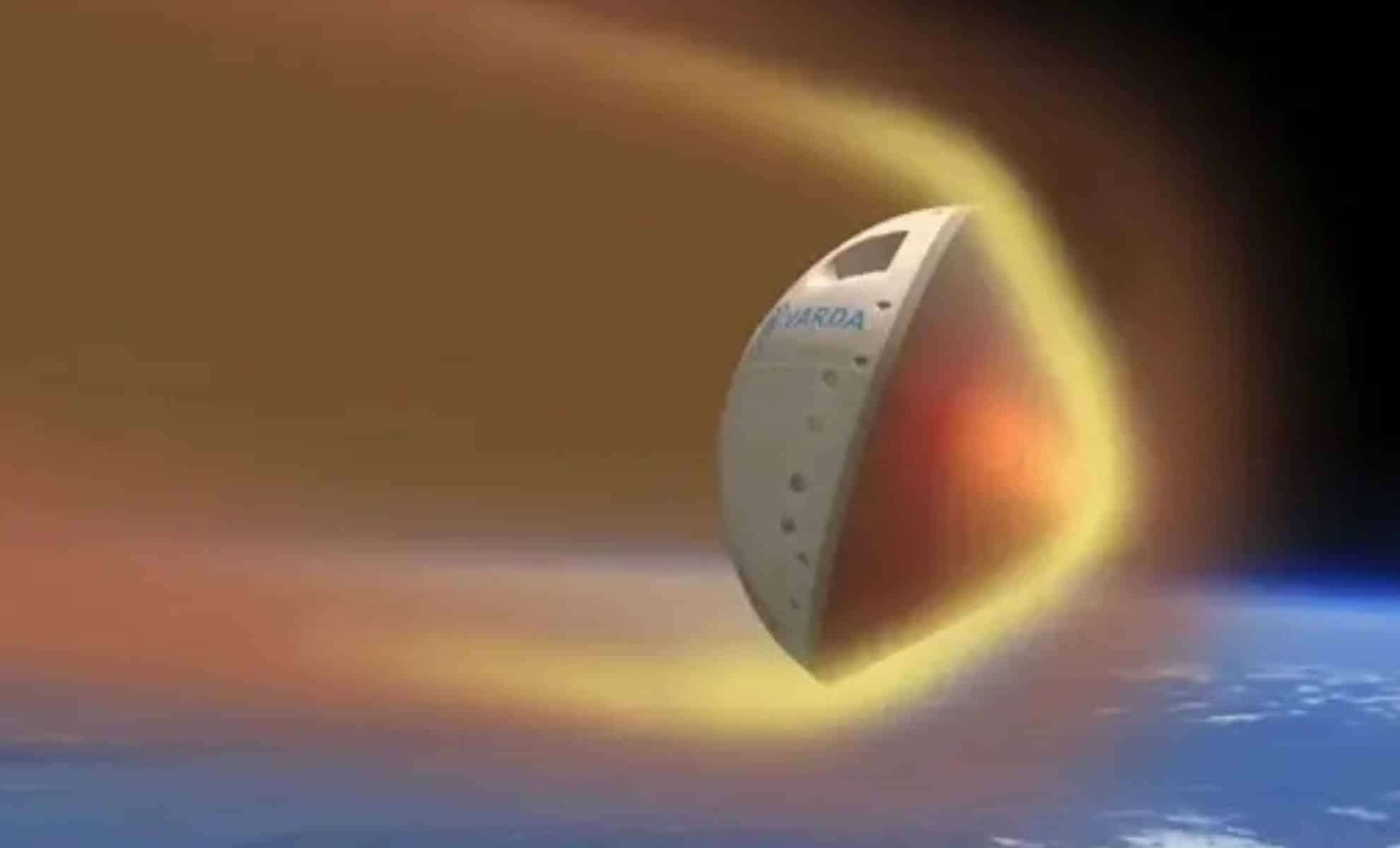
Hypersonic travel is advancing rapidly as Varda Space Industries teams up with the U.S. Air Force to test groundbreaking reentry technology at velocities beyond Mach 25. Their latest orbital payload, W-3, was deployed on a Rocket Lab Pioneer satellite during SpaceX’s Transporter-13 rideshare mission. In the weeks ahead, this capsule will reenter Earth’s atmosphere, challenging endurance to extreme heat, speed, and aerodynamic stress.
This trial is a key component of the Prometheus program, an initiative by the Air Force Research Laboratory (AFRL) focused on expediting innovations in hypersonic and reentry science. The W-3 capsule is set to touch down at South Australia’s Koonibba Test Range, where researchers will investigate how advanced materials and instruments perform under intense hypersonic conditions. Initial details of this project were shared by Interesting Engineering.
Ahead of the Curve: Testing Reentry at Mach 25
A centerpiece of W-3’s mission is a cutting-edge Inertial Measurement Unit (IMU), created by the U.S. Air Force in partnership with Innovative Scientific Solutions Incorporated (ISSI). IMUs are essential in aerospace for detecting motion, position, and velocity. While everyday devices like smartphones contain IMUs, the one aboard this capsule is tailored to operate under extreme velocity and environmental conditions.

During descent, the capsule will travel faster than 25 times the speed of sound, capturing data that will enhance hypersonic navigation systems crucial for future space missions, missile technology, and reentry vehicles.
As Dr. Steve NeVille, senior scientist at ISSI, explains:
“The need for robust, plug-and-play IMU technology is a growing capability area that will significantly advance the current state-of-the-art for domain awareness and control of future systems.”
This experiment signifies a step forward in perfecting reusable hypersonic spacecraft capable of enduring severe aerodynamic pressure and thermal load during atmospheric reentry.
Transforming Space Manufacturing and Military Testing
Established by former SpaceX engineer Will Bruey and investor Delian Asparouhov, Varda Space Industries is innovating how space tech is developed. Their vision is to normalize in-orbit manufacturing and hypersonic trials by utilizing orbital platforms that accelerate progress.
The company’s inaugural payload, W-1, launched in June 2023 and was hailed as the planet’s first space factory. Varda focuses on creating materials in microgravity, such as advanced fiber optics, drugs, and semiconductors, which benefit from space’s unique environment for quality and performance.
Simultaneously, Varda collaborates with the U.S. military, developing cost-efficient hypersonic testbeds. Through frequent reentry trials at hypersonic speeds, the company aids the Air Force in advancing guidance, thermal protection, and materials technology.
Brandi Sippel, Varda’s Vice President for Mission Management, highlights their bold future vision:
“High-cadence, routine operations is our goal. We are working to make reentry as commonplace as launch.”
Significance of Hypersonic Reentry Technology
Deploying and retrieving vehicles at extreme speeds opens up possibilities across various domains, including:
- Defense: Enabling agile, high-speed missile systems and advanced tactical platforms.
- Deep Space Exploration: Ensuring astronauts and cargo safely return from Mars and other distant missions with improved heat shielding.
- Commercial Space: Accelerating the timeline and reducing costs of orbital and lunar travel through faster and efficient reentry technologies.
By advancing aerodynamic and thermal design for hypersonic flight, Varda and the U.S. Air Force are paving the way for transformative progress in aerospace and defense sectors.
- Categories:
- News








0 comments
Sign in to Comment