
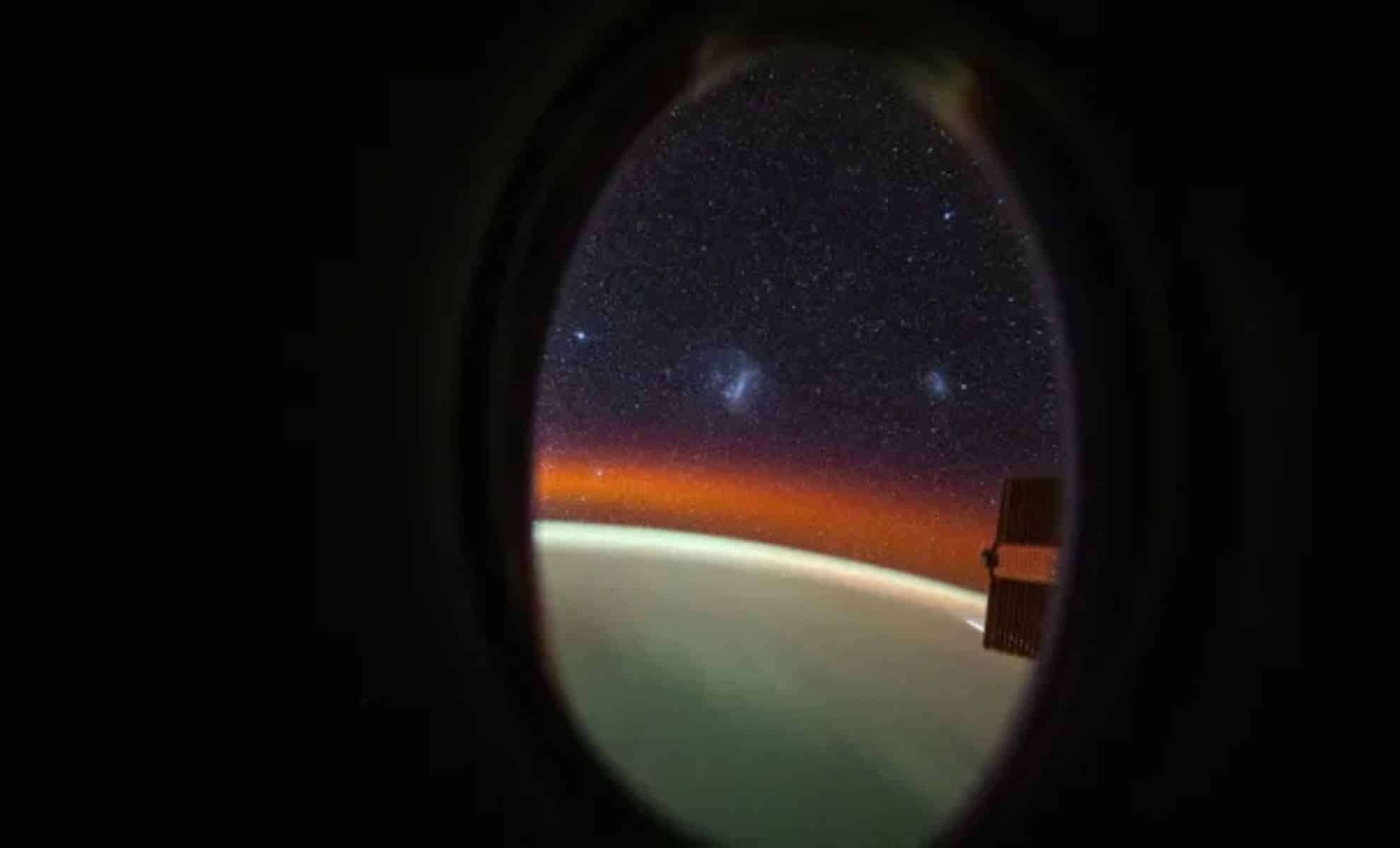
NASA astronaut Don Pettit recently snapped a dazzling long-exposure photo featuring two dwarf galaxies, the Large Magellanic Cloud and the Small Magellanic Cloud, through the window of a SpaceX Crew Dragon capsule. Released in December 2024, this exceptional image offers an extraordinary glimpse of these galaxies, situated roughly 160,000 and 200,000 light-years from Earth. Typically only observable from the Southern Hemisphere, Pettit’s image provides a rare vantage point, highlighting the intricate beauty of these distant galaxies.
Magellanic Clouds: Nearby Galaxies with a Stellar Story
The Large Magellanic Cloud (LMC) and Small Magellanic Cloud (SMC) rank among the closest galactic neighbors to our Milky Way. Positioned approximately 160,000 and 200,000 light-years away, these galaxies belong to the Local Group—a collection of more than 50 galaxies bound by gravity. Together with the Milky Way and other small galaxies, they form a vast system moving synchronously through the cosmos.
These Magellanic Clouds are especially intriguing because they are satellite galaxies orbiting our Milky Way. Their irregular and often distorted shapes are the results of gravitational interactions with our galaxy. Unlike the symmetrical spiral arms of the Milky Way, these galaxies have endured turbulent histories shaped by their ongoing cosmic dance around our home galaxy.

Astronomers also find the Magellanic Clouds fascinating due to their rich astronomical activity. The LMC is famously the location of supernova SN 1987A, the brightest supernova visible to the naked eye in recent history. This 1987 stellar explosion provided critical insights into the end phases of massive stars. More recently, the discovery of the enormous star WOH G64 in the LMC, which is about 1,500 times larger than the Sun and approaching a cataclysmic explosion, underscores the galaxy’s dynamic nature.
Don Pettit’s Space Photography: Revealing the Universe’s Wonders
Don Pettit’s space photography transcends mere imagery, serving as a compelling link between space science and the public. At 69 years old, Pettit is NASA’s oldest active astronaut, with over 370 days spent in space across four missions. He is recognized for his captivating photos, from star trails and SpaceX Starlink satellites to nighttime views of Las Vegas. His expertise in long-exposure photography captures the universe’s subtle details, bringing cosmic phenomena into vivid focus.
In his latest mission aboard the SpaceX Crew Dragon capsule, Pettit utilized his unique orbital viewpoint to photograph the Magellanic Clouds, a perspective unattainable from Earth’s surface. Long-exposure techniques allow him to unveil the delicate structures of faraway galaxies and stars. This particular image highlights the progress in space photography and emphasizes the critical role astronauts play in enhancing our cosmic knowledge.
Pettit’s captivating long-exposure images deepen public appreciation for the cosmos and highlight humanity’s quest to understand the universe. His photos document both the dramatic and serene aspects of outer space, reminding us of the vast scale of the cosmos and the value of exploration.
Looking Ahead: Space Exploration and Discovery
The image of the Magellanic Clouds captured by Pettit symbolizes the expanding role of space exploration in advancing science and engaging society. As operations aboard the International Space Station continue, combined with private sector innovations from companies like SpaceX, astronauts such as Pettit are pivotal in changing how we view the cosmos. Their images inspire awe and encourage ongoing support for space research.
Future missions promise even more awe-inspiring observations and scientific breakthroughs about galaxies, stars, and the vast universe. Whether through astronaut photography aboard orbiting stations or data from next-generation telescopes, the Magellanic Clouds and other celestial marvels will remain central to cosmic exploration. Pettit’s work demonstrates that human creativity and presence remain essential to unlocking the universe’s secrets even as technology progresses.
- Categories:
- Astronomy ,
- News ,
- Nasa






0 comments
Sign in to Comment