
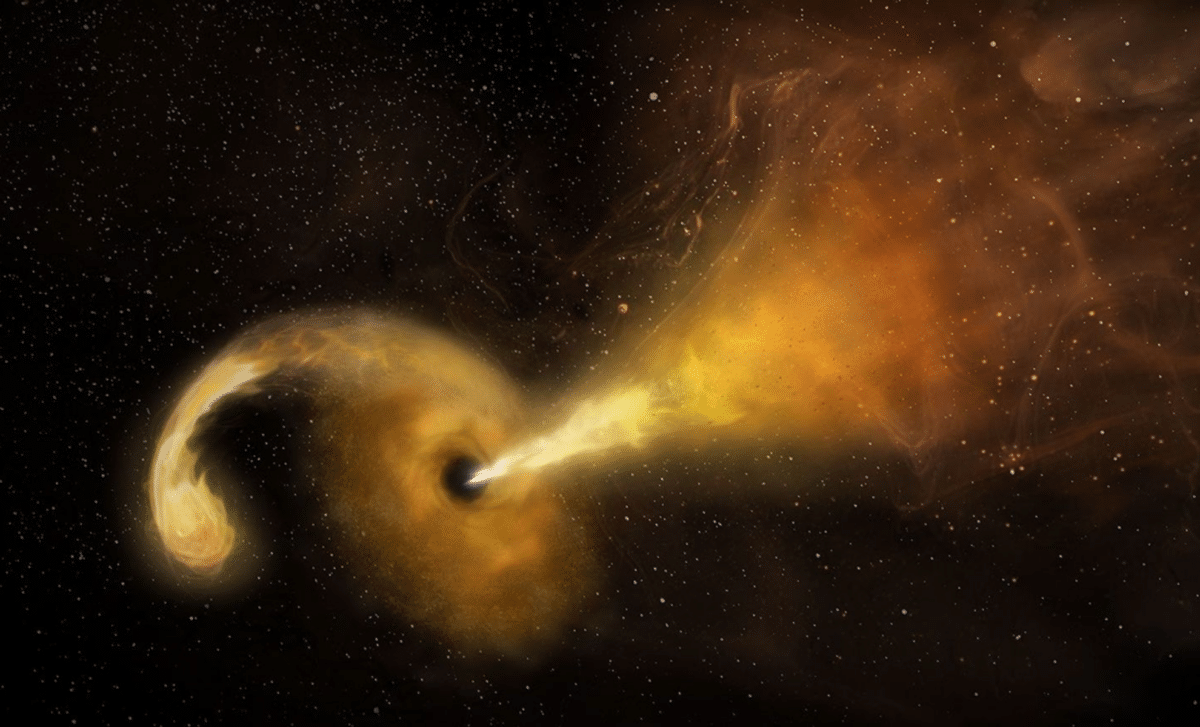
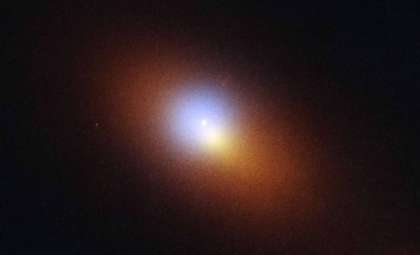
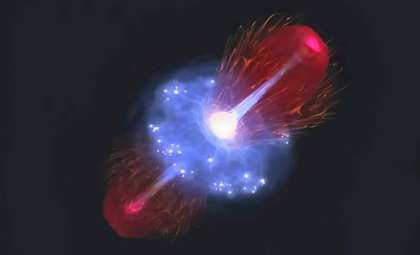
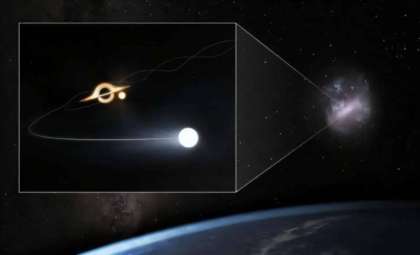
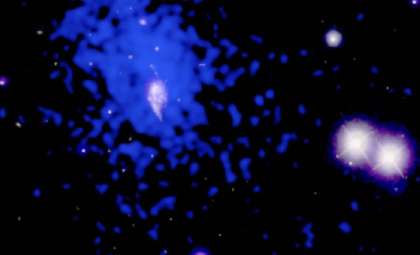
Astronomers have uncovered one of the most definitive signs yet of a supermassive black hole drifting through space after it tore apart a star far from the center of its galaxy. This breakthrough, enabled by NASA’s Swift Observatory and a global array of telescopes, confirms that giant black holes can move throughout galaxies rather than staying fixed in their cores. The results, published in The Astrophysical Journal Letters, introduce a groundbreaking approach to locating these otherwise hidden cosmic behemoths.
An Uncommon Cosmic Event Reveals a Hidden Titan
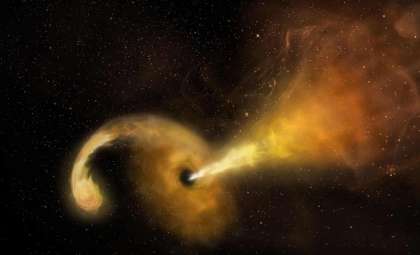
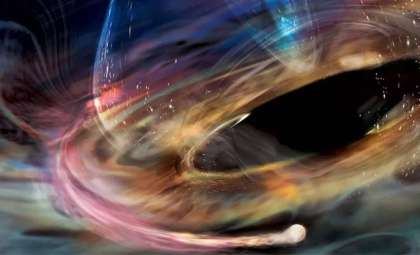
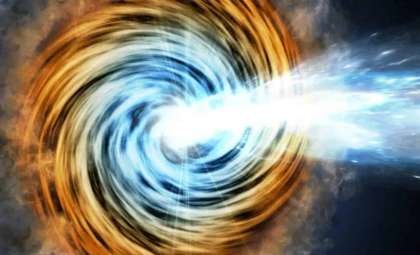
Scientists have long theorized that nearly every large galaxy contains a supermassive black hole, with mass millions or billions of times that of the Sun, typically stationed at the galaxy’s center. Detecting one outside this typical environment has been challenging because inactive black holes produce minimal light. This changed when astronomers spotted a dramatic tidal disruption event, where a star is pulled apart by the formidable gravitational forces of a black hole.
This intense burst of light briefly reveals the presence of an otherwise unseen black hole. What made this occurrence unique was its location well away from the galactic nucleus, hinting at the identification of a rare wandering supermassive black hole. Researcher Robert Stein commented,

“We were looking for these star-shredding events as a way to find otherwise invisible supermassive black holes wandering away from the galactic cores where they usually reside,” said Robert Stein, a research fellow at The University of Maryland, College Park and NASA’s Goddard Space Flight Center in Greenbelt, Maryland. “With this discovery, which is one of just a couple that have been confirmed so far, we’ve validated a new technique and can use it to hunt for more.”
AI Identifies the Rare Stellar Disruption
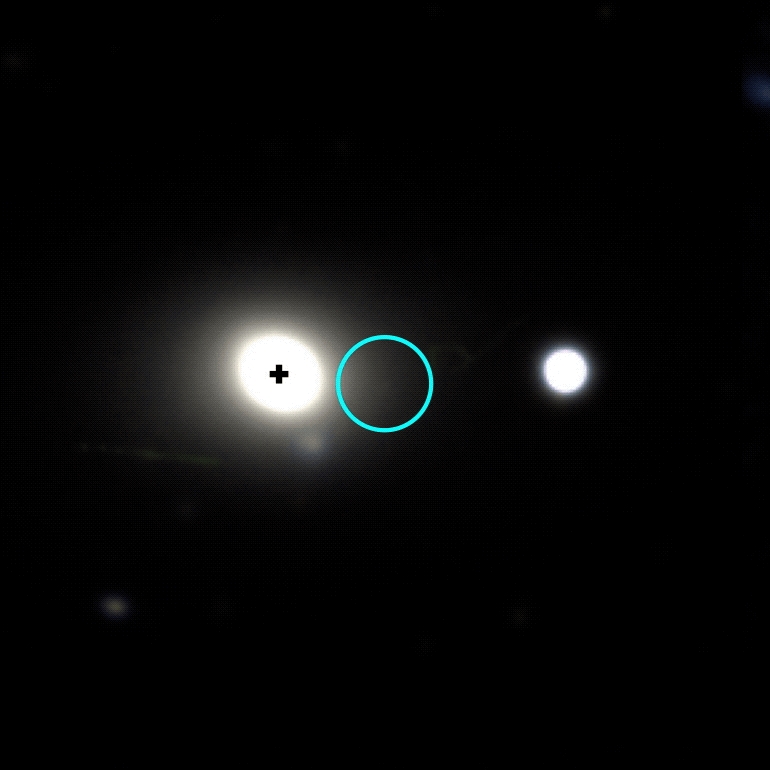
This discovery was sparked by data from the Zwicky Transient Facility (ZTF), which monitors the sky nightly for sudden cosmic changes. With about 500,000 transient flashes detected each night, manually examining each is impossible. To address this, scientists applied an advanced artificial intelligence designed to spot patterns linked to rare cosmic phenomena. Among hundreds of thousands of nightly detections, the AI singled out an unusual flare resembling a tidal disruption event despite its remote galactic position.
The flare’s off-center position drew researchers to conduct further multi-wavelength observations. Data collected across optical, ultraviolet, X-ray, and spectroscopic channels strengthened the conclusion that the light was caused by a star being shredded by a massive black hole, rather than any other cosmic event. Stein emphasized the AI’s key role, stating,
“Out of the half million flashes ZTF detects each night, our new artificial intelligence algorithm automatically recognized a flare that looked a lot like a tidal disruption event, despite its unusual location in the outskirts of a galaxy,” Stein said.
The detailed findings are available in The Astrophysical Journal Letters, where the researchers describe the extensive evidence supporting their conclusions.
Confirmations from Multiple Instruments Establish the Discovery
Pinpointing such a transient flash is only the initial step in demonstrating the presence of a roaming supermassive black hole. Scientists relied on data from various independent observatories to exclude other possibilities like supernovae or active galactic nuclei. Spectral analysis proved especially critical by revealing chemical signatures typical of a star being torn apart by gravitational forces. Observations from NASA’s Swift together with terrestrial telescopes generated a comprehensive picture spanning multiple wavelengths.
The combined evidence confirmed that the flare exhibited all characteristics of a tidal disruption event, while lacking traits of other phenomena, enabling researchers to confidently classify it as a rare instance of a supermassive black hole outside a galaxy’s core actively devouring a star. Jonathan Carney, who captured the first supporting spectra, explained,
“The combination of all this data helped us rule out other explanations and confidently say it’s a tidal disruption event, despite its strange location,” said Jonathan Carney, a doctoral student at the University of North Carolina at Chapel Hill, who took the first spectra that supported the flare’s interpretation as a tidal disruption event.
Hunting for the Universe’s Hidden Black Holes Enters a New Era
While only a few wandering supermassive black holes have been identified so far, astronomers suspect many more exist throughout the cosmos. Some may have been displaced during galactic collisions, while others could be remnants from ancient interactions leaving them adrift in galactic outskirts. Understanding how common these drifting giants are could revise theories on galaxy development, black hole growth, and cosmic merger histories. Stein stressed the significance of this question, saying,
“Further discoveries could reveal the origin of this apparent ‘orphan’ black hole,” Stein said. “The key science question we want to answer is: How common are wandering black holes?” Future observatories promise to accelerate this search dramatically.
The soon-to-be-launched Vera C. Rubin Observatory will scan vast sky regions with unmatched sensitivity, while NASA’s Nancy Grace Roman Space Telescope will extend this monitoring deeper into the universe’s history. Carney noted,
“Rubin’s wide, deep surveys will reveal a much larger sample of tidal disruption events than current observatories are capable of collecting, including ones that are off-center,” Carney said. “And Roman’s space-based surveys will extend the current search zone by seeing ones that are farther away, looking back through 9 billion years of cosmic history.”
These cutting-edge instruments could transform sporadic detections into a thriving new discipline of black hole research, shedding light on how many massive black holes wander the vastness of space.
- Categories:
- News

0 comments
Sign in to Comment