
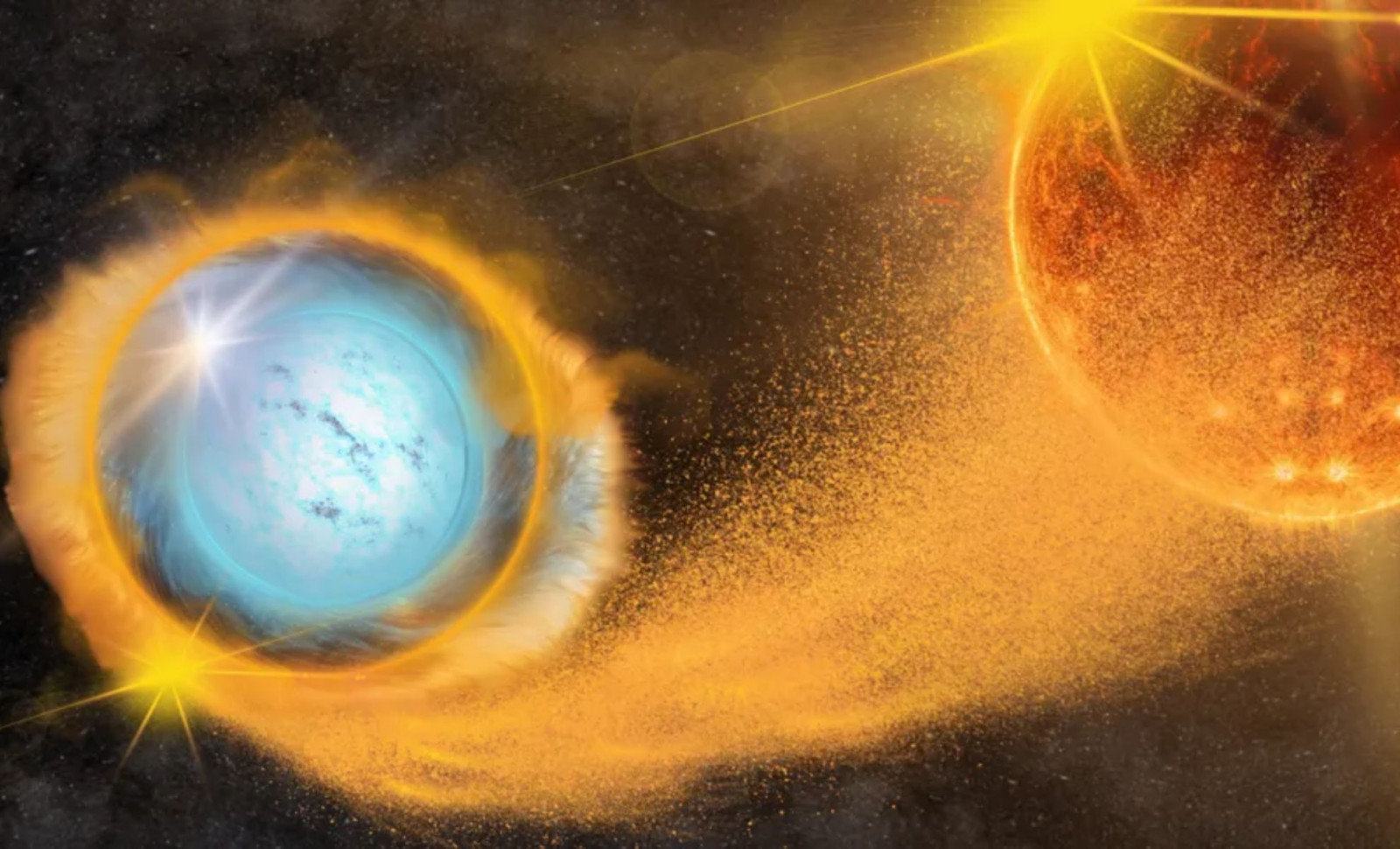
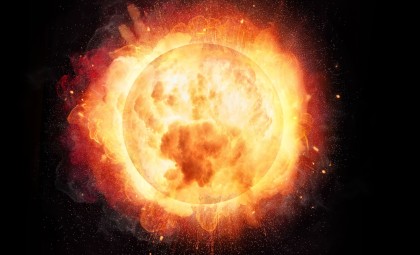
Astronomers have detected strange gas clumps racing at speeds reaching 20 million miles per hour originating from V445 Puppis, the Milky Way’s only confirmed helium nova. This discovery sheds light on the rare binary stars behind the explosion and highlights a new enigma about these rapid gas formations.
After over two decades of monitoring, during which dense dust clouds from the eruption masked the central stars, the clearing debris enabled scientists to reveal the system as a white dwarf accreting matter from an uncommon helium-star companion.
Typical novae occur when a white dwarf draws hydrogen-rich material from a neighboring star, triggering a thermonuclear blast. V445 Puppis differs because its erupted material is helium-rich and almost devoid of hydrogen, representing a rare example of a hydrogen-deficient stellar eruption.

The Royal Astronomical Society reported that a team led by John Mills from the University of Warwick has definitively identified the binary components causing this unique helium nova. Their findings were unveiled at the society’s National Astronomy Meeting in Birmingham.
Dust Obscures Then Reveals a Rare Stellar Phenomenon
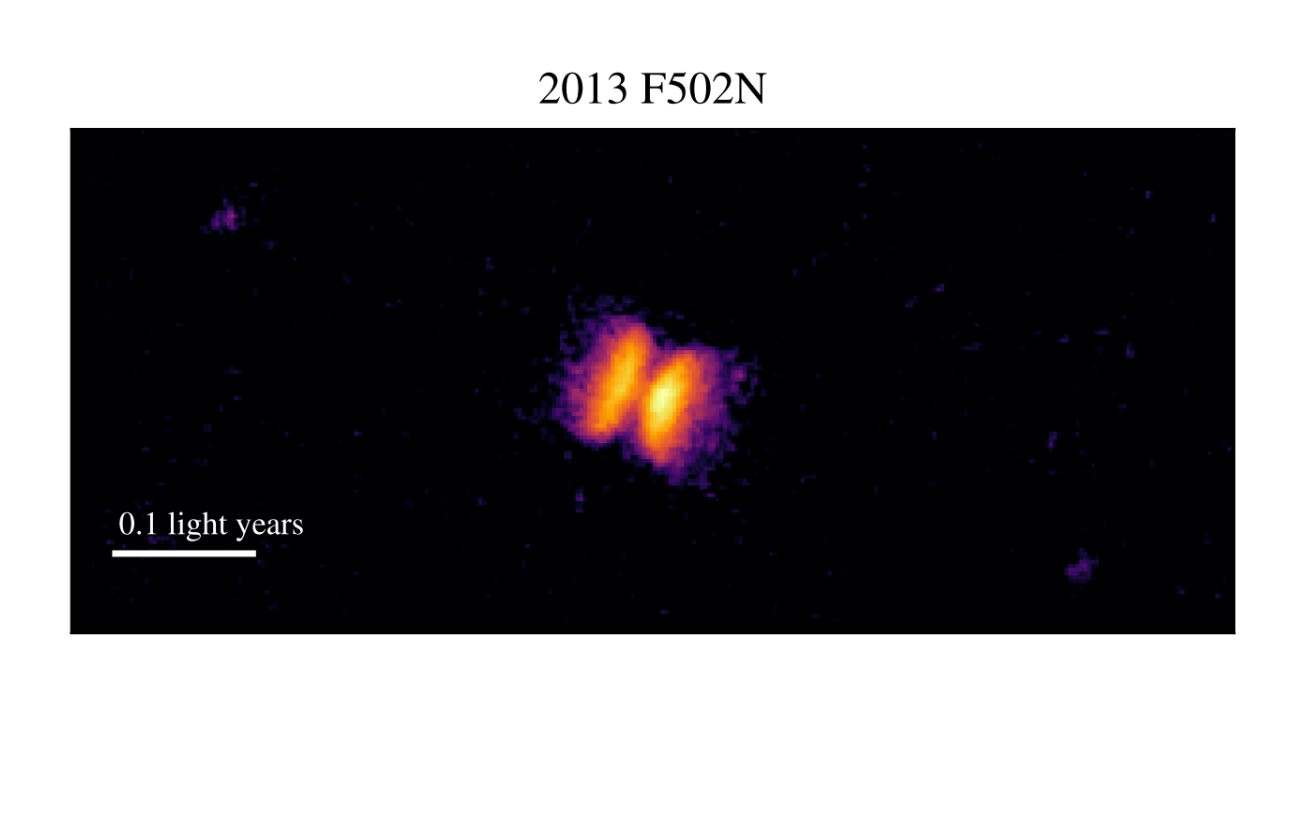
The V445 Puppis event, which commenced in late 2000, unleashed a wide bipolar stream of material into space. The explosion generated a thick dust disk that obscured direct view of the central stars.
For more than 20 years, scientists tracked the expanding cloud but couldn’t identify the exact nature of the hidden stellar system. As the dust thinned, the binary pair became observable, allowing a detailed study of the unusual nova’s source.
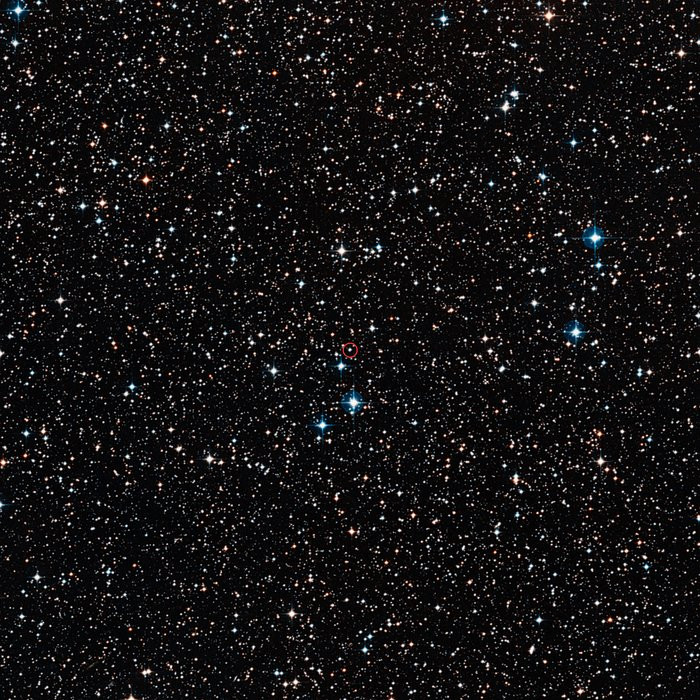
The research reveals the system comprises a white dwarf pulling material from a helium star that has lost its hydrogen outer layers, likely due to prior interactions with its companion, resulting in an uncommon helium-rich stellar remnant.
Data from several observatories were combined, featuring infrared readings from the European Southern Observatory’s Very Large Telescope, images from the Hubble Space Telescope, spectra from the Southern African Large Telescope, and NASA’s TESS mission observations. The collective results provide the first robust confirmation of the binary stars involved in V445 Puppis.
“V445 Puppis has long stood out among novae for its complete lack of hydrogen. How could such an event be completely devoid of the most abundant element in the universe?” said John Mills, a researcher and doctoral student at the University of Warwick.
Rapid Gas Clumps Present Another Puzzle
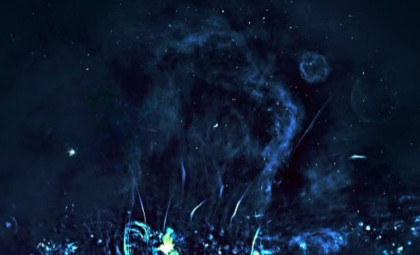
Deep within the expanding material from V445 Puppis, astronomers observed striking gas clumps moving at remarkable speeds. These “bullets” surge at up to 20 million miles per hour and may be composed of oxygen-rich gas.
Their origin is still unclear. Such structures have not been documented in other nova events, marking them as a distinctive characteristic of this explosion.
“The origin of these ‘bullets’ is a mystery,” Mills said. “We suspect that these originated post-outburst, but ‘bullets’ of this kind have not been observed in any other nova.”
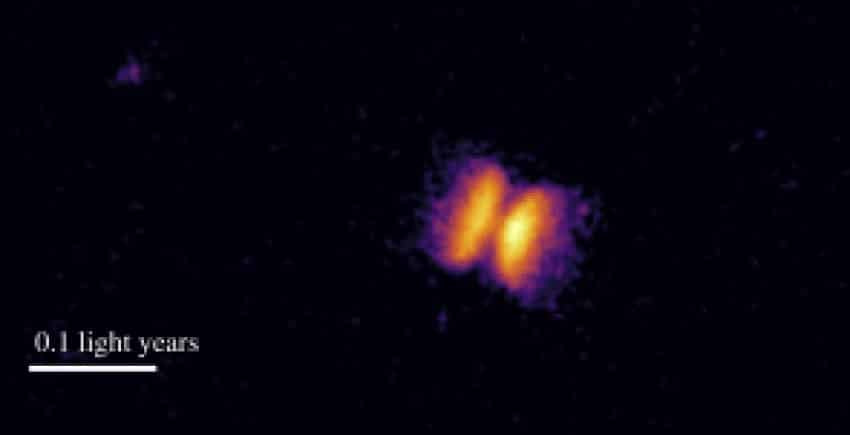
These gas clumps appear at both ends of the nova’s bipolar outflow. Their positions imply a connection to the explosion's aftermath, though their formation mechanism remains unsolved.
This adds a further unique aspect to V445 Puppis, already unusual due to its lack of hydrogen. Mills remarked that the hydrogen deficiency has long challenged explanations, given hydrogen’s status as the universe’s most abundant element.
An Exceptional Site to Explore Stellar Detonations
New data also shows the binary system remains active, with matter still flowing from the helium star to the white dwarf. The stars orbit each other every 3.7 days, roughly twice the period previously thought.
Helium stars are extremely rare, with only a few thousand estimated to exist among the hundreds of billions in our galaxy. This makes V445 Puppis a crucial subject for understanding helium-rich interactions around white dwarfs.
Mills said repeated helium novae like this could be a pathway leading to type Ia supernovae, which rank among the universe’s brightest explosions and are vital as standard candles for measuring galactic distances.
“I look forward to seeing how this result may help us uncover what powers other similar hydrogen-poor astronomical explosions, such as the famous Type Ia supernovae,” he added.
While the exact mechanism driving these explosions is yet to be fully understood, V445 Puppis offers a rare glimpse into a hydrogen-deficient stellar system and the dynamic processes surrounding one of the galaxy’s most extraordinary novae.
- Categories:
- Science







0 comments
Sign in to Comment