
For many years, extraterrestrial intelligence research has concentrated on a narrow radio frequency band famously called the “water hole.” However, recent findings indicate that a broader range of radio frequencies could hold promise, and previous SETI investigations may have surveyed far more stars than originally estimated.
Efforts to find intelligent alien life extend beyond optical telescopes, often focusing on detecting artificial radio signals signaling advanced technology. Traditionally, these searches have zeroed in on frequencies between 1.42 and 1.66 GHz, where natural hydrogen and hydroxyl emissions create a relatively quiet zone ideal for spotting potential technosignatures.
Emerging research challenges the notion that this particular band is the only useful spectrum for SETI. As reported by the Royal Astronomical Society, Louisa Mason, a doctoral student at the University of Manchester, has conducted the inaugural SETI investigation utilizing archival data from the Atacama Large Millimeter/submillimeter Array (ALMA). She explored high-frequency radio bands previously overlooked in the search for extraterrestrial signals.

Expanding the Search Beyond Traditional Frequencies
Rather than applying for fresh telescope observations, Louisa Mason extracted and analyzed ALMA’s archived data originally gathered for other astronomical studies. Her objective was to detect narrowband radio emissions that are often viewed as promising technosignatures due to their low likelihood of being generated through natural cosmic phenomena.
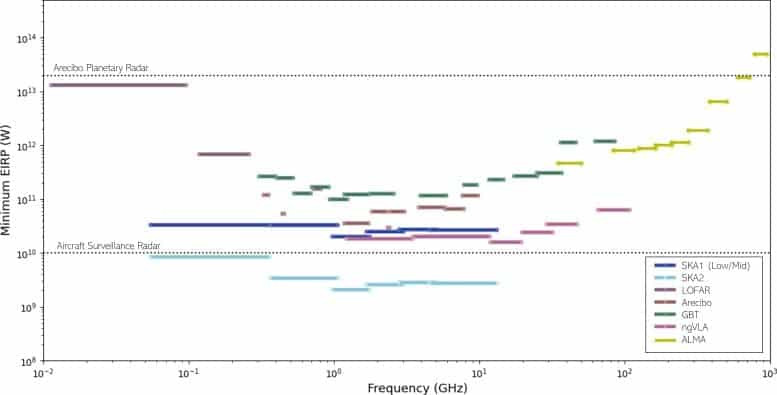
The survey targeted two narrow frequency segments in ALMA Band 3. According to the Royal Astronomical Society, the investigation did not find any signals meeting the detection criteria. Nonetheless, this outcome was anticipated since the study aimed to evaluate the feasibility of employing high-frequency radio bands for SETI rather than to confirm or disprove alien civilizations.
“For decades, SETI searches have concentrated on a relatively small part of the radio spectrum. We wanted to ask what might happen if we looked somewhere very different,” Mason said. She added that the millimeter and submillimeter radio bands remain “almost completely unexplored” for SETI.
More Stars in a Single Field of View Than Previously Realized
The research also explored the concept of stellar bycatch, which refers to the additional stars observed inadvertently when a radio telescope targets a specific object.
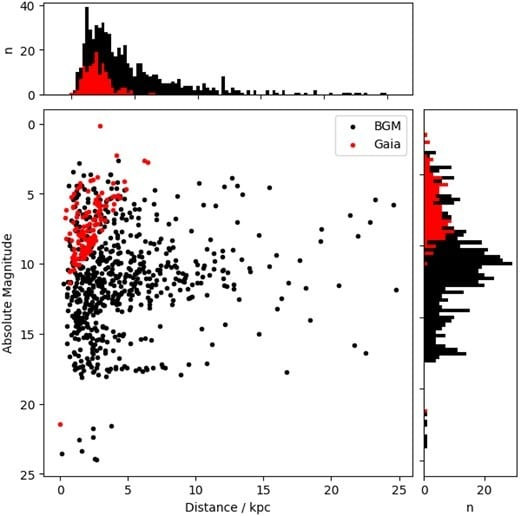
Traditionally, SETI teams have based their stellar counts on the Gaia star catalog. However, Mason applied the Besançon Galactic Model, which better accounts for faint, distant, and less distinctly cataloged stars.
The contrast was dramatic. As detailed in the Monthly Notices of the Royal Astronomical Society, when this model was applied to an earlier SETI observational campaign involving 1,327 telescope pointings, the estimated number of stars covered soared from around 288,000 to over 6.1 million.
“One of the most exciting things about this work is realizing that we’ve surveyed many more stars than initially thought,” Mason said.
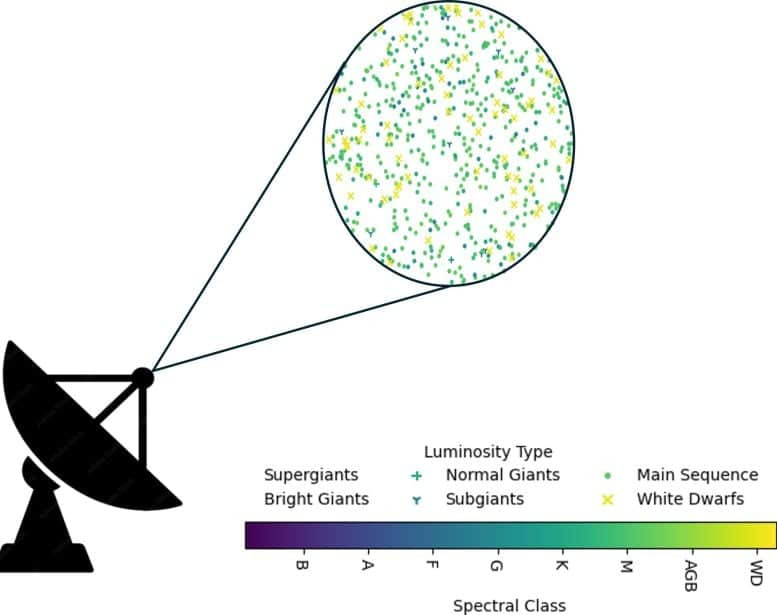
Mason also emphasized that even brief observations include a surprisingly vast and varied stellar population.
Repurposing Archived Data for Enhanced SETI Efforts
While no technosignatures emerged from the data, this research underscores an innovative path forward—better utilization of existing astronomical archives.
This approach offers the opportunity to mine previous datasets for signals that were not the primary focus when the data were first collected.
By combining archived observations with galactic population simulations, researchers can gain a more accurate estimate of the stellar coverage in earlier SETI studies. For Mason, this work highlights how SETI can extend beyond the classic “water hole” using existing high-frequency data.
“Even a very small observation can contain a huge number and diversity of stars that we might never have intended to study. By combining high-frequency observations with galactic simulations, we can better understand exactly what we’ve searched and where we should look next.”
- Categories:
- Astronomy






0 comments
Sign in to Comment