
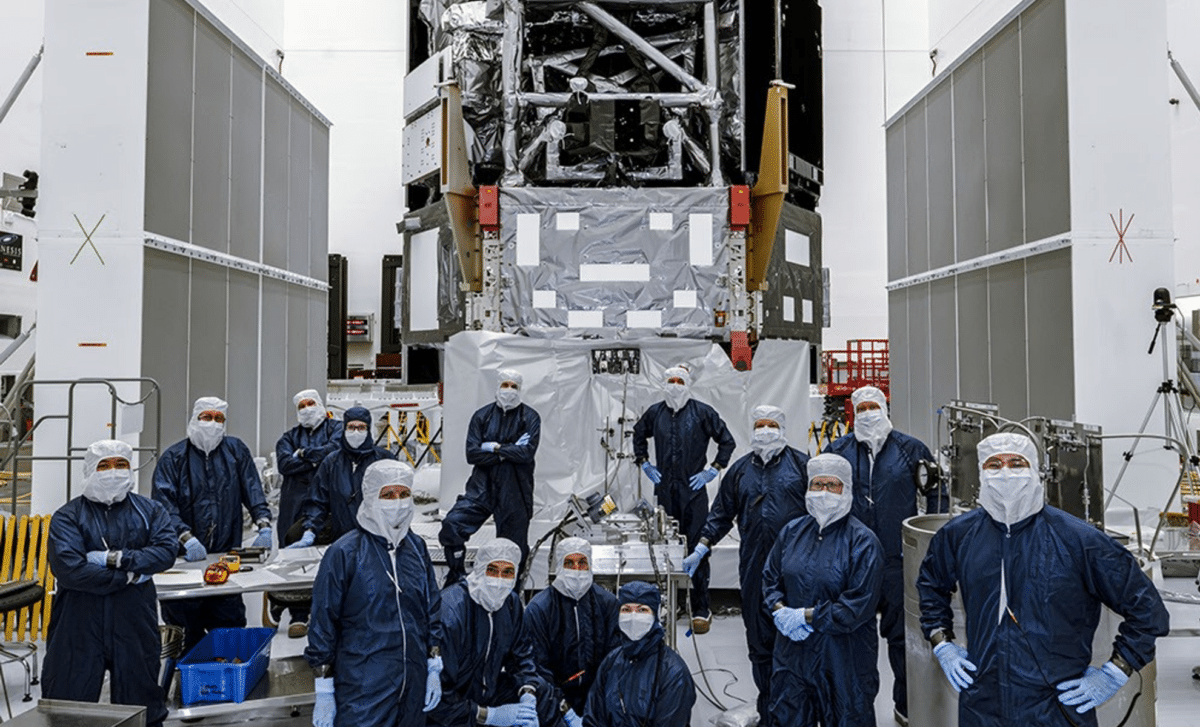
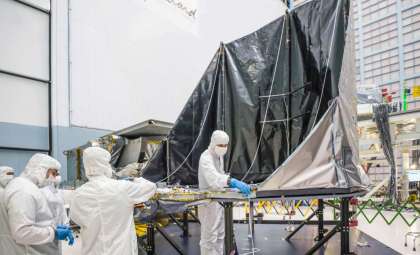
The Nancy Grace Roman Space Telescope has reached a critical stage in its pre-launch preparations after engineers successfully loaded fuel into the spacecraft, setting the stage for its anticipated late August 2026 liftoff. This crucial process represents a significant pivot from years of design and testing toward the final phases before launch. Once operational, Roman is poised to become one of the foremost astronomical observatories, enhancing our capability to explore dark energy, dark matter, distant exoplanets, and the universe’s large-scale structure.
Fueling Is One of the Most Sensitive Pre-Launch Procedures
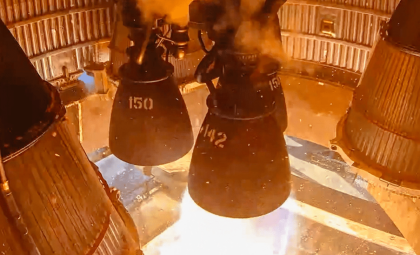
Loading propellant is among the most delicate operations carried out before launch. The fuel injected into the Roman telescope will provide the necessary propulsion for fine trajectory adjustments, orbital maintenance, and station-keeping throughout its mission lifespan.
This step transitions the spacecraft into its final flight-ready configuration. Once the hazardous fuels are onboard, stringent safety protocols restrict access to the vehicle and impact the pace of other integration tasks. Throughout the process, teams closely monitor every valve, pressure indicator, and transfer procedure to guarantee flawless propulsion system functionality.

Successfully completing this procedure without any problems highlights the high level of readiness achieved by NASA and its partners. It marks a movement beyond testing and validation, inching Roman closer to becoming a fully functional observatory in space. Subsequent steps like final inspections, attachment to launch hardware, and system readiness checks all depend on the successful completion of fueling.
NASA Announces Mission is Entering Final Launch Preparations
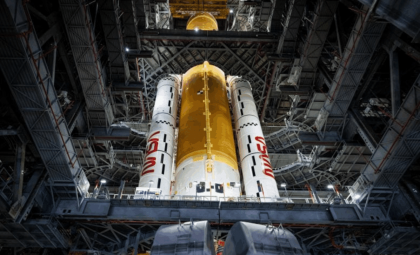
Per NASA, fueling completion is one of the last major technical hurdles before Roman’s upcoming mission. This event fits into the carefully structured operations aiming to prepare the spacecraft for its scheduled late August 2026 launch. Teams continue final processing and integration prior to attaching the telescope to its rocket.
Roman is among NASA’s key astrophysics missions, created to tackle profound questions about the universe. Its field of view is approximately 100 times wider than that of the James Webb Space Telescope for similar infrared data, allowing Roman to scan vast sky areas with unparalleled sensitivity.
This capability will empower researchers to construct expansive cosmic maps, detect thousands of exoplanets via gravitational microlensing, chart the cosmic distribution of dark matter, and enhance understanding of dark energy — the enigmatic force accelerating cosmic expansion.
A Telescope Designed to Survey the Cosmos on a Grand Scale
While the James Webb Space Telescope excels at detailed study of specific targets, Roman is engineered for sweeping sky surveys that would be impractical with narrower views. This synergy enables Roman to pinpoint interesting astronomical targets over huge regions, which Webb can then study in exquisite detail.
Scientists expect Roman to dramatically boost the known catalog of exoplanets, including those located thousands of light-years away, which are difficult to observe using other techniques. Additionally, Roman will seek out free-floating planets drifting in space without a parent star, shedding light on planetary origins and evolution.
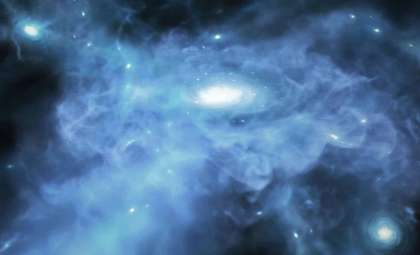
Beyond exoplanet research, Roman’s study of billions of galaxies will generate some of the most comprehensive views to date of cosmic structure across epochs. Such data could refine cosmological theories and potentially uncover new insights into the universe’s fundamental physics.
Final Focus Now on Launch Readiness
With fueling complete, Roman’s team shifts into the home stretch of launch preparations. Ongoing tasks include extensive system verifications, finishing the remaining integration steps, and confirming that all spacecraft components are fully flight-ready.
Although multiple reviews and authorizations remain before launch clearance, achieving this milestone firmly sets Roman on course for its upcoming journey. Years of collaborative engineering and scientific design are converging on a mission set to influence astronomy throughout the next decade.
Provided all final preparations proceed smoothly, the Nancy Grace Roman Space Telescope will soon depart Earth to probe some of the universe’s deepest enigmas, offering an unmatched blend of wide-field imaging, infrared sensitivity, and survey ability that promises to transform our cosmic understanding.
- Categories:
- News




0 comments
Sign in to Comment