
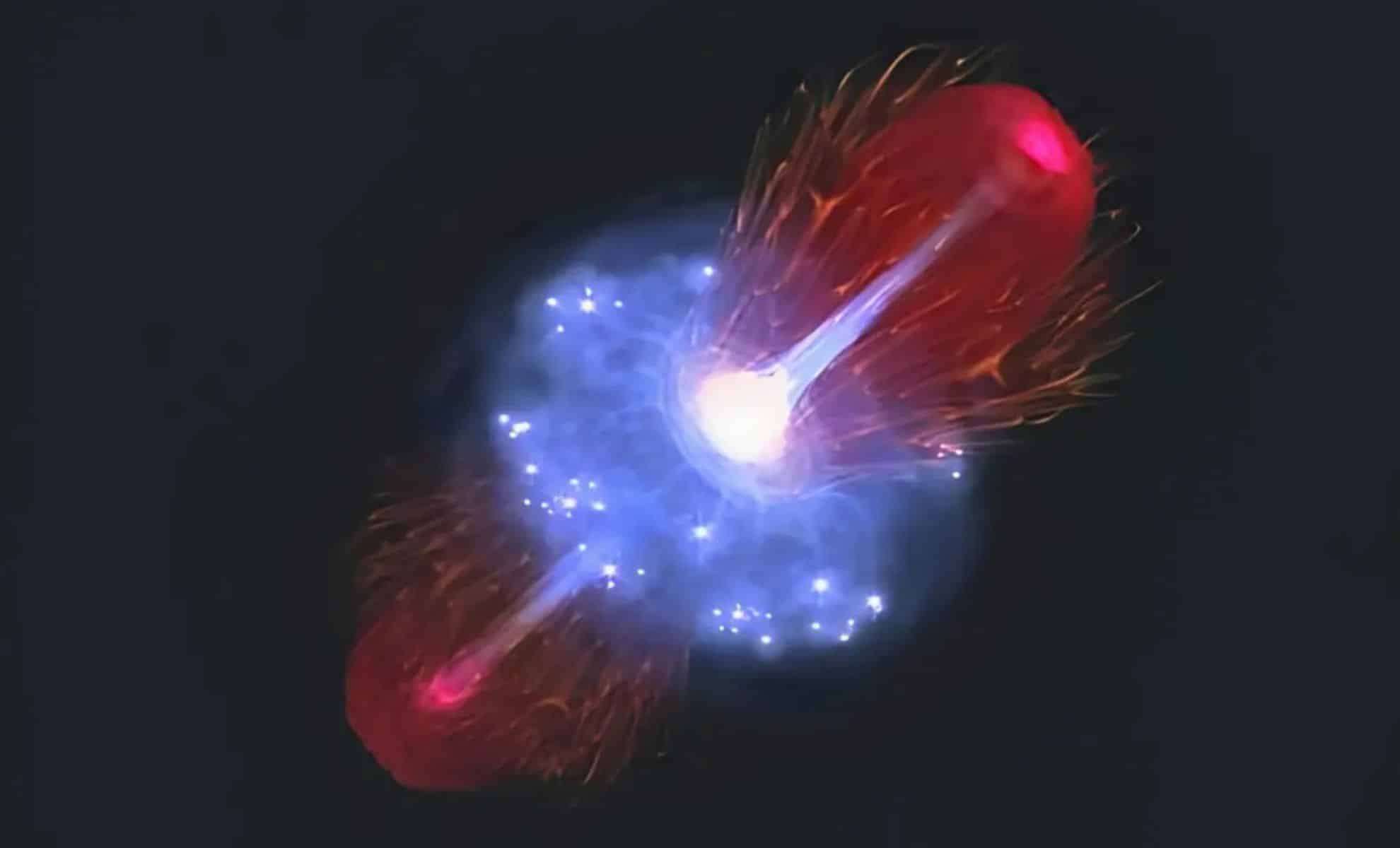
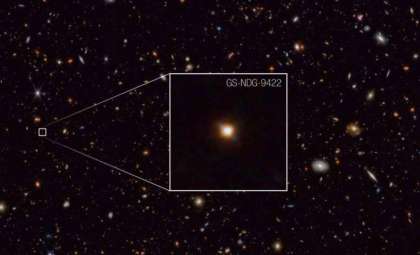
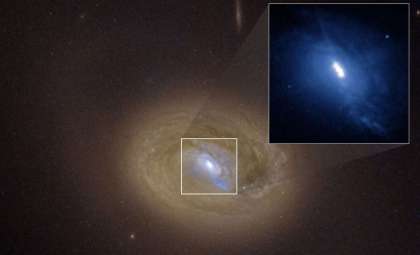
The James Webb Space Telescope (JWST) has identified a massive supermassive black hole lying dormant in the universe's infancy, providing fresh insights into how these cosmic behemoths evolve. Observed just 800 million years post-Big Bang, this black hole, weighing 400 million times the Sun’s mass, upends existing theories about black hole formation and sparks new debates about their growth phases. Its inactive condition alongside its vast size offers an uncommon look at hidden black holes during the universe’s formative era.
A Colossal Black Hole Uncovered in Rest
This remarkable black hole represents an anomaly, possessing roughly 40% of its galaxy’s total mass—a stark contrast to typical black holes, which claim only about 0.1% of their host galaxy’s weight. Despite its size, the black hole remains almost motionless, drawing in material at a pace 100 times slower than its predicted peak. This quiescence enabled astronomers to detect it under rare conditions.
“Even though the black hole is quiet, its sheer magnitude allowed us to discover it,” explained Ignas Juodžbalis from Cambridge’s Kavli Institute for Cosmology. “Its tranquil state also helped us determine the mass of its galaxy. This shows that even tiny galaxies in the early universe could contain monstrous black holes.”

This finding emphasizes JWST‘s unparalleled capacity to explore the distant cosmos. By detecting the faint emissions of surrounding matter, the telescope exposed this hidden giant, granting an unprecedented chance to study dormant black holes in detail.
Swift Mass Gain and Lengthy Quiet Phases
This discovery challenges fundamental assumptions about how black holes grow so massive so quickly. Conventional wisdom holds that supermassive black holes build up gradually by gathering gas, dust, and merging with other black holes over billions of years. Yet, finding such a massive black hole early in the cosmic timeline complicates this view.
“Black holes might be born with large masses, which could explain why JWST detects such giants in the young universe,” suggested Roberto Maiolino, also from the Kavli Institute. “Alternatively, they may undergo cycles of intense activity followed by long dormant spells.”
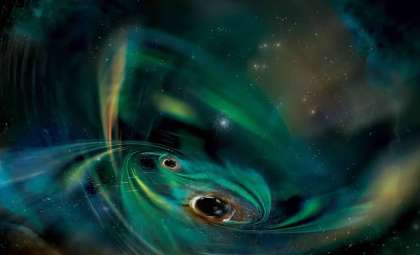
Simulations indicate that some black holes experience “super-Eddington accretion”, allowing them to ingest material faster than traditional theoretical limits. During these high-growth bursts, lasting 5 to 10 million years, black holes rapidly gain mass before entering prolonged dormancy, potentially spanning 100 million years or more.
“It may seem paradoxical, but these bursts of hyperactivity explain how dormant black holes can become so enormous by spending much of their existence in a resting state,” Maiolino elaborated. This cyclical growth model offers a new perspective on the evolution of early universe black holes.
The Significance of Dormant Black Holes
Because they emit little to no radiation, dormant black holes are difficult to spot. Unlike active black holes, which glow brightly through accreting matter, these silent giants remain almost invisible. Thanks to JWST’s remarkable sensitivity, researchers could uncover this sleeping colossus, opening a pathway to better understand these elusive cosmic objects.
“Most black holes may, in fact, be sleeping rather than feeding,” Maiolino said. “Discovering this one is just the tip of the iceberg, and many others might be lurking unseen.”
This finding hints at a vast, concealed population of dormant black holes in the early universe, potentially key to unraveling the mysteries of galaxy formation and the environments in which these black holes reside.
Broader Impact on Cosmic Evolution
The ramifications extend beyond simply this black hole’s discovery. Its immense mass and unusual quiet behavior could reshape the understanding of interactions between black holes and their galaxies. Black holes influence galaxy formation and structure through their gravity and energy output, but this case implies interactions more intricate than previously thought.
Future JWST observations aim to further explore the cycle of awakening and dormancy in black holes, deepening knowledge of how these cycles affect both black holes and their galaxies. These studies will be indispensable for piecing together the evolutionary history of these cosmic giants.
By overturning traditional theories and revealing new cosmic creatures, this breakthrough marks a pivotal advance in our quest to comprehend the universe’s earliest epochs and the colossal black holes that have shaped it for billions of years.
- Categories:
- News



0 comments
Sign in to Comment