
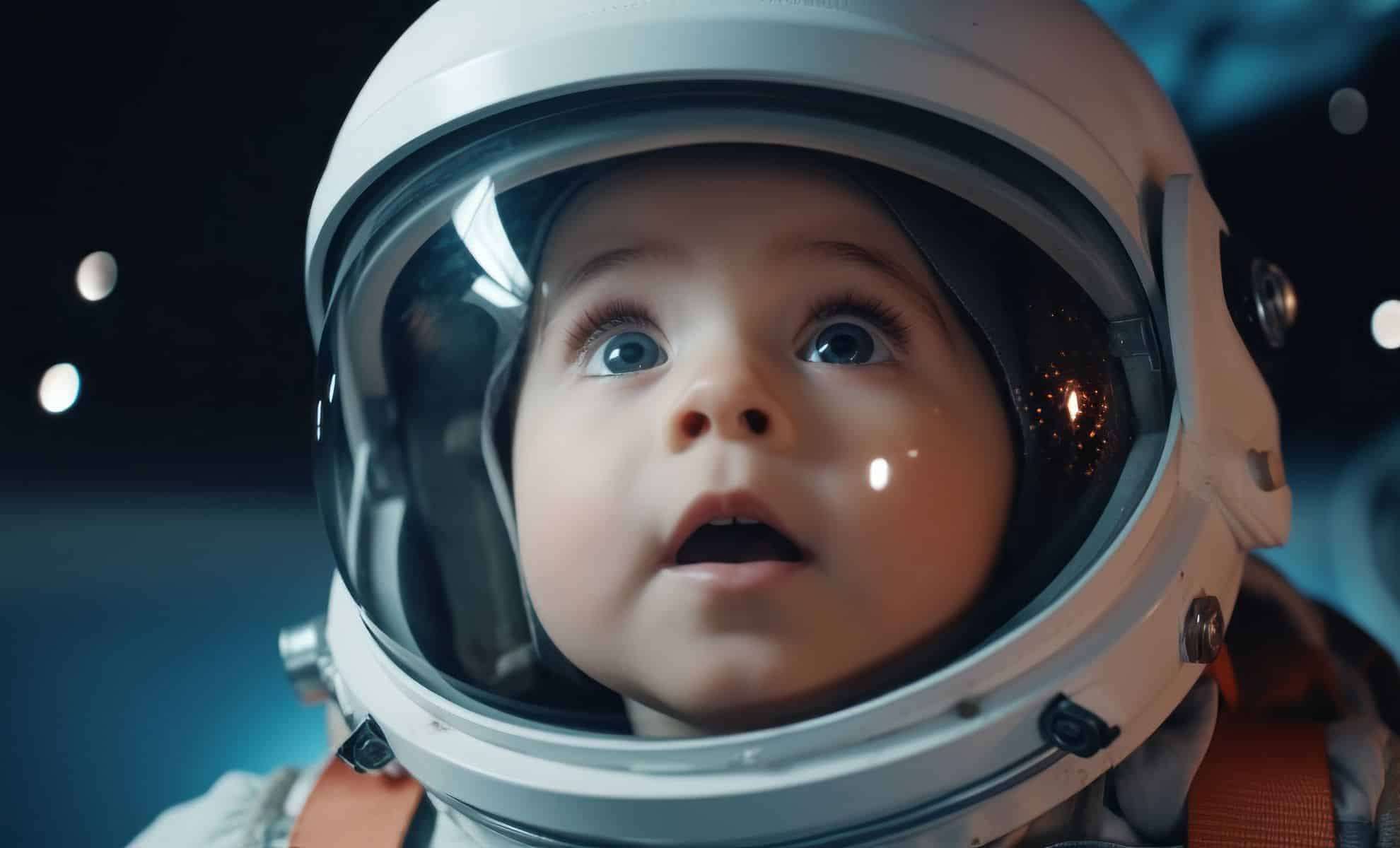
As space exploration targets Mars and distant worlds, scientists are raising critical questions about human reproduction outside our planet. Is it feasible for a child to be conceived, carried, and delivered safely in space? A recent scientific study uncovers the intricate and largely uncertain dangers linked to pregnancy and childbirth beyond Earth’s atmosphere.
The Fragile Path of Prenatal Development
Even under Earth’s conditions, pregnancy is a delicate and uncertain process. Nearly two-thirds of embryos fail to reach birth, often ending early before the pregnancy is known. These failures usually happen when an embryo does not develop correctly or cannot implant in the uterine lining.
Arun Vivian Holden, Emeritus Professor of Computational Biology at the University of Leeds, describes pregnancy as “a series of biological checkpoints” where each step's success is required for the next to occur.

When this intricate biological chain is considered in the context of space’s unique environment, new obstacles emerge. Microgravity, a common condition during space missions, may not obstruct implantation once it takes place. However, it could make intimacy and conception more challenging. After conception, sustaining pregnancy under weightless conditions seems possible in theory, but the process of giving birth in this environment remains highly uncertain.
Birthing in Microgravity Presents Major Challenges
In microgravity, fluid dynamics are drastically altered—this includes the amniotic fluid, blood, and even the newborn child. In zero gravity, fluids don’t settle, which could create dangerous complications during delivery. On Earth, gravity supports maternal positioning, labor progression, feeding, and newborn care. Spacecraft traveling to Mars or in orbit would require novel equipment, procedures, and extensive training to replicate these functions safely.
Interestingly, the fetus develops immersed in amniotic fluid, creating a suspension somewhat analogous to microgravity. Astronauts use large water tanks to simulate zero gravity, indicating some parallels. Still, this resemblance ends at birth, where a baby must learn to navigate a world without the familiar gravitational orientation cues of Earth.
Radiation: The Invisible Hazard in Space
While microgravity is a hurdle, radiation poses an even more hidden threat. Earth’s atmosphere and magnetic shield protect us from most cosmic rays—high-energy particles traveling at nearly the speed of light. These particles, often just stripped atomic nuclei (protons and neutrons), can damage cells when passing through our bodies.
During early stages of pregnancy, rapid cell division makes the embryo extremely vulnerable. Holden cautions, “A single strike by a cosmic ray at this phase could be fatal to the embryo.” Although these rays are uncommon and the embryo tiny initially, the risk of a silent miscarriage remains significant.
As the fetus develops, it becomes a larger target for radiation. Cosmic rays hitting the uterine muscle might induce premature contractions. Without access to advanced neonatal care, such early births carry heightened risks in space settings.
Postnatal Growth in Space Comes with Developmental Risks
Birth marks just the start of development. A child raised in microgravity faces altered developmental processes that depend on gravitational cues. Skills like head control, sitting, crawling, and walking rely on gravitational orientation to form proper reflexes. In a gravity-free context, these responses might not emerge typically.
Additionally, the brain continues maturing well after birth. Long-term radiation exposure in space may adversely impact cognitive functions, memory, behavioral development, and overall neurological health.
The implications are profound, influencing a child’s ability to adapt and flourish. While conceiving and birthing a baby in space might be theoretically conceivable, the practical realities involve complex, unresolved challenges.
- Categories:
- News









0 comments
Sign in to Comment