
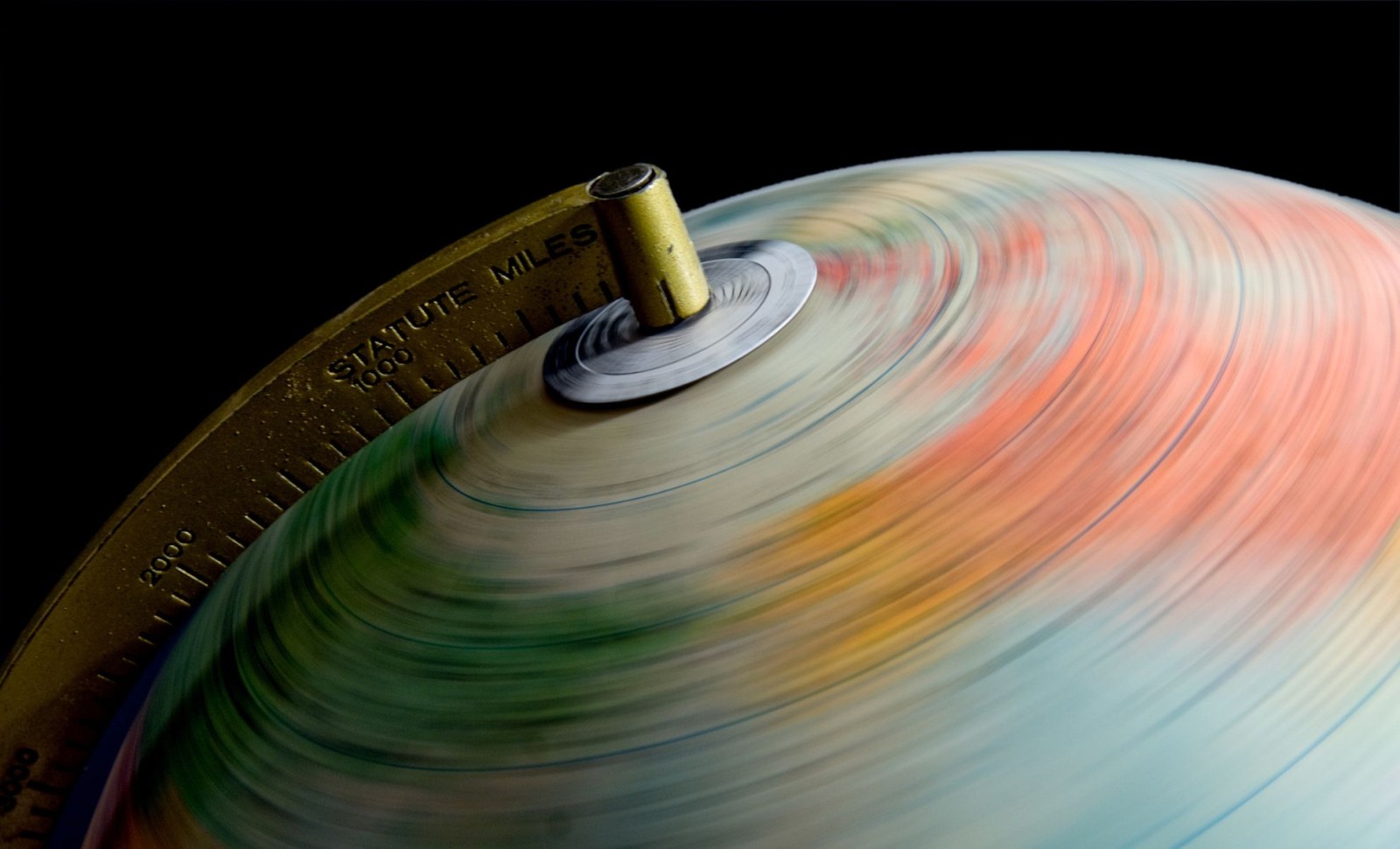
For an astonishing span nearing one billion years, Earth’s rotation ceased its usual slowdown. During this unique cosmic equilibrium, the length of a day held steady at 19 hours, interrupting the planet’s gradual trend toward longer days. Geological evidence highlights this extraordinary epoch of rotational stability deep in Earth’s history.
Under the lead of Ross Mitchell, a geophysicist affiliated with the Chinese Academy of Sciences, the research team aggregated numerous ancient day-length measurements derived from sedimentary rock strata documenting the last 2.5 billion years. Through the use of cyclostratigraphy, their findings show Earth’s rotation rate didn’t decline progressively as previously thought. Instead, the planet experienced a prolonged phase of dynamic balance driven by opposing tidal effects.
Tidal Forces Put Earth's Spin in a Holding Pattern
From roughly two billion to one billion years ago, the duration of an Earth day hovered consistently at about 19 hours. Reports from Earth.com indicate this phenomenon resulted from a rare tidal resonance: a fine-tuned counterbalance between gravitational lunar tides that tend to decelerate Earth’s rotation, and solar-driven atmospheric tides that act to accelerate it.

“Earth’s day length appears to have stopped its long-term increase and flatlined at about 19 hours roughly between two to one billion years ago,” Ross Mitchell explained.
While the Moon’s gravity generates tidal friction that gradually slows Earth’s spin by influencing ocean movement, this effect was largely neutralized by solar heating that induced atmospheric pressure waves. At the 19-hour rotation rate, these competing effects nearly canceled each other out, effectively pausing Earth’s losing spin for close to a billion years.
Shorter Days Link to Slowed Oxygen Rise
This extensive period of rotational steadiness also impacted atmospheric evolution. During that era, the majority of atmospheric oxygen originated from cyanobacterial mats, photosynthetic microorganisms inhabiting shallow marine environments. According to a study in Nature Geoscience, Judith Klatt and colleagues found that shorter day lengths influenced how these microbes consumed and produced oxygen.
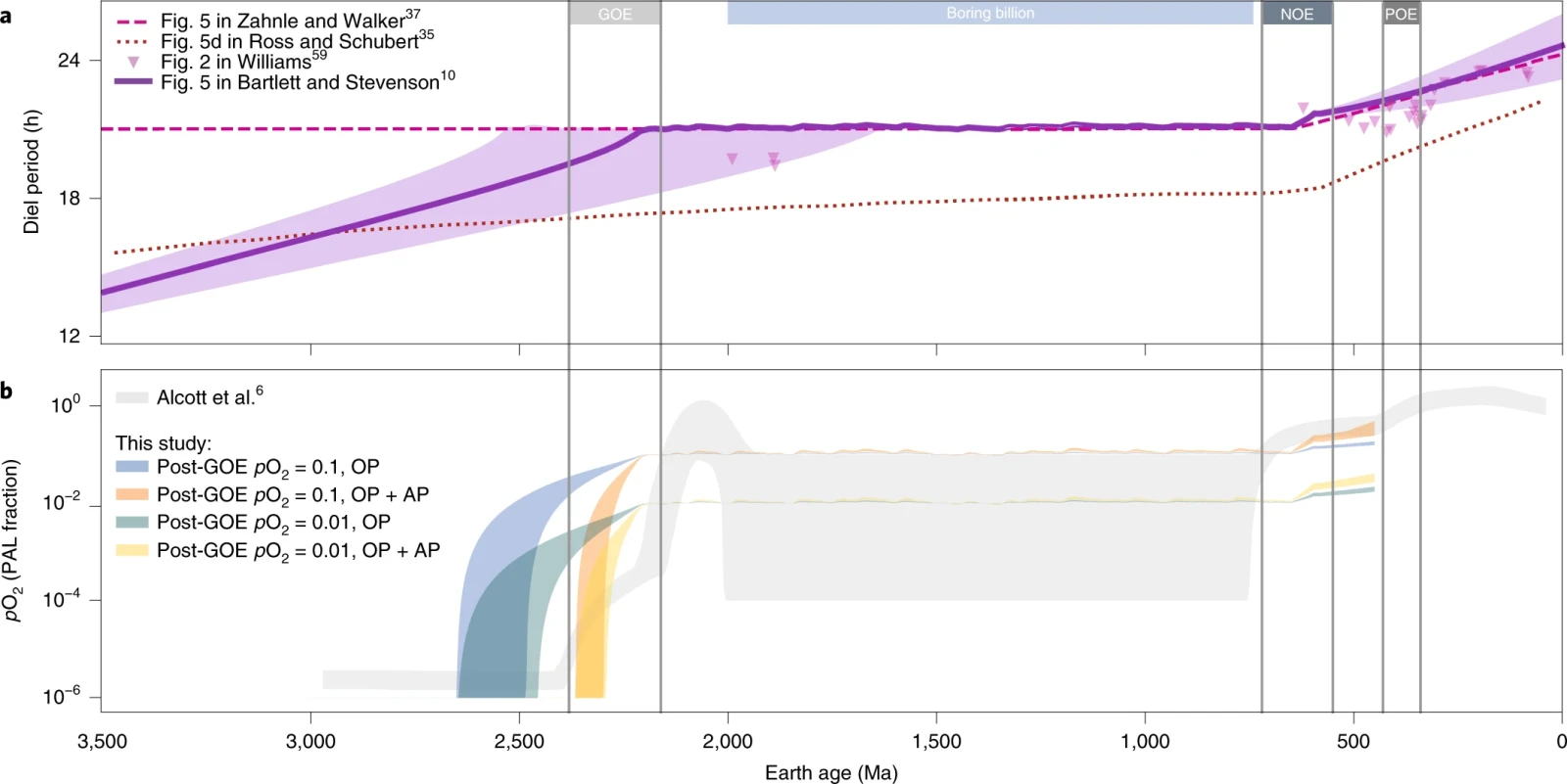
The research demonstrated that when day lengths dipped below 16 hours, these cyanobacterial mats consumed more oxygen than they generated. Even at 19 hours, oxygen output remained minimal. This prolonged phase possibly suppressed atmospheric oxygen accumulation for hundreds of millions of years, potentially delaying the emergence of more complex life forms.
Earth’s Rotation Continues to Vary Subtly Today
Although that billion-year rotational stasis has ended, Earth’s spin still fluctuates slightly. Present-day atomic clock data reveal day lengths shift minutely on annual timescales, influenced by factors like wind patterns, ocean flows, and interior geophysical dynamics.
Earlier research from Liverpool University examined Earth’s rotation from 1962 to 2012, isolating deep rotational changes by removing atmospheric and oceanic effects. This study identified two significant phenomena: a recurring 5.9-year oscillation, and sharp shifts coinciding with geomagnetic jerks, which are sudden changes in Earth’s magnetic field caused by flows within the liquid outer core. These findings highlight how our planet’s interior continues to influence the subtle variability of day length.
- Categories:
- Science












0 comments
Sign in to Comment