

The North Magnetic Pole of Earth continues its steady trek, prompting scientists to update their models urgently. The newly released World Magnetic Model 2025 (WMM2025) offers advanced insights into the dynamic changes occurring in our planet’s magnetic field, with significant implications for navigation, technology, and geophysical research. This update precisely charts the pole’s current position and forecasts its future movement, impacting many facets of daily life.
Where Is Earth’s Magnetic North Heading?
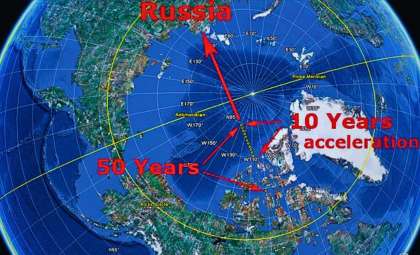
Unlike the fixed Geographic North Pole, which remains stable at 90° latitude, the magnetic north pole continuously drifts due to the turbulent flows of molten iron within Earth’s core. First located in 1831 in Canada’s Boothia Peninsula by explorer James Clark Ross, this wandering pole has since migrated over 2,250 kilometers toward Siberia.
Its journey has fluctuated between slow meanders and rapid advances. Since the 1990s, it has sped up dramatically, moving 50–60 kilometers annually, challenging scientists to keep pace. Currently, it is positioned at 86.5°N, 164.0°E, but its future path remains uncertain.

Advancing Our Understanding with an Enhanced Magnetic Model
The World Magnetic Model (WMM) serves as the definitive guide to Earth's magnetic field. The 2025 revision offers a significant leap forward, transcending previous versions by providing unprecedented clarity and detail.
Earlier versions captured magnetic variations with a broad resolution of 3,300 kilometers at the equator—a relatively coarse picture of Earth’s magnetism. With WMM2025, this improves dramatically to a fine resolution of 300 kilometers, enabling scientists to accurately track magnetic nuances.
This precision is especially crucial in sensitive areas like the South Atlantic Anomaly (SAA), where the magnetic field is weak and satellites face heightened radiation exposure, risking damage. Enhanced model data helps satellite operators mitigate these hazards and efficiently navigate this challenging region.
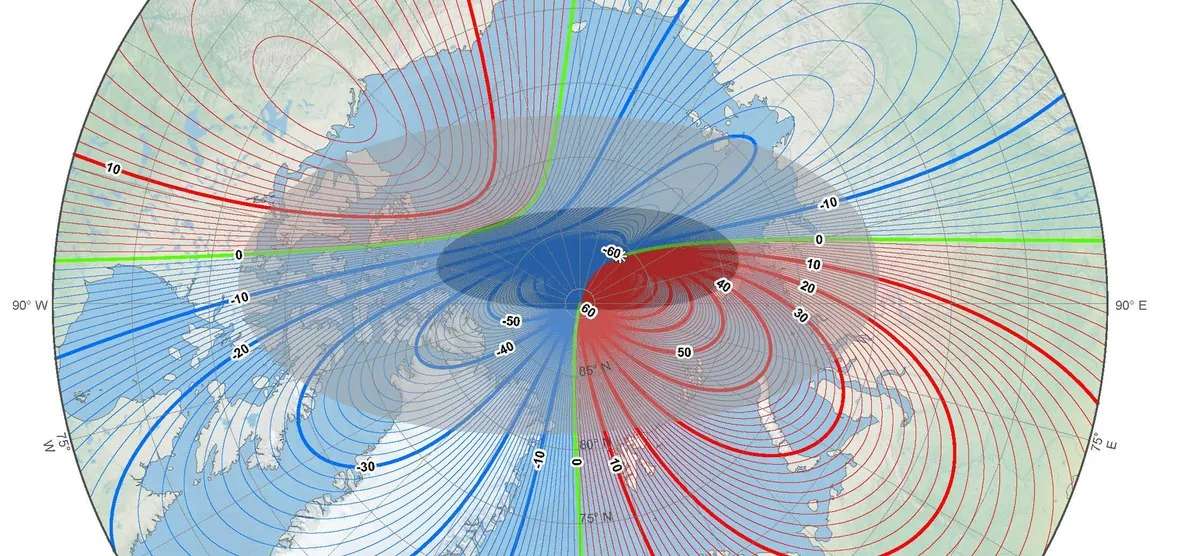
The Crucial Role of Magnetic North in Today’s Technology
Magnetic north is fundamental to numerous technological systems that we rely on daily. From mobile navigation apps to advanced self-driving cars, precise magnetic field data is essential for accurate operation.
Even satellite-based GPS navigation can be affected by magnetic field changes. Critical applications like airplane runway guidance and shipping routes depend on magnetic alignment being correct. An error in magnetic north positioning, no matter how slight, can lead to operational disruptions, flight delays, or navigational error at sea.
Military systems also rely heavily on the WMM for navigation accuracy. The U.S. Department of Defense incorporates up-to-date magnetic data into its tactical navigation tools, where precision is vital. Whether for commercial or defense purposes, reliable magnetic information is indispensable.
A Sudden Acceleration Followed by an Unexpected Slowdown
The behavior of the magnetic north pole has kept scientists intrigued. After moving slowly for centuries, it surged to speeds of 50–60 kilometers per year in the 1990s, attributed to swift changes in the outer core’s flow.
Today, this movement has decreased sharply to about 35 kilometers per year, marking the most significant reduction observed in modern history. As Ciaran Beggan from the British Geological Survey (BGS) explains, “The movement of the pole is highly complex and influenced by various factors we are still striving to fully comprehend.”
This intriguing deceleration could signal new developments beneath the surface, warranting further investigation into Earth’s innermost layers.
Diving into Earth’s Core to Understand Magnetic Changes
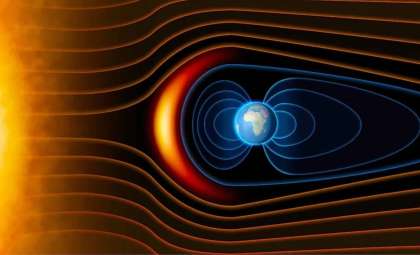
The root of magnetic north’s shifts lies deep beneath Earth’s surface. The outer core, a roiling sea of molten metal, generates the geomagnetic field that shields the planet from harmful solar radiation. However, this field is dynamic and constantly evolving.
New research points to disturbances in Taylor columns, large cylindrical flows aligned with Earth’s rotation, as key drivers of magnetic change. Alterations in these structures can cascade through the core’s fluid motions, influencing the magnetic pole’s trajectory.
The enhanced data from WMM2025 equips scientists with sharper tools to unravel these deep-seated magnetic mysteries.
Earth’s Magnetic Field: Protecting Our Planet and Informing Other Worlds
Earth’s magnetic field acts as a protective barrier, not merely a directional guide. Vulnerable regions like the South Atlantic Anomaly expose satellites to greater radiation levels, highlighting concerns should our magnetic shield weaken further. Researching magnetic north offers insights into Earth’s sustainability and echoes planetary evolution stories across the solar system.
Mars, for instance, lost its magnetic field billions of years ago, leaving it defenseless against solar wind. Is Earth on a similar path? The WMM2025 data is vital for scientists exploring these critical questions. The tale of Earth’s magnetism is unfolding—and its next chapters promise to be fascinating.










0 comments
Sign in to Comment