

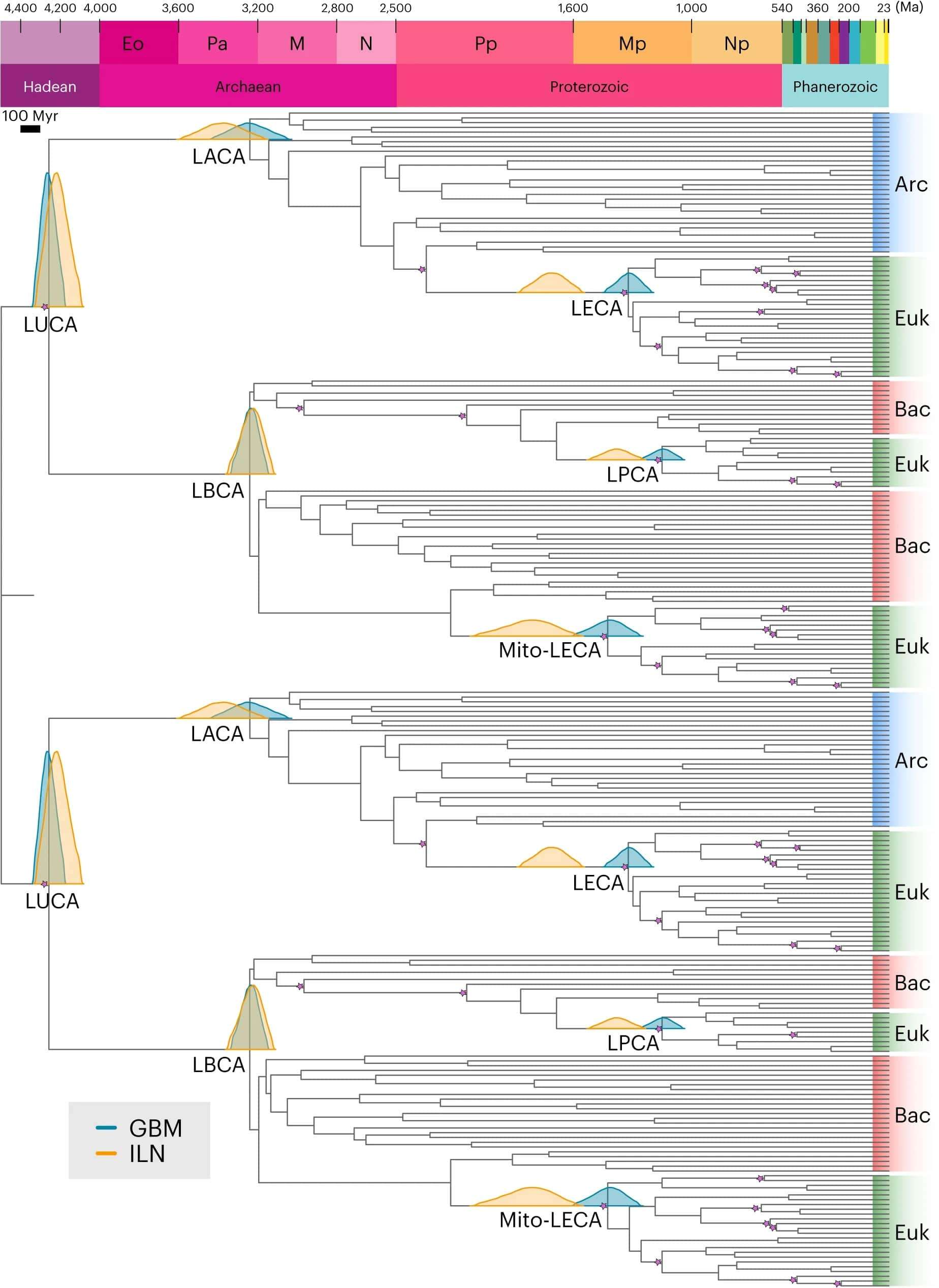
An international group of scientists has pinpointed a single organism as the origin point of all current life on Earth, dating back 4.2 billion years, shortly after our planet’s formation. Published in Nature Ecology & Evolution, their findings indicate that the last universal common ancestor (LUCA) existed significantly earlier than the previously estimated 3.8 billion years ago.
Extending the Timeline to the Hadean Eon
Led by Edmund Moody from the University of Bristol, the team analyzed genetic data spanning diverse modern organisms. Using a molecular clock approach to measure mutation accumulation rates, they estimated the age of LUCA at approximately 4.2 billion years ago.
Moody commented, “Gene evolution is not isolated; gene transfer between lineages complicates evolutionary histories. Our models reconcile these complexities to outline a clearer tree of life.”

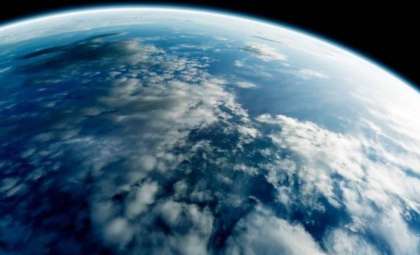
The findings place LUCA in the Hadean period, when Earth was still cooling from its early molten state some 4.5 billion years ago. This implies that life emerged rapidly once the planet’s conditions became hospitable.
LUCA: A Prokaryote with Complex Capabilities
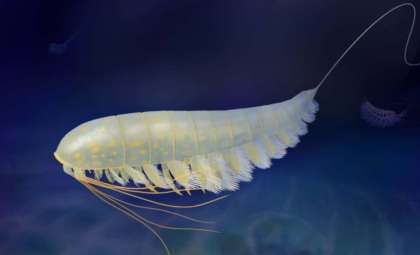
Although resembling a simple prokaryotic cell, LUCA likely possessed more sophisticated traits than previously thought. The researchers suggest it may have had mechanisms to protect itself from ancient viruses, indicating an early form of an immune defense system.
LUCA probably thrived in extreme hydrothermal vent environments characterized by intense heat, pressure, and rich chemical gradients. Such conditions could have fueled its metabolism and allowed its byproducts to sustain other microorganisms like methanogens, fostering an early form of nutrient recycling.
As University of Exeter’s Professor Tim Lenton explained, “LUCA was interacting with and modifying its environment. Its metabolic waste would have served as nourishment for other microbes, laying groundwork for biological diversity.”
The Significance of This Revised Timescale
By placing LUCA farther back in Earth’s history, this research tightens the interval between the planet’s birth and the onset of life. This suggests living systems may emerge surprisingly fast when conditions are suitable.
This accelerated timeline has important implications for the search for life beyond Earth, suggesting that life might arise more commonly on other worlds. This insight supports ongoing efforts to detect biosignatures on planets like Mars and icy moons such as Europa and Enceladus, where hydrothermal activity exists.
Nonetheless, many foundational questions persist, including how self-replicating molecules first appeared, the chemistry behind stable heredity, and the transition from nonliving chemistry to life.
Advancing Our Understanding of Life’s Origins
While LUCA isn’t the planet’s first life form, it represents the deepest known ancestor shared by all present-day organisms—from single-celled bacteria to humans. Its older date enriches the narrative of Earth’s evolutionary complexity.
Future work will seek to enhance these evolutionary models through additional genetic data and laboratory simulations of early Earth environments. Currently, this discovery strengthens the view that life could be both more widespread and more resilient than previously believed.
- Categories:
- Science






0 comments
Sign in to Comment