

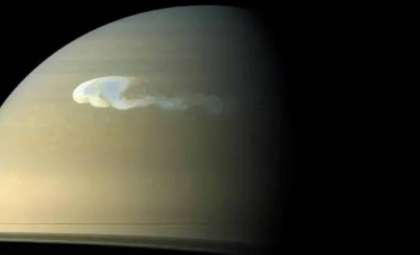
Saturn, renowned across our solar system for its breathtaking and complex ring system, captivates astronomers with its icy and rocky band formations composed of particles ranging in size and origin.
Come March 2025, these iconic rings will become nearly imperceptible when viewed from Earth, marking a fleeting yet extraordinary astronomical event. This occurrence stems from Saturn’s distinctive axial tilt and its orbital path as it revolves around the Sun.
The Astronomical Mechanics Behind the Rings’ Disappearance
The rarity of Saturn’s rings nearly vanishing in 2025 is due to a transient geometric configuration rather than a permanent transformation. Saturn’s axis is tilted at about 26.7 degrees, a factor that periodically presents its rings edge-on from Earth's perspective as the planet completes its orbit in approximately 29.5 years. When viewed edge-on, the rings reflect very little sunlight, making them almost invisible to ground-based observers. This cycle is an inherent part of Saturn’s revolution around the Sun.

Because of the rings’ extremely thin, flat structure, their visibility drops dramatically during these aligned intervals. As March 2025 nears, the rings will gradually tilt edge-on, becoming harder to detect until they reemerge later that year. This vanishing act will repeat cyclically, with full ring visibility expected again around 2032.
This temporary obscurity offers astronomers a rare window to study Saturn’s behavior from an unusual angle. According to Dr. Lucy Jones of the Harvard-Smithsonian Center for Astrophysics, such events provide crucial data to deepen our grasp of planetary motion and dynamics within the solar system.
The Complex Composition of Saturn’s Rings
Saturn’s rings have intrigued scientists not only for their beauty but also for their intricate makeup and formation. They are not a continuous solid band but a vast assembly of countless particles that can be as tiny as sand grains or as large as huge boulders, primarily built from water ice mixed with rock and dust. This composition accounts for their sparkling, reflective quality, making them accessible for observation using relatively small telescopes.
The ring system consists of distinct segments, mainly the A, B, and C rings, alongside fainter ones like D, E, F, and G. These sections are separated by notable gaps such as the Cassini Division, a roughly 4,800 km-wide space between the A and B rings. The positioning of these gaps is influenced by Saturn’s moons, often called shepherd moons, whose gravitational pull shapes and preserves the ring particles’ distribution, preventing the rings from dissipating.
The origin story of Saturn’s rings continues to be a subject of debate. Some experts propose they formed from the debris of a moon or comet shattered by Saturn’s gravitational forces. Others argue the rings are remnants from the primordial material that formed Saturn over four billion years ago. Each hypothesis adds layers to our understanding, with ongoing research gradually uncovering new details about these celestial features.
Saturn’s Rings: Insights into Planetary Evolution
Exploring Saturn’s rings has shed light on the planet’s evolutionary history and broader solar system phenomena. The Cassini-Huygens mission, a joint effort by NASA, ESA, and ASI, significantly advanced our knowledge by studying Saturn since its arrival in 2004 for over 13 years until 2017. This mission uncovered how moons influence ring formations and detailed features like the Cassini Division.
A particularly remarkable finding was the discovery of geysers on Enceladus, one of Saturn’s icy satellites. These water vapor plumes suggest the presence of subsurface oceans, raising the prospect of habitable environments. Jonah Peter, a doctoral researcher at Harvard University with ties to NASA’s Jet Propulsion Laboratory, pointed out, “Enceladus not only meets basic habitability criteria, but also hints at chemical pathways for creating complex organic molecules.” The Cassini mission has revolutionized our view of Saturn as a dynamic and intricate planetary system.
As Saturn’s rings edge toward their 2025 alignment, their brief disappearance symbolizes the transient nature of many cosmic cycles. Though temporarily hidden, the rings are set to return, continuing to inspire wonder and scientific curiosity. Saturn remains a captivating subject for astronomers, its rings exemplifying the grandeur and complexity of our cosmic neighborhood.
- Categories:
- Astronomy ,
- News ,
- Science ,
- Space ,
- Nasa











0 comments
Sign in to Comment