
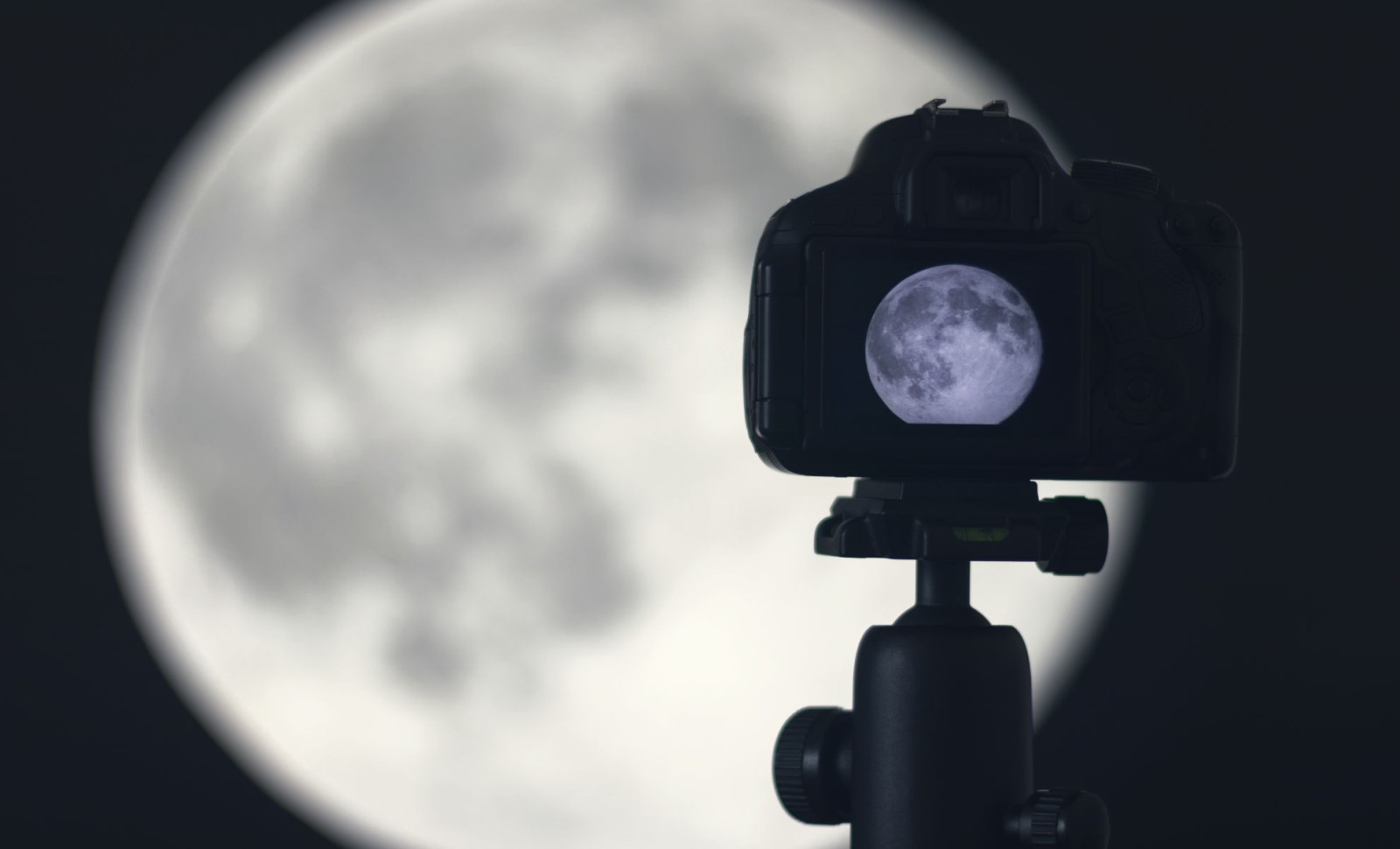
For their upcoming historic journey around the Moon, NASA’s Artemis II astronauts will utilize Nikon D5 DSLR cameras, originally launched in 2016. These cameras, despite their age, were chosen because of their tested dependability and exceptional operation in harsh space conditions. Astronauts Reid Wiseman, Victor Glover, Christina Koch, and Jeremy Hansen will become the first to venture farther from Earth than any human before them on this mission.
The Rationale Behind Choosing Proven Equipment
In an era dominated by rapid technological progress, opting for ten-year-old gear might seem surprising. However, as reported by PetaPixel, NASA’s selection of the Nikon D5 was deliberate. The agency explained that these cameras have been "flight-qualified" to withstand the unique challenges of deep space travel, undergoing rigorous testing that current models have yet to complete.
Recently, the astronaut crew took part in a "photo-TV" segment on the NASA Artemis Facebook page. In it, Wiseman displayed the team’s reliable "old-school" D5 setup. This full-frame 20.8-megapixel camera will be outfitted with both wide-angle and telephoto lenses to capture the mission from various vantage points.

By comparison, the International Space Station currently employs newer Nikon Z9 mirrorless cameras. Sources reveal that future Artemis missions will feature next-gen camera systems as they receive spaceflight certification, indicating Artemis II is a bridge between old and new in space photography technology.
What Makes the Nikon D5 Ideal for Space Missions
Charles Boyer from Florida Media Now highlights that the D5’s selection stems not only from availability but from qualities tailored for the challenges of deep space. Its low noise levels and extensive dynamic range enable it to effectively capture scenes with intense contrast, from brightly lit spacecraft surfaces to deep shadows in the vacuum beyond Earth’s atmosphere.
Crucially for voyages beyond the shielding of low Earth orbit, the D5 is proven to resist radiation damage. Boyer states:
“Just as critical for a deep-space mission, the D5 has shown strong resistance to radiation effects, helping ensure reliable operation beyond low Earth orbit where exposure levels are significantly higher. Still, it is an old camera by today’s standards,” quoted PetaPixel.
Upon release, the D5 garnered attention for its extraordinarily high ISO sensitivity range, reaching up to 3,280,000. In contrast, the Nikon Z9’s maximum ISO is 102,400. Even at these extreme settings, the older DSLR reportedly delivers cleaner images than the newer model after processing. This advanced light capture capability will be vital as the Artemis II crew ventures through space’s darkness.
- Categories:
- News










0 comments
Sign in to Comment