
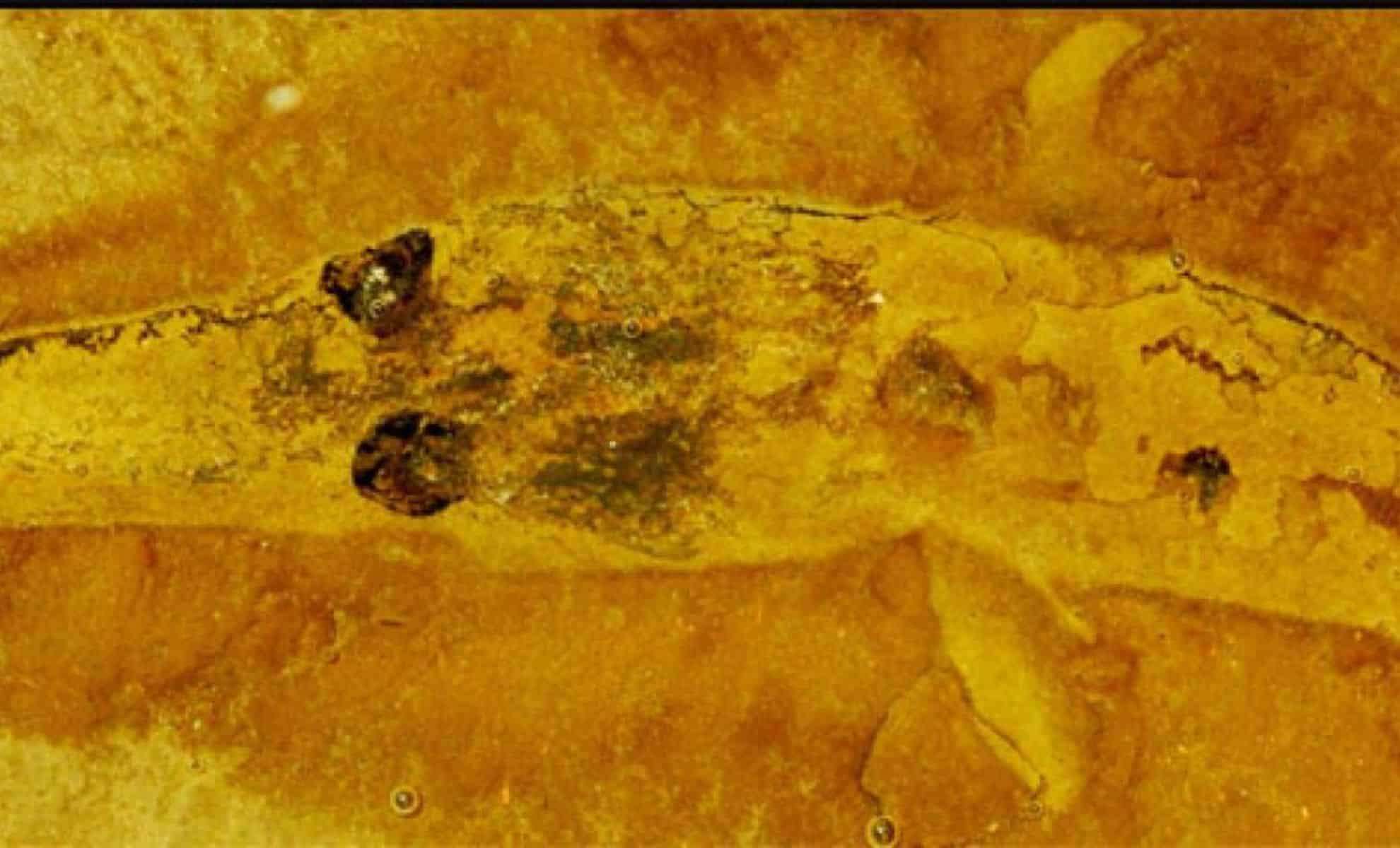
Researchers have identified a 310-million-year-old shark nursery along the ancient seashores that once stretched across the American Midwest. Fossils of juvenile sharks and their characteristic spiral egg cases were excavated at the Mazon Creek fossil beds in northeastern Illinois.
Discovering Ancient Sharks at Mazon Creek
The initial finding of Bandringa shark remains in 1969 generated more inquiries than conclusions.
Scientists uncovered tiny baby sharks, measuring merely 4 to 6 inches in length, alongside spiral-shaped egg coverings, indicating these sharks utilized a distinct breeding habitat.

Early on, these juvenile sharks were incorrectly thought to belong to a new, diminutive species, and were named Bandringa rayi.
However, further fossil discoveries in a different Mazon Creek site in 1979 led to a revised perspective.
The new finds of baby sharks from ancient brackish swamp areas prompted a reclassification.
That same year, a 10-foot adult Bandringa shark was discovered in freshwater river deposits in Pennsylvania, causing researchers to rethink prior assumptions.
Piecing Together the Puzzle
University of Michigan paleontologist Lauren Sallan, in a recent article in the Journal of Vertebrate Paleontology, proposes that all these fossils represent a single species.
This conclusion stemmed from detailed analysis of fossil preservation differences.
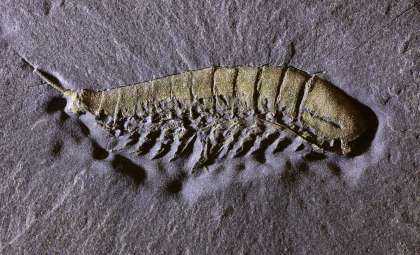
Specimens from marine sediments showcased outstanding soft-tissue preservation but lacked internal skeleton remains, while those from freshwater layers retained skeletal structures but no soft tissues.
Sallan commented, “Accounting for these preservation variations, no distinct differences remain between the fossils.”
The evidence points to an extraordinary reproductive behavior where adult Bandringa sharks predominantly inhabited freshwater rivers and deltas but migrated to coastal regions to deposit eggs in protected nursery zones.
Rethinking Shark Nursery Habitats
Modern sharks commonly use shallow coastal zones as nurseries to shield their young from bigger predators.
Nonetheless, it’s unusual for present-day sharks to migrate between freshwater and marine habitats for reproduction purposes.
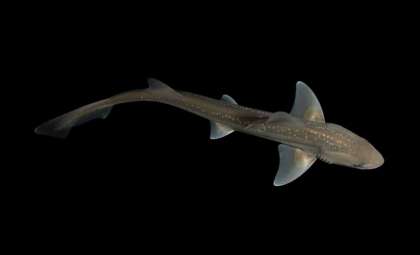
The ancient Bandringa sharks, recognized by their elongated, spoon-like snouts, appear to have exhibited a comparable lifecycle strategy in their environments.
Sallan highlighted the significance of nursery habitats, stating, “Nearly all modern sharks and their kin rely on nursery waters.”
These coastal nurseries offer juvenile sharks essential protection, as shallow areas restrict access from larger predatory sharks.
Shallow waters thus likely provided a secure environment for developing baby sharks, minimizing predation risks.
Distinctive Features of Bandringa Sharks
As bottom-dwelling feeders, Bandringa sharks employed electroreceptors on their extended snouts to locate prey.
The upper surfaces of their bodies were armored with pointed scales, including sharp, needle-like spines on the cheeks and heads.
These spines probably functioned as a defense mechanism against predators.
The extraordinary preservation of these fossils, including rare soft tissues and skeletal details, offers scientists an invaluable glimpse into the early evolution of sharks.
- Categories:
- Science




0 comments
Sign in to Comment