
A man who perished in the AD 79 eruption of Mount Vesuvius has been virtually reconstructed through artificial intelligence, offering a vivid glimpse into the lives lost at Pompeii. This innovative approach bridges archaeological facts with a deeply human story behind the tragedy.
The digital portrait was developed through a partnership between the Pompeii Archaeological Park and the University of Padua. This marks the first application of AI at the site to produce a detailed facial reconstruction derived directly from excavation findings.
Located near Naples and recognized as a UNESCO World Heritage site, Pompeii was engulfed in volcanic ash and debris nearly two millennia ago, preserving the city and its residents in time.

A Victim of Vesuvius's Early Eruption Stages
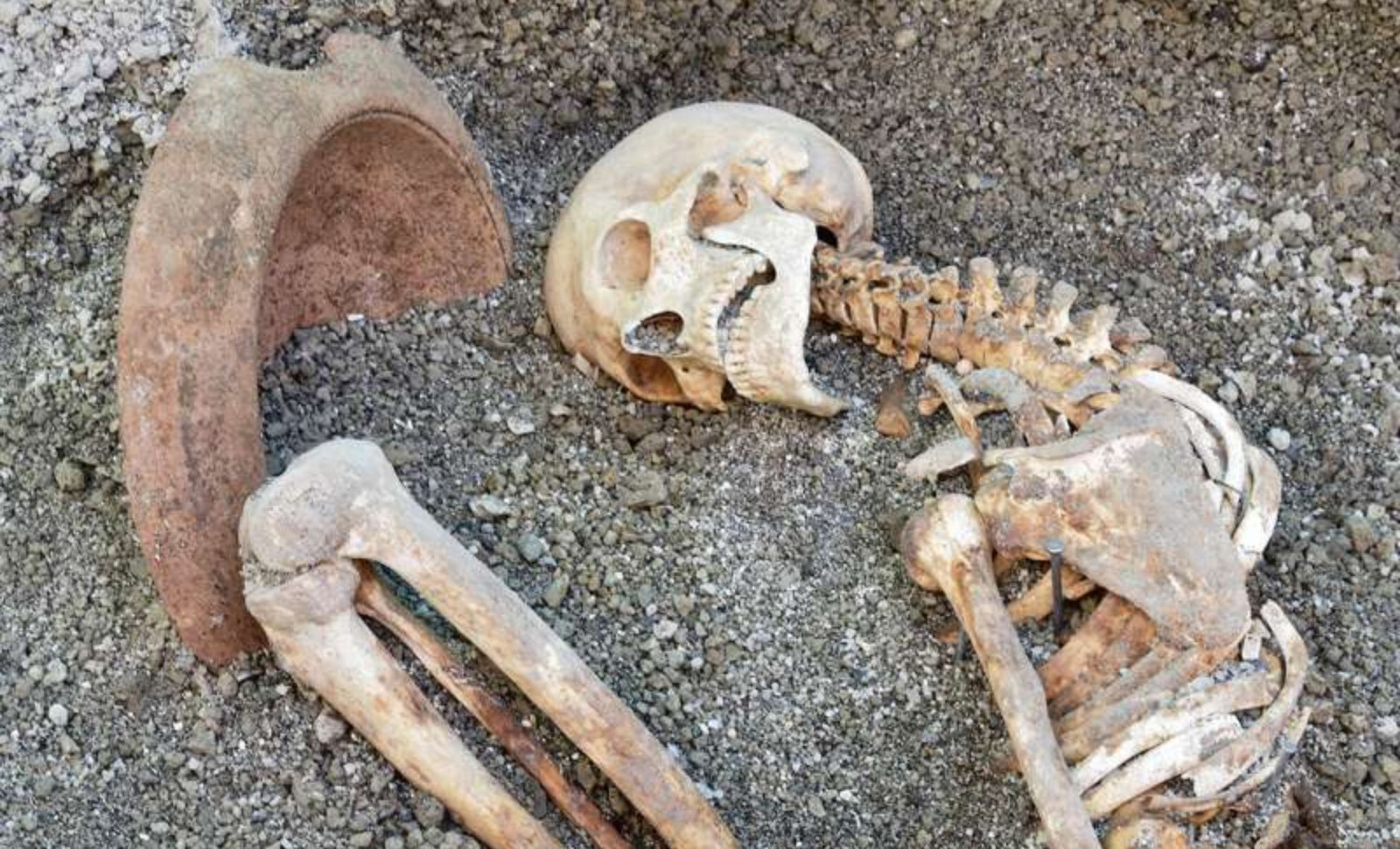
The remains were uncovered adjacent to Porta Stabia, just outside Pompeii's ancient city walls. As reported by the Pompeii Archaeological Park, the man seemed to be fleeing towards the coastline when caught by the volcanic event.
Researchers conclude he died in the initial stages of the eruption amid a heavy shower of volcanic material. His remains were found close to those of another person, indicating a group attempt to escape through the same path. The body’s positioning and nearby artifacts suggest a rapid, chaotic scenario.
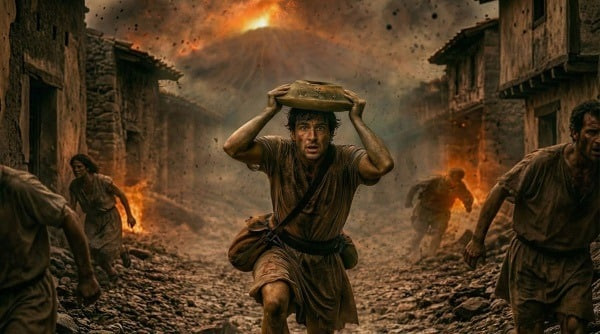
The rendering depicts the man running along a debris-filled street with Mount Vesuvius erupting behind him.
“One of them, the younger one, was likely swept away by a pyroclastic flow – a glowing cloud of ash and toxic gases – while trying to flee the city. The other, the older man, died a few hours earlier under a shower of lapilli, trying to protect his head with a terracotta mortar found near his body, showing clear signs of fracture,” wrote the authors in the statement.
Artifacts Found with the Skeleton
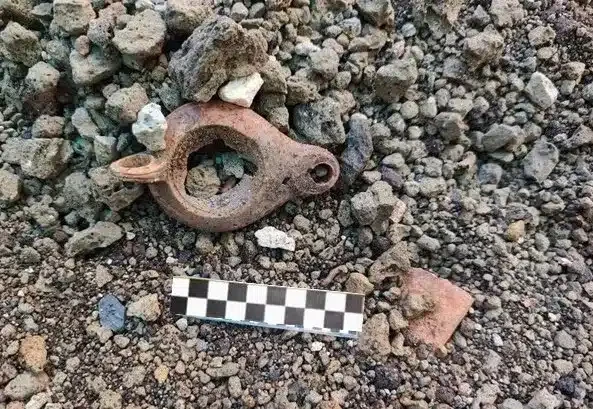
Several belongings were discovered alongside the man, including an oil lamp, a small iron ring, and ten bronze coins. These items offer insights into the daily life of Pompeii’s citizens and the man’s final moments.
A notable find is a terracotta mortar the man clutched, which archaeologists suggest served as a defensive tool against falling volcanic stones.
Pliny the Younger, who chronicled the eruption, noted how inhabitants used whatever was at hand to shield themselves from the falling ash and debris—an observation supported by these archaeological discoveries.
Harnessing AI to Reconstruct Ancient Faces
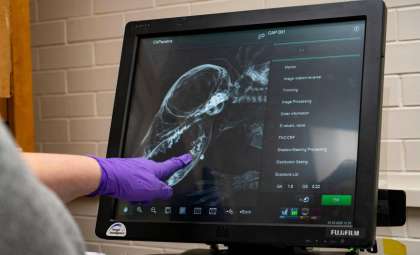
The facial reconstruction employed artificial intelligence combined with advanced photo editing techniques to convert skeletal data into a lifelike image. This process was based on meticulous survey information collected from the excavations near the Porta Stabia necropolis.
According to Gabriel Zuchtriegel, the park’s director, increasing archaeological data demands innovative technology to manage and interpret it effectively.
“The scale of archaeological data at Pompeii and beyond is so vast that only artificial intelligence can truly help us preserve and enhance it,” said Director Zuchtriegel. “When used effectively, AI can revitalize classical studies by offering a more immersive understanding of the ancient world.”
This initiative also aims to bring archaeological research closer to the general public by combining scientific evidence with a human face, creating a more engaging connection to the history of Pompeii.
- Categories:
- Science







0 comments
Sign in to Comment