
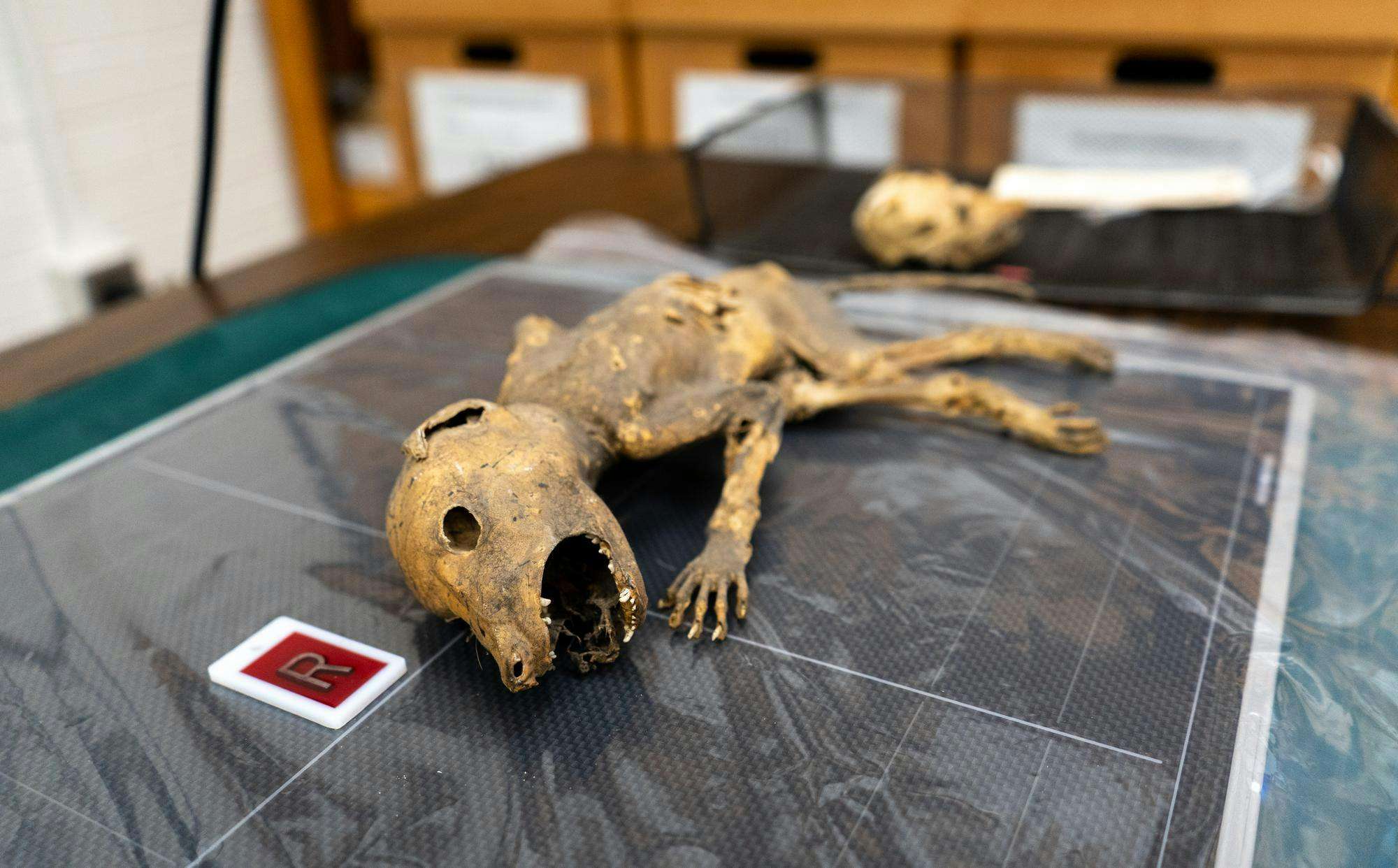
An unusual, 12-inch-long mummified specimen exhibiting charred-like skin and striking white dentition has recently sparked a detailed forensic examination at Michigan State University (MSU). Discovered during 2018 renovation work inside Cook Hall, this peculiar entity—now known as the “CAPacabra”—was largely overlooked until Jerielle Cartales, a doctoral candidate specializing in forensic archaeology, decided to investigate it further.
From Hidden Ceiling Find to Campus Enigma
This intriguing relic, unearthed alongside a detached head within the ceiling space of Cook Hall, was entrusted to the Campus Archaeology Program (CAP). It remained untouched for years, entertaining only the playful moniker blending CAP’s acronym with the folklore creature chupacabra.
The specimen attracted no formal research until Cartales, who had recently joined CAP as a fellow, stumbled upon the mummy. Her interest in skeletal remains—“as any curious child would, naturally,” she quipped—made her recognize the value of this disregarded artifact. Despite its disturbing appearance and desiccated intestinal traces, she admitted, “It’s quite endearing.”

An Anomalous Being Possibly From Another Era
Experts remain uncertain about the mummy’s true background, proposing possibilities from a recent demise to one dating back a century. Cartales noted that natural mummification can occur swiftly in environments that are dry and stable—“similar to Otzi the Iceman or even sun-exposed roadkill,” according to reports. Considering where it was found, she suspects proximity to a heating vent or air duct.
The species identity is the greatest mystery. Initially thought to be an opossum, Cartales dismissed this: “We were just throwing ideas out to make sense of it,” she said, citing its sharp dentition and flattened snout did not match opossum anatomy.
Current leading theories suggest either a raccoon or a dog, whereas Cartales emphasized, “It’s definitely not a dog. We just need concrete photographic evidence to verify it.”
Lab Investigation Blending Science and Fascination
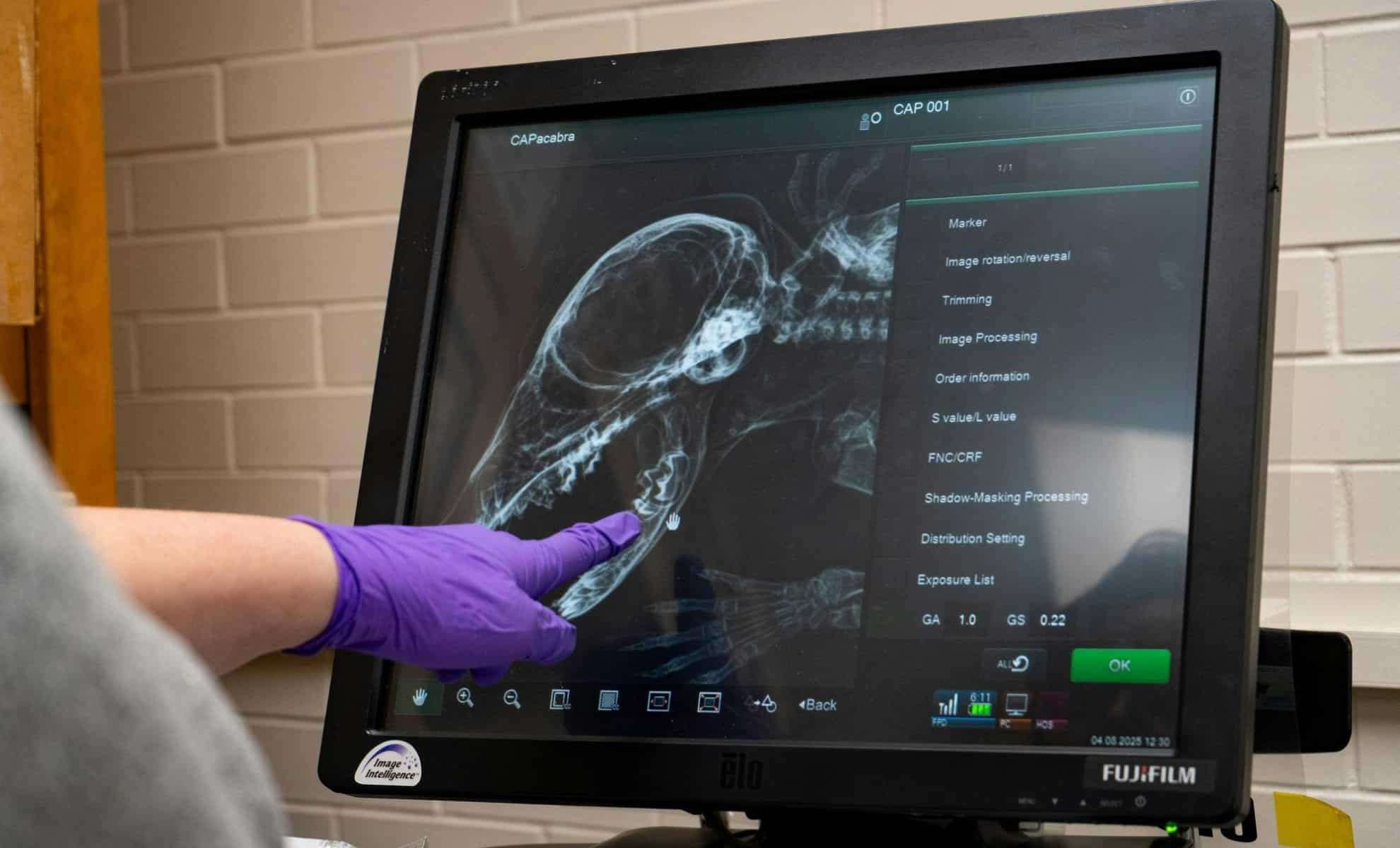
During a recent examination at the Forensic Anthropology Lab, Cartales, alongside lab head Carolyn Isaac, conducted X-rays of the specimen to delve deeper into its classification. The scan unveiled unexpected details. Watching the images appear, Cartales admitted, “I’m captivated by this.” The creature’s pose in the X-ray was so striking that Isaac remarked, “It resembles an action snapshot.”
The X-ray revealed the individual was relatively young upon death. “Some bones had fused, while others, such as the vertebrae, remained separate,” Cartales said, implying it was approaching adulthood. The dental formation also supported this, displaying a mix of juvenile and adult teeth emerging.
Is It a Raccoon, a Relic, or Something Completely Different?
The peculiar arrangement of the mummy’s feet does not align with typical canine traits, which bolsters the theory of it being a raccoon. Despite this, Cartales is committed to a detailed, systematic analysis.
She intends to compare the mummy’s bones with authenticated animal skulls in the collection of the MSU Museum. Luckily, her study materials are nearby. “She won’t have far to look for a raccoon skull,” the report states. Cartales joked, “I even keep one at home. Because why not.”
What began as a disregarded curiosity has since turned into a captivating subject blending the fields of forensics, archaeology, and a hint of the eerie.
- Categories:
- Science








0 comments
Sign in to Comment