
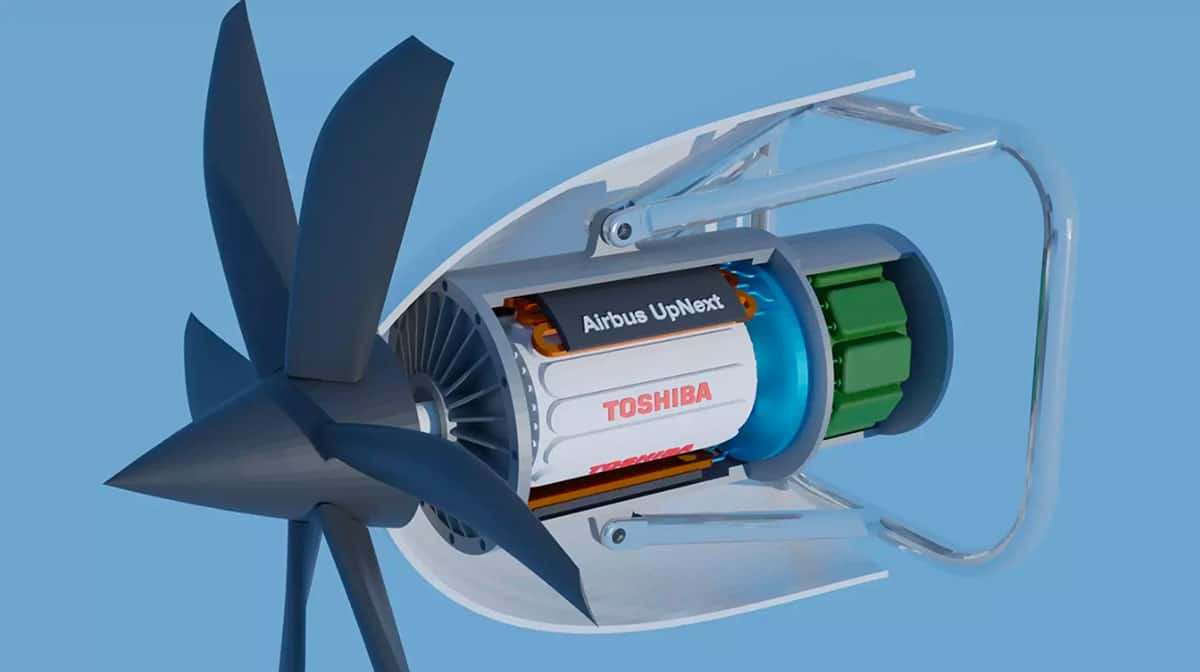
Superconductivity emerges in certain materials cooled to ultra-low temperatures, causing their electrical resistance to virtually disappear. This remarkable trait enables the creation of highly efficient and powerful magnets that serve important roles in fields such as:
- Medical imaging technologies like CT scanners
- Particle physics accelerators
- Electrical power grid systems
- Advanced electric motor designs
In aviation, superconducting motors offer substantial benefits compared to traditional motors. Airbus reports that their superconducting motor weighs less than a third of conventional designs while achieving a 97% efficiency in powertrain performance. This leap in power-to-weight efficiency makes these motors particularly promising for aircraft propulsion.
The new partnership between Airbus and Toshiba unites two pioneers with deep expertise. Airbus's innovation branch, Airbus UpNext, is investigating novel propulsion methods, while Toshiba Energy Systems & Solutions Corporation brings decades of experience developing superconducting motor prototypes.

Hydrogen Aircraft: Advancing Clean Aviation
The superconducting motor development is part of a larger effort to realize zero-emission planes. Among clean energy options, hydrogen fuel is especially promising due to its high energy density and environmentally clean exhaust, primarily releasing water vapor.
Nevertheless, hydrogen aviation faces notable obstacles:
- Storage demands: Hydrogen requires larger volume compared to jet fuel.
- Handling complexities: Its use depends on maintaining cryogenic temperatures below -253°C (-423°F).
- Weight issues: Conventional aviation electric motors of sufficient power tend to be heavy.
The Airbus-Toshiba solution ingeniously employs liquid hydrogen as both the propulsion fuel and cooling agent, enabling a more lightweight and compact motor system.
Combining Innovations: Cryoprop and Superconducting Engine
Announced at Japan Aerospace 2024, this partnership merges two leading-edge technologies:
Company Key Technology Airbus Cryoprop demonstrator initiative Toshiba Superconducting motor prototype rated at 2 megawatts
Through this integration, the firms aim to deliver a game-changing propulsion system that could transform aircraft engineering. The liquid hydrogen cools the superconducting motor before powering the fuel cells, optimizing the system’s overall performance.
Grzegorz Ombach, Airbus Senior VP and Head of Disruptive R&T, highlighted the collaboration’s importance: “Working with Toshiba enables us to surpass the confines of current superconducting and traditional electric motors.” He noted that this alliance is a vital milestone toward maturing superconducting motor technology tailored for aerospace demands.
Revolutionizing Aircraft Design Ahead
This breakthrough in superconducting motor technology could profoundly influence future aircraft design. By slashing propulsion system mass and size, engineers will gain improved freedom to craft sleeker, more efficient airplanes.
Key advantages anticipated include:
- Greater payload capacity
- Longer flight distances
- Lower fuel usage
- Decreased operational expenses
- Reduced environmental footprint
Facing increasing pressure to cut carbon emissions, the aerospace sector may find the Airbus-Toshiba superconducting motor instrumental in meeting sustainability targets. This collaboration between two industry leaders marks a major leap toward greener, more efficient air travel.
- Categories:
- Aircraft






0 comments
Sign in to Comment