
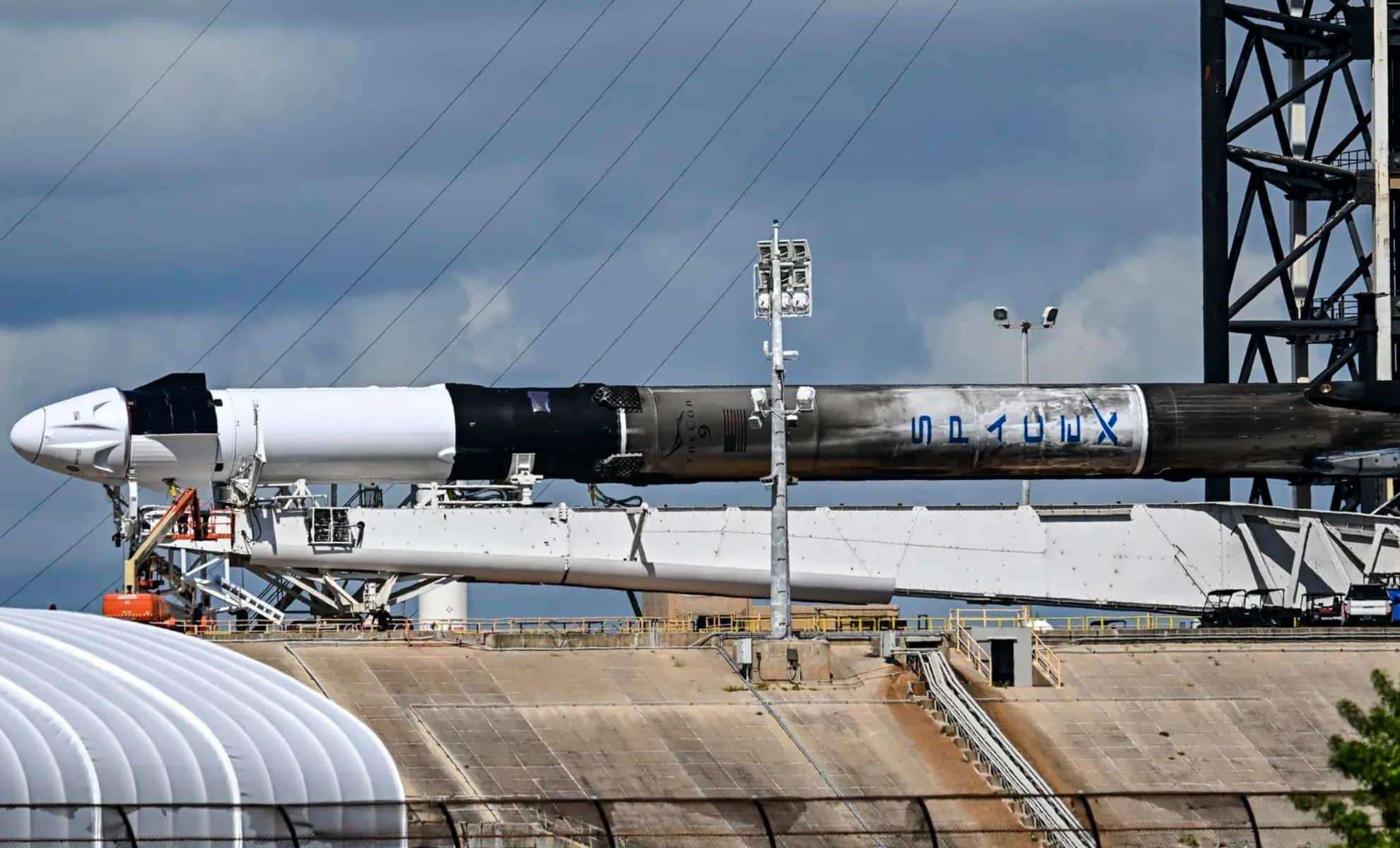
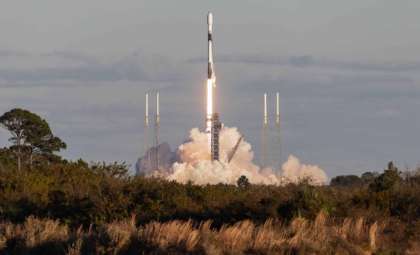
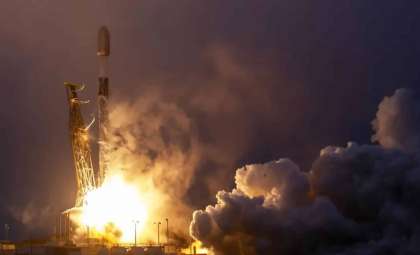
The Federal Aviation Administration (FAA) has imposed a temporary halt on all SpaceX Falcon 9 launches after a booster landing failure on August 28, 2024.
This suspension is part of an ongoing FAA inquiry into the event to evaluate any risks to public safety. The malfunction happened during a mission that successfully placed 21 Starlink satellites into orbit, although the booster encountered difficulties upon returning to the droneship, ultimately tipping over and being lost in the ocean.
Details of the Incident and Initial Reactions
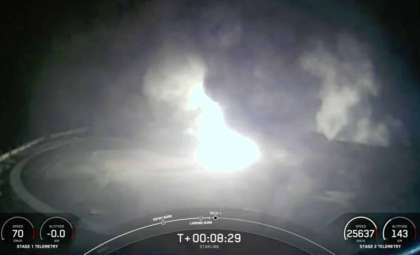
The event involved the Falcon 9’s first-stage booster, which normally executes a precise sea landing on a droneship after completing its role. On August 28, after deploying the Starlink payload, the booster experienced problems during its descent. Flames were seen at the base upon touchdown, and the rocket toppled over seconds afterward, resulting in its total loss. Fortunately, no injuries or external damages beyond the booster were reported.

Following this, the FAA released a statement confirming the investigation. They noted: “The FAA is aware an anomaly occurred during the SpaceX Starlink Group 8-6 mission that launched from Cape Canaveral Space Force Station in Florida on August 28.” The agency also specified that the event involved “the failure of the Falcon 9 booster rocket while landing on a droneship at sea,” adding that “no public injuries or public property damage have been reported.”
The FAA highlighted that resuming Falcon 9 flights depends on verifying that any issues related to this incident do not compromise public safety. The suspension will stay in effect until SpaceX demonstrates that corrective measures have been implemented to guarantee safe launch operations.
Consequences for Scheduled SpaceX Launches
The FAA-imposed pause significantly affects SpaceX’s upcoming planned missions, especially those involving crewed spaceflight. Two prominent launches are now delayed: Polaris Dawn and Crew-9. The Polaris Dawn mission, a private astronaut expedition led by billionaire Jared Isaacman, was initially pushed back due to weather constraints. However, the FAA’s probe into the booster anomaly could further postpone this mission depending on how long the safety review takes.
Isaacman commented on the update, stating, “We’re just focused on recovery weather at this point. I think that is still gate to our launch,” emphasizing that while weather remains a factor, the FAA’s investigation introduces additional complexity.
The other critical mission, Crew-9, scheduled for September, involves ferrying NASA astronauts to the International Space Station (ISS). As part of NASA’s Commercial Crew Program, any delays in this mission could affect ISS operations, including the timing for the Boeing Starliner test crew’s return, who have been aboard since early June.
Falcon 9’s Recent Troubles and What Lies Ahead
This recent stoppage marks the second grounding of Falcon 9 within two months after anomalies. Back in July 2024, a second-stage engine malfunction during a Starlink launch from California led to a short suspension of flights. That problem, linked to an oxygen leak, was resolved within two weeks. The current FAA action reinforces the necessity for stringent safety checks across all Falcon 9 launch and recovery systems.
SpaceX has sought to minimize the perceived severity of the booster landing mishap. Jon Edwards, SpaceX’s Falcon launch vehicles VP, remarked on social media, “We are working as hard as we can to thoroughly understand root cause and get corrective actions in place ASAP. One thing we do know though is this was purely a recovery issue and posed no threat to primary mission or public safety.”
Although satellite deployment succeeded, the loss of the booster raises questions about the dependability of SpaceX’s recovery methods, which are vital to the company’s model of rocket reuse for cost savings. The FAA investigation will likely influence how SpaceX modifies these systems and may affect the timeline for resuming launches given the firm’s packed schedule.
How long Falcon 9 remains grounded depends on the investigation’s findings and the necessary fixes. If problems stem from a particular part, such as a landing leg malfunction, the suspension might be brief. But if broader issues are detected, the pause could stretch longer, impacting SpaceX’s future missions and overall launch cadence.
This episode underscores the challenges inherent in space travel and the critical role of rigorous safety standards. As SpaceX advances its rocket technology, prioritizing safe operations remains essential, especially with increasingly complex missions on the horizon.








0 comments
Sign in to Comment