

The US Space Force’s secretive X-37B spaceplane is set to undertake innovative atmospheric maneuvers during its imminent return to Earth.
Though details about the mission remain under wraps, the X-37B will employ a groundbreaking approach called aerobraking, where the spacecraft leverages Earth's atmospheric resistance to modify its orbit and conserve fuel. This technique could significantly enhance military satellite operations by increasing efficiency and unpredictability.
Introducing Revolutionary Aerobraking Procedures
In an uncommon disclosure, the US Space Force announced that the X-37B will execute “unprecedented maneuvers” on descent, including the use of aerobraking. This carefully controlled technique relies on Earth's atmospheric drag to adjust orbit without excessive fuel expenditure. US Air Force Secretary Frank Kendall highlighted its strategic value, stating, “This novel and efficient series of maneuvers demonstrates the Space Force’s commitment to achieving groundbreaking innovation as it conducts national security missions in space.”

Never before demonstrated by the X-37B, aerobraking allows rapid orbital changes while reducing fuel needs and complicating tracking by potential adversaries. As former US Air Force Secretary Heather Wilson noted, the spacecraft might perform these maneuvers “on the far side of the Earth from our adversaries”, enhancing stealth and unpredictability during reentry.
Extended Mission Nears Conclusion
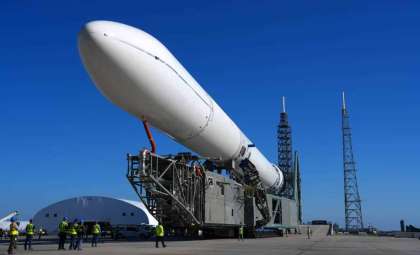
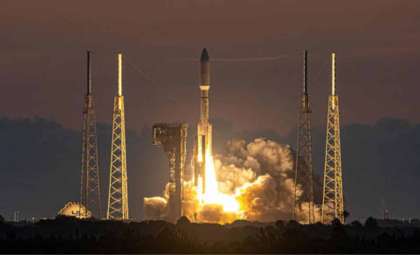
The X-37B, launched in December 2023 via a SpaceX Falcon Heavy, is in its seventh flight (OTV-7). Engineered for prolonged operations, it can stay in orbit for years using solar panels to recharge power cells. Its prior mission set a record with 908 days in space. General Chance Saltzman, US Space Force Chief of Space Operations, remarked, “The success is a testament to the dedication and perseverance of the team.”
As it prepares for descent, the X-37B will carefully modify its orbit and will safely jettison certain modules, following international guidelines to mitigate space debris. The service module containing technical components will be discarded before touchdown to minimize orbital clutter.
A Testbed for Advanced Space Technologies
Though its exact goals are undisclosed, the X-37B acts as a test platform for cutting-edge technologies potentially impacting military and civilian space initiatives. Previous missions have explored the effects of solar rays on materials and developed advanced space domain awareness systems to monitor orbital objects.
The operation is coordinated by the US Department of Defense along with the US Air Force Rapid Capabilities Office. This flight pushes the envelope in reusable spacecraft capabilities. As Frank Kendall stated, “This first of a kind maneuver from the X-37B is an incredibly important milestone for the United States Space Force as we seek to expand our aptitude and ability to perform in this challenging domain.”
Introducing aerobraking marks a major leap in space warfare technology, enabling the craft to linger in orbit longer and alter its course unpredictably, enhancing its strategic value.
Advancing Space Defense Innovations
The X-37B’s upcoming maneuvers explore new orbital territories and may shape future space defense tactics. Prior Space Force reports highlighted the vehicle’s role in “operating in new orbital regimes, experimenting with space domain awareness technologies, and investigating the radiation effects to NASA materials.” The OTV-7 mission has introduced highly elliptical orbits, with altitudes ranging from just 300 kilometers up to over 35,750 kilometers.
Despite mission secrecy, the spacecraft’s capacity for military reconnaissance is clear. The X-37B continues to pioneer technologies that could underpin the future of space defense systems.









0 comments
Sign in to Comment