
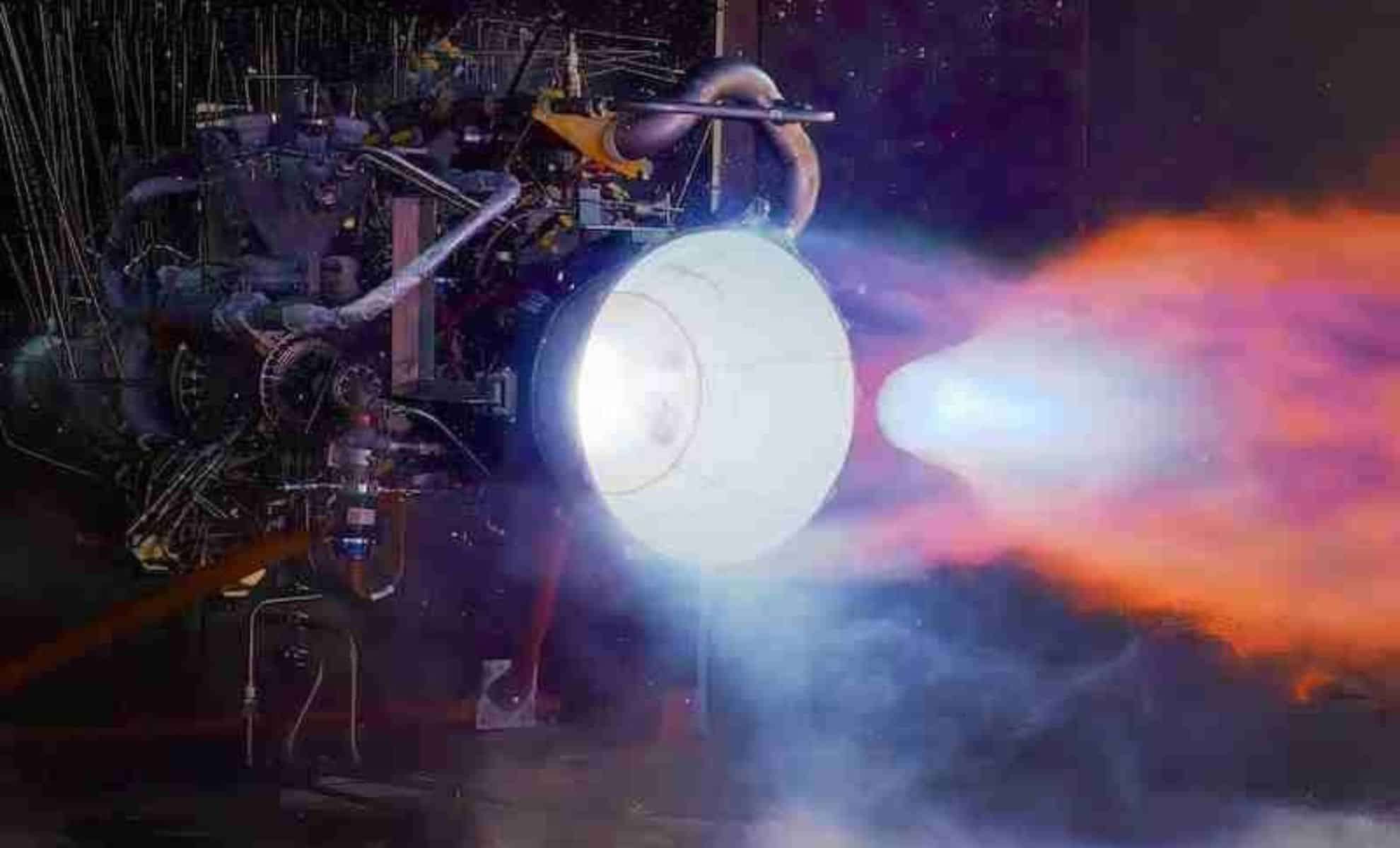
Stoke Space has achieved a significant breakthrough by successfully test-firing a cutting-edge engine intended for the initial stage of its fully reusable rocket, moving the company closer to its pioneering spaceflight goals.
This milestone test took place on June 5 in Moses Lake, Washington, showcasing the engine's capabilities and bringing Stoke Space nearer to creating a reusable medium-lift launch system.
Innovative Design and Testing of Stoke Space’s Engine
The engine, delivering thrust up to 100,000 pounds-force, uses a full-flow staged combustion cycle. This advanced design routes both the liquefied natural gas fuel and liquid oxygen oxidizer through separate preburners before mixing in the main combustion chamber, enhancing performance and engine durability but also requiring complex engineering solutions.

Currently, SpaceX’s Raptor engine on the Starship employs this rare technology. Stoke Space CEO Andy Lapsa highlighted the importance of such high-performance engines for rapid reusability, stating, “In a world of rapid reuse, you need high performance. Full-flow stage combustion gives you the highest performance possible under the least stressing conditions.”
During a brief two-second trial, the engine reached half of its maximum thrust. The primary focus was on testing the engine’s start-up and shut-down sequences, which are critical and challenging phases. Lapsa explained, “The duration of the test was short because the goal was to demonstrate the transient and then back out.” This success paves the way for longer-duration tests later this summer, supported by a larger test stand under construction.
Progress on the Nova Rocket Project
Stoke Space is building Nova, a two-stage rocket designed for full reusability. The booster stage will house seven of the newly tested engines, while the upper stage will use an engine powered by liquid hydrogen and liquid oxygen, incorporating an actively cooled heat shield to support powered landings. Earlier, a prototype hopper test flight last September validated aspects of the upper stage design.
Lapsa pointed out that while the booster and upper stage engines share similarities in turbomachinery and system analysis techniques, each presents its own engineering complexities.
The recent test incorporated flight avionics and software, underlining system integration capabilities. Stoke Space’s efforts are backed by a $100 million Series B funding round secured last October. “In a lot of ways, all systems are go, and the last big question mark that I felt carrying on my shoulders was the first stage engine, and specifically getting the engine through the transients and back successfully,” Lapsa remarked.
Looking Ahead: Impact and Development Plans
The company aims to initiate orbital flight demonstrations by 2025, with the potential to expedite this schedule. Progress will heavily rely on the establishment of its launch operations at Cape Canaveral’s Launch Complex 14, assigned by the Space Force last year.
Although Lapsa did not provide a revised timeline, he conveyed optimism about ongoing rapid technological progress. “I think that you’ll find over time, just like fully rapidly reusable rockets will render all others obsolete, I think that these high-performing engines that make that mission possible will render over time the lower performing variants also obsolete. I think it’s an essential technology mountain to climb, and I’m really excited to be on that mountain.”
This successful booster engine test marks a pivotal step forward in advancing reusable launch vehicle technology. Stoke Space’s continued innovations promise to reshape commercial spaceflight, offering faster, more efficient access to orbit and enabling new frontiers in scientific and commercial space endeavors.






0 comments
Sign in to Comment