
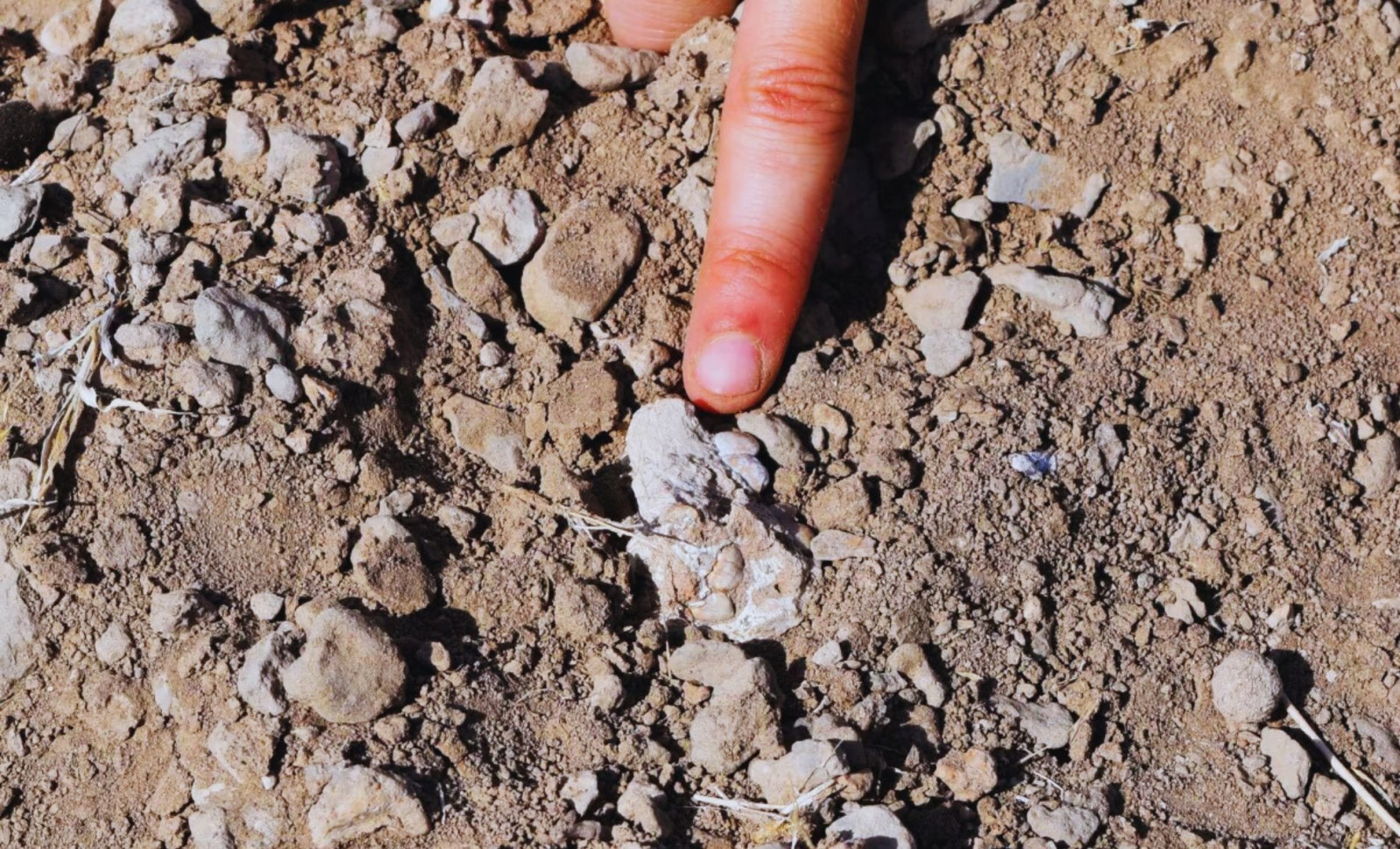
A fossilized foot found in Ethiopia, unassigned for more than ten years, has recently been connected to a lesser-known hominin species that lived alongside Australopithecus afarensis—the species to which the famous Lucy belongs. Featured in a recent Nature publication, this evidence calls into question Lucy’s accepted position as a direct human ancestor.
Scientists now associate this enigmatic Burtele foot with Australopithecus deyiremeda, suggesting that two different hominin species coexisted in the same region with distinct anatomical traits and feeding behaviors. This discovery is prompting fresh inquiries into the complexity of early human evolution and whether Lucy’s lineage truly leads to modern humans.
The Burtele Foot Reveals a Unique Form of Bipedalism
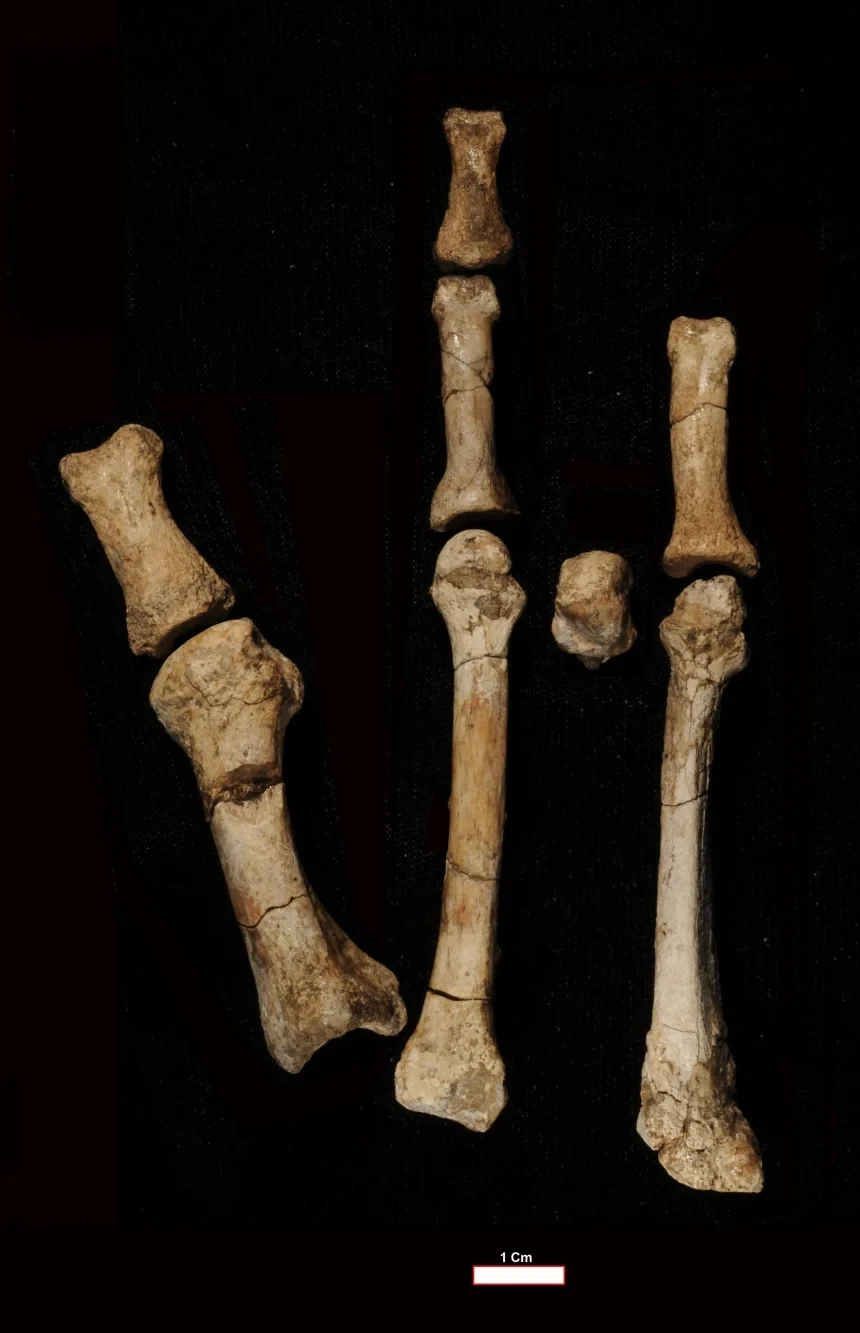
According to Becoming Human, the Burtele foot, comprising eight bones, dates back approximately 3.4 million years. The standout feature—a fully opposable big toe—indicates an agile climbing ability absent in Lucy’s foot structure, which suited habitual upright walking instead.

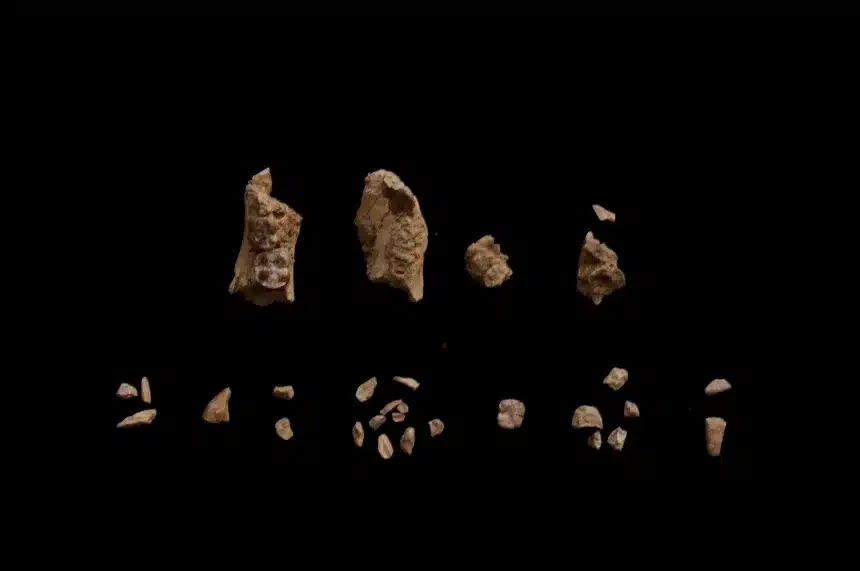
Yohannes Haile-Selassie and colleagues initially doubted the foot belonged to A. afarensis. Research published in Nature revealed that the connection became clearer only after the 2015 discovery of a partial jawbone and teeth attributed to A. deyiremeda. Recent analysis of additional fossils supports this association.
“What that means is that bipedality — walking on two legs — in these early human ancestors came in various forms,” Haile-Selassie explained in a university statement.
This suggests that upright locomotion didn’t evolve through a singular path but rather manifested differently among early hominin species.
Distinct Diets Reduced Competition
Isotopic studies of A. deyiremeda teeth indicate a diet focused on trees and shrubs, differing markedly from Lucy’s species, which consumed a broader variety of plants found in grassland habitats.
Haile-Selassie highlights that these dietary and locomotive differences allowed both species to occupy the same region with limited ecological overlap.
“This is the first time that we’re showing that Australopithecus deyiremeda and Australopithecus afarensis were able to coexist because one, they were different in terms of their locomotive adaptation, and two, they were consuming different dietary resources,” he said in a video shared by Arizona State University.
Such separations support the notion that A. deyiremeda occupied a distinct ecological niche in ancient East Africa.
A More Complex Human Evolutionary Tree Emerges
Realizing that Australopithecus deyiremeda lived concurrently with Lucy challenges previous assumptions about her place in the human family tree. While A. afarensis was long regarded as our direct forebear, emerging evidence points to a more intricate evolutionary web. Fred Spoor of the Natural History Museum in London notes that A. deyiremeda displays traits spanning both earlier and later hominin species, implying that multiple human-like species may have descended from Australopithecus anamensis.
The presence of mixed features places A. deyiremeda at a pivotal evolutionary juncture, though it remains unclear which species eventually gave rise to modern humans.
““The new research suggests that A. anamensis wasn’t just the ancestor of Lucy, but that many other human species could descend from it as well, including our own,” Spoor stated.
Meanwhile, Ryan McRae at the Smithsonian emphasizes that there is currently insufficient evidence to conclusively identify either A. deyiremeda or Lucy’s species as direct ancestors of modern humans. Additional fossil discoveries are needed to unravel the story further.
- Categories:
- Science




0 comments
Sign in to Comment