
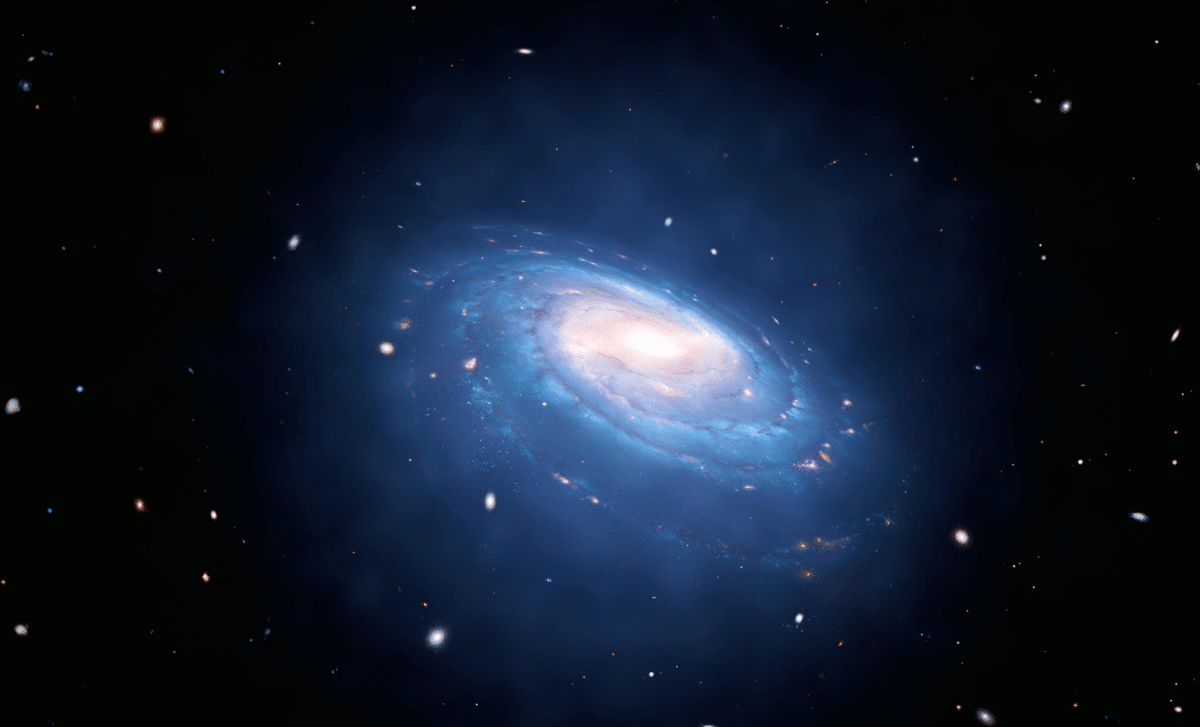
A recent article in the Monthly Notices of the Royal Astronomical Society challenges the longstanding concept of dark energy, the enigmatic phenomenon believed to fuel the universe’s accelerating expansion. The study proposes that some observational evidence might have been misunderstood, sparking discussions that could profoundly change our cosmic outlook.
Reevaluating Observational Data on Universe’s Acceleration
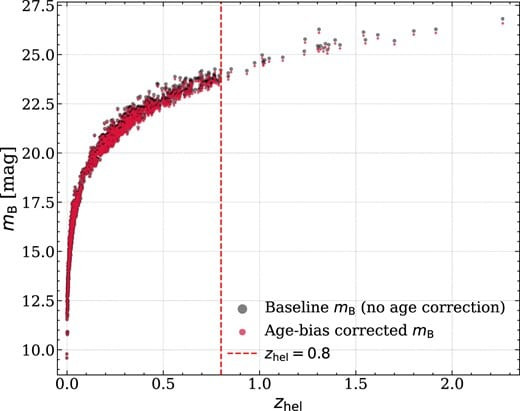
For many years, dark energy has been an essential part of the prevailing cosmological framework, introduced to explain discrepancies between predicted and observed acceleration rates. The new research, documented in the Monthly Notices of the Royal Astronomical Society, critically examines supernova data, especially focusing on older, fainter stars, suggesting earlier studies may have exaggerated their influence.
“This created a big shock,” says Sarkar, lead author of the study. “This is a very interesting and potentially quite impactful observation,” adds Dominik Schwarz at the University of Bielefeld in Germany. He notes that “dark energy came about as a fix for a discrepancy between our model of the universe and observations about it, and we may now be seeing a new discrepancy that comes from older, dimmer stars. That could again indicate the breakdown of the model.”
Add Cosmo Herald as a Preferred Source

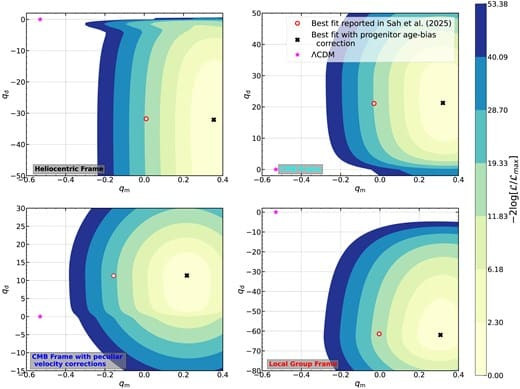
By applying updated statistical techniques to supernova catalogs, Sarkar and the team indicate that what has been interpreted as cosmic acceleration might partly result from biases in data selection and analysis models. If validated, this revelation would suggest that current ideas about the universe’s expansion dynamics are less definitive than previously accepted.
Scientific Community Weighs In on the Findings
There is still skepticism from parts of the scientific community about dismissing the current cosmological consensus. Joshua Frieman from SLAC National Accelerator Laboratory points out that “multiple independent lines of evidence, including alternative supernova surveys, galaxy distributions, and cosmic microwave background measurements, strongly support the reality of cosmic acceleration. These new results question only a subset of data and don’t overturn the overall paradigm.”
This episode illustrates how progress in science often involves debate and gradual consensus building. Geraint Lewis at the University of Sydney explains, “At the frontiers of science, opinions can differ widely as evidence is interpreted in different ways. It often takes time, additional data, and persuasive arguments to reach agreement.”
Potential Consequences for Cosmological Models
If these results gain traction, they could prompt a significant reexamination of core concepts regarding the universe’s makeup, the evolution of ancient stars, and the assumptions underlying data interpretation. This could trigger new experimental campaigns aimed at validating whether dark energy is truly necessary to explain cosmic acceleration or if alternative theories need consideration.
The debate highlights cosmology’s evolving nature, where fresh analyses can challenge established views, encouraging refinement of methods and expanding inquiries into the cosmos.
The Path Forward for Dark Energy Research
As these findings circulate, astronomers and physicists are expected to conduct further observations and independent tests. Upcoming projects like the Vera C. Rubin Observatory and the Euclid space mission will be instrumental in either confirming the presence of dark energy or supporting alternative explanations for the data.
Even if existing models hold up, this study underscores the necessity of constantly revisiting assumptions and scrutinizing evidence to deepen our comprehension of the universe. In astrophysics, definitive answers are rare, and challenging fundamentals often leads to transformative discoveries.
- Categories:
- News





0 comments
Sign in to Comment