
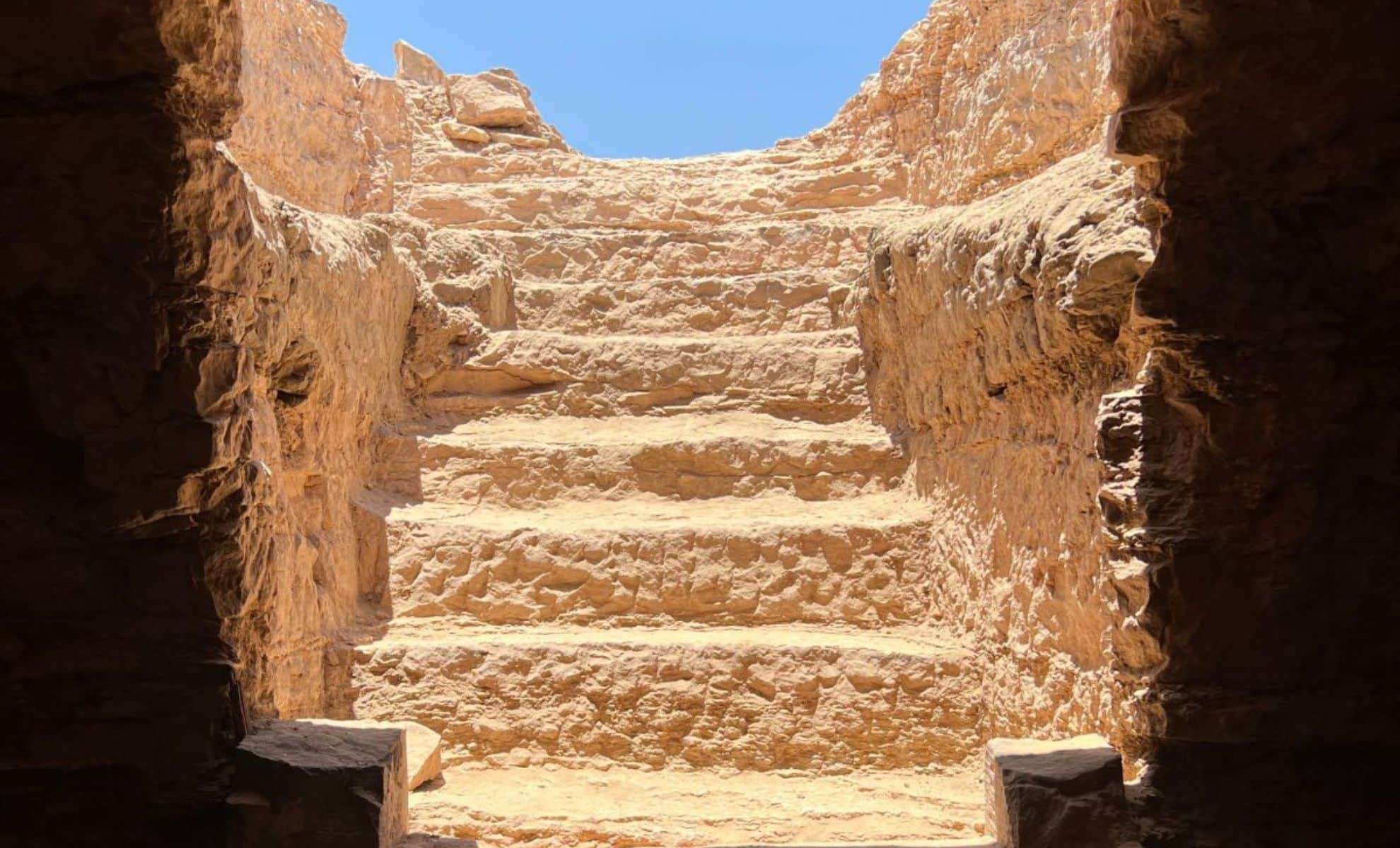
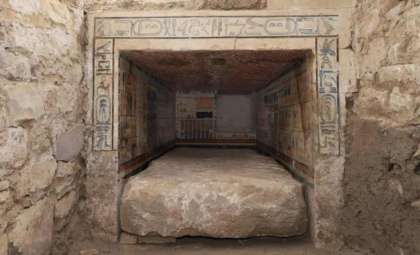
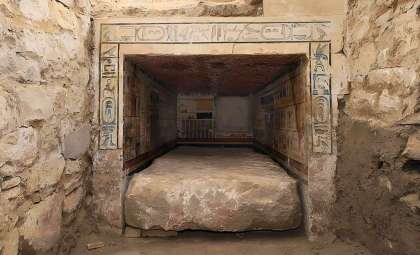
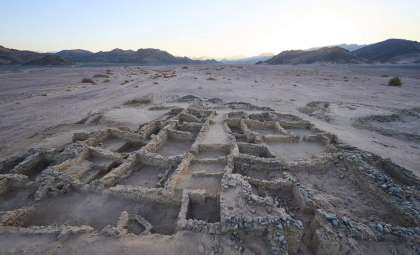
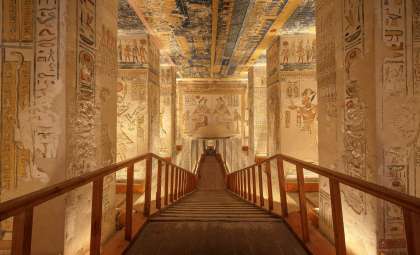
Hidden under a discrete stairway in southern Egypt, a Greco-Roman burial site is providing fresh insights into the region's ancient mortuary customs. At the bottom of nine stone steps in the Aga Khan Mausoleum vicinity of Aswan, researchers uncovered a carved rock chamber housing an ornately adorned limestone coffin standing approximately six feet tall. This discovery, announced by Egypt’s Ministry of Tourism and Antiquities, adds an important chapter to the study of ancient Egyptian burial practices.
Remarkable Tomb Unearthed in Aswan’s Historic Burial Grounds
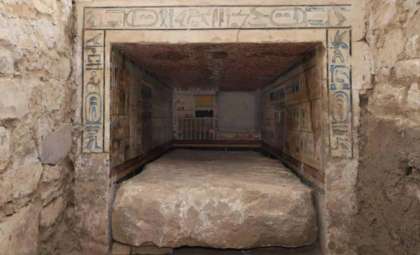
A collaborative archaeological effort between Egyptian authorities and the University of Milan has unearthed what experts describe as “one of the most architecturally remarkable and well-preserved tombs discovered in recent times.” The limestone sarcophagus, resting on an intricately sculpted stone pedestal more than six feet below ground level, is inscribed with vertical columns of hieroglyphics. These carvings include invocations to regional deities and confirm the tomb as belonging to Ka-Mesiu, a prominent official now emerging into the historical record of Aswan.
Central to the excavation is Tomb No. 38, featuring mudbrick benches on either side of the stairway, believed to have accommodated funerary offerings. The core of this site is a sarcophagus sealed with an anthropoid cover, showcasing an expertly carved human visage crowned with a decorative wig and adorned with vivid paintwork.

Untouched Sarcophagus Reveals Layers of History
Accompanying the sarcophagus, the tomb contained several mummified bodies, including those of children, suggesting the site was used by multiple generations of families. Mohamed Ismail Khaled, secretary general of the Supreme Council of Antiquities, stated this provides “tangible proof of the necropolis’ ongoing use by diverse social groups over an extended period.” While elites were interred atop the plateau, middle-class individuals were typically buried along the slope near the mausoleum.
Researchers are now conducting in-depth examinations, including CT imaging and biological analysis, to determine the identities, health conditions, and causes of death of those interred. These studies offer a unique window into medical and personal histories from Egypt’s Greco-Roman era. Additionally, scholars will delve into the hieroglyphic texts and related artifacts to better understand the religious beliefs and evolving burial customs of the epoch.
A Testament to Aswan’s Role as a Cultural Intersection
Aswan has historically served as a vital crossroads for cultural and political interactions, and this tomb underscores that legacy. Sherif Fathy from the Ministry of Tourism and Antiquities remarked that these burial sites “illustrate not only the grandeur of the Pharaonic civilization but also its remarkable adaptability and endurance under successive rulers such as the Ptolemaic and Roman authorities.”
More discoveries might still await. Mohamed Abdel-Badei, head of the Egyptian Antiquities Sector, mentioned that the plateau above the staircase contains multiple large subterranean tombs dating back to the Ptolemaic period. Originally built for elite families, these chambers were later reused during Roman times.
- Categories:
- News




0 comments
Sign in to Comment