
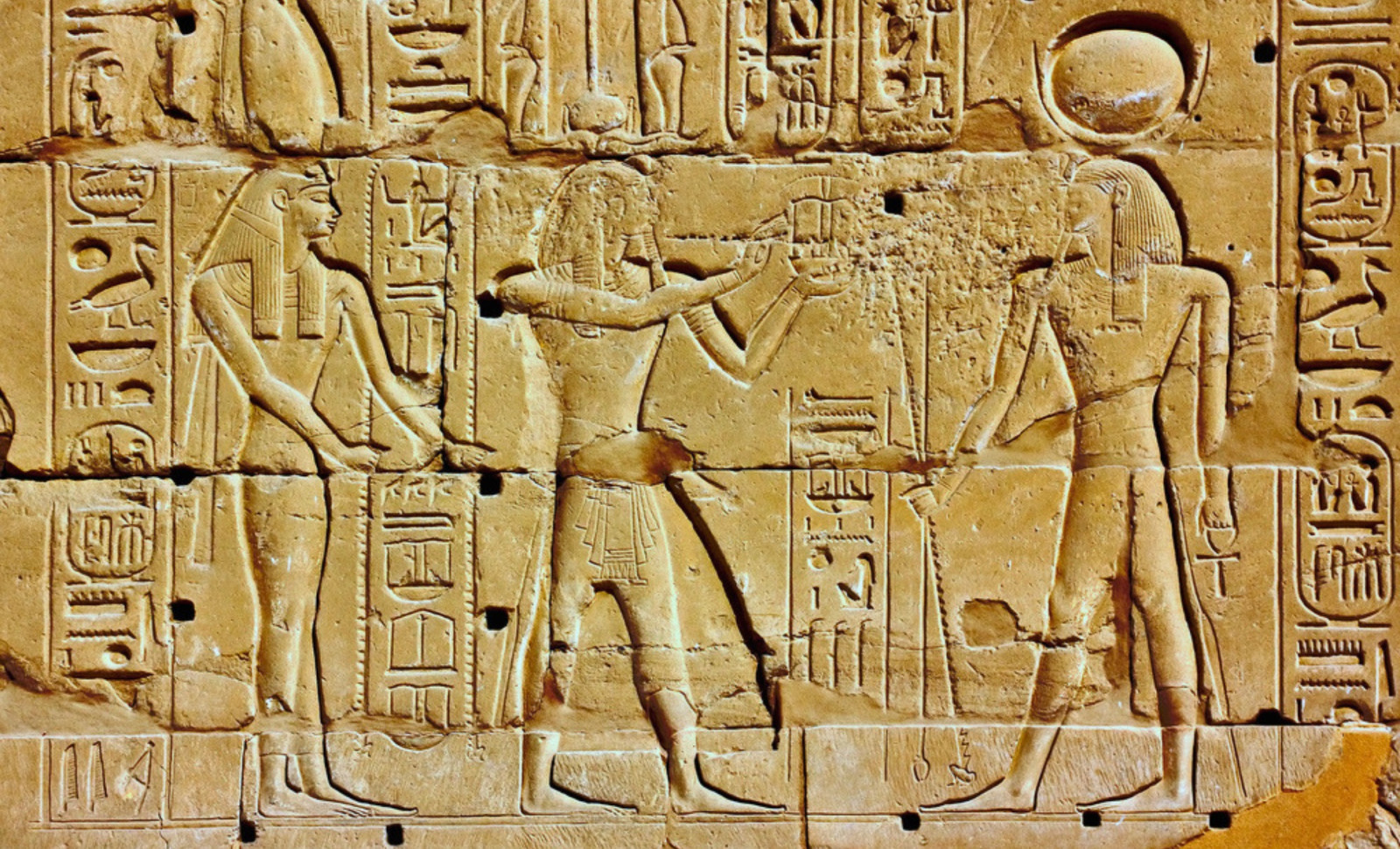
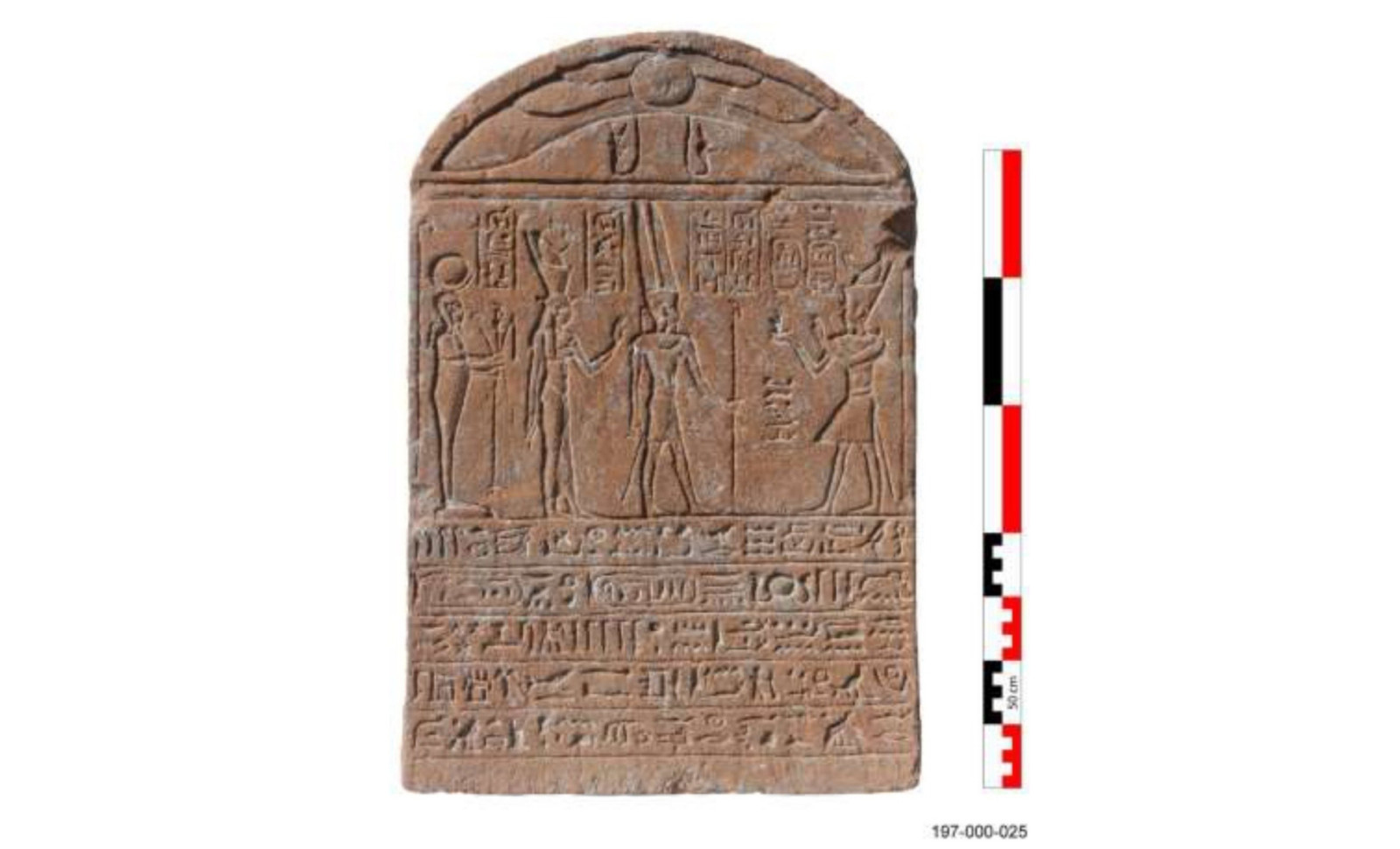
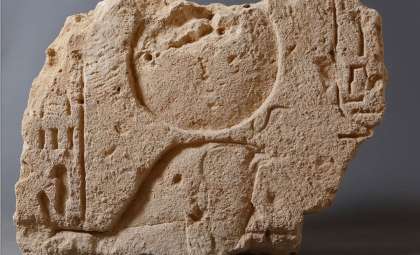
Discovered at the Karnak temple complex in Luxor, a sandstone slab dating back around 2,000 years portrays Roman Emperor Tiberius adorned with Egypt’s iconic double crown instead of a traditional Roman toga. This relief captures him engaging in sacred rituals alongside the Theban Triad of gods, highlighting a practice where foreign rulers embraced pharaonic imagery to symbolize their authority and divine role long after the indigenous Egyptian pharaohs had ceased to rule. The stela presents Tiberius sustaining Ma’at, the principle of cosmic balance crucial to Egyptian belief.
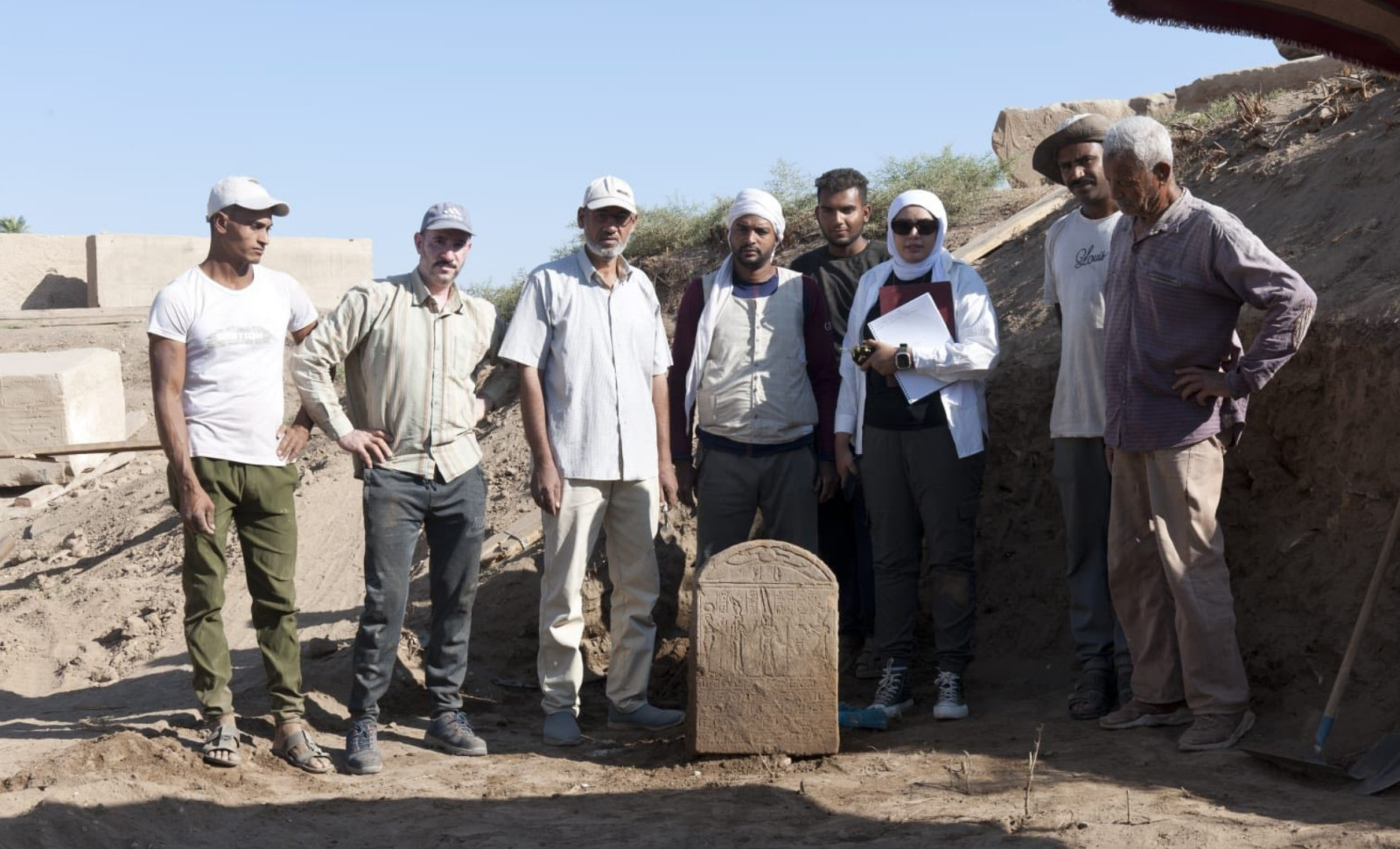
The find was publicized by Egypt’s Ministry of Tourism and Antiquities and covered by the Franco-Egyptian Center for the Study of the Temples of Karnak, which led the excavation in partnership with France’s National Center for Scientific Research and the Supreme Council of Antiquities.
Tiberius Depicted with Theban Deities Amun-Ra, Mut, and Khonsu
The stela, roughly 60 by 40 by 10 centimeters, illustrates Emperor Tiberius—who governed the Roman Empire from 14 to 37 AD—wearing the combined crowns of Upper and Lower Egypt. He is positioned before the Theban Triad: Amun-Ra, the supreme deity; Mut, his consort; and Khonsu, their offspring.

Inscribed hieroglyphs beneath the imagery detail restoration efforts on the Temple of Amun-Ra’s wall, supporting on-site architectural findings documented by the research team.
Portraying Tiberius in pharaonic garb signifies his role in performing rituals to honor the gods of Egypt—a land conquered by Rome. Such temple carvings and paintings acted as idealized depictions of ceremonies that might have included statues or human actors representing rulers and deities. Similar portrayals of Tiberius donning Egyptian regalia and presenting offerings exist at the temples of Dendera and Philae, emphasizing his integration into local religious traditions over Roman pantheon symbolism.
Stela Unearthed Among Later Historical Remains
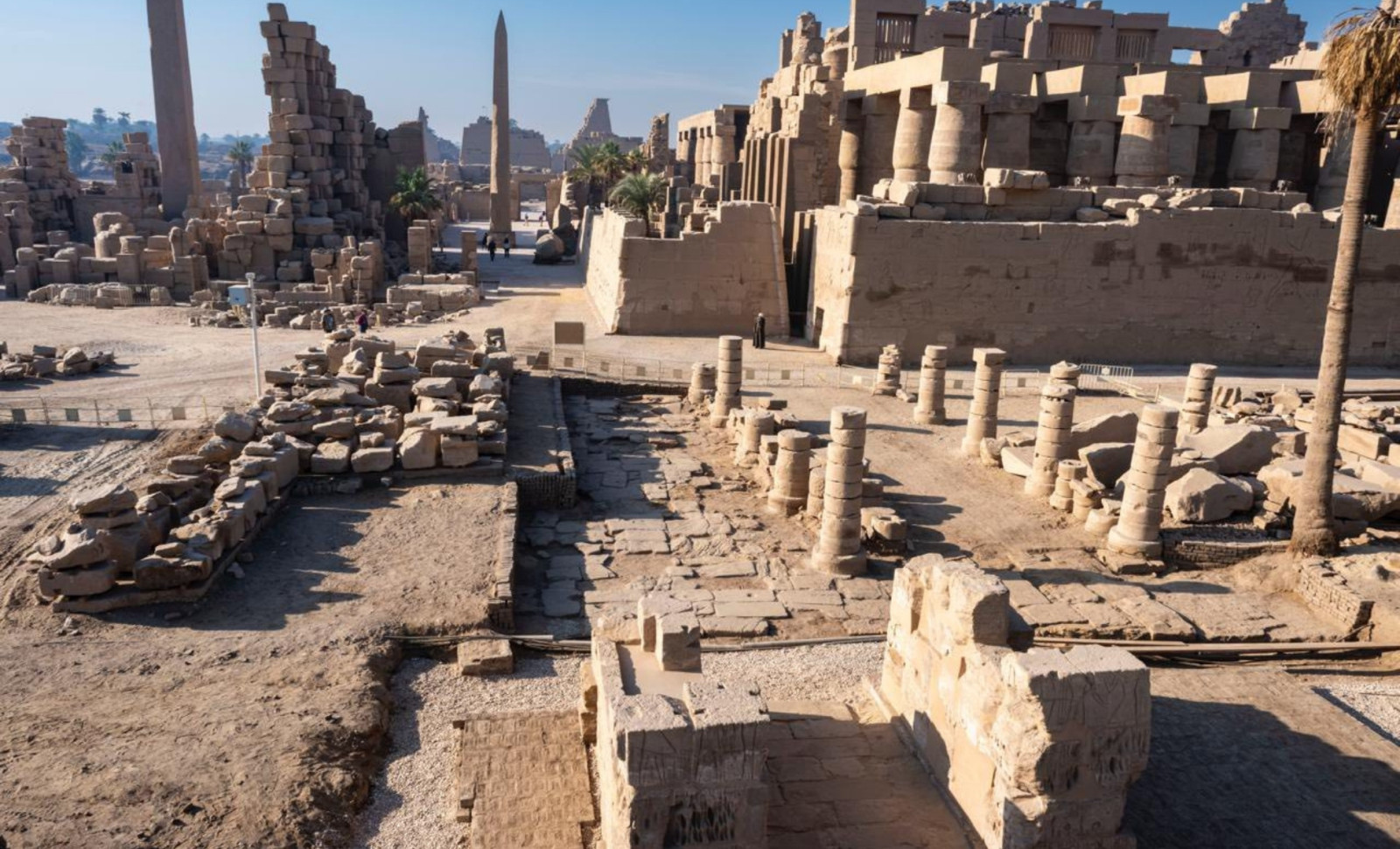
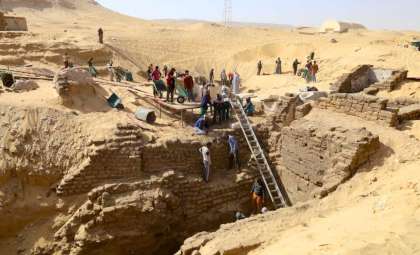
The artifact was discovered amid remnants of mud-brick buildings dating to the late Roman and Byzantine eras, located northwest of the Ramesses III gateway, reflecting Karnak’s rich accumulation of successive cultures that renovated and adapted previous structures.
Since 2022, archaeologists have been engaged in restoring and reconstructing the Ramesses III gate, originally erected in the 20th Dynasty. The restoration involved dismantling the gate, cataloging and repairing stone blocks, and then reassembling the structure with contemporary techniques.
During work on the gateway, researchers uncovered that some decorated stones were originally from the reign of Amenhotep III, predating Ramesses III by approximately two centuries. This discovery implies the gate’s initial construction began in the 18th Dynasty with subsequent alterations. The study thus identified several building phases spanning from the New Kingdom through Greco-Roman times.
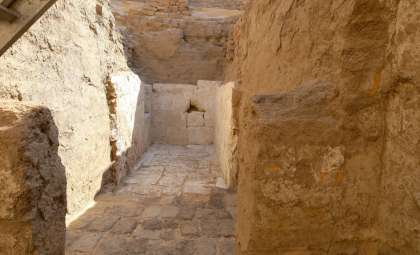
The project also revealed a paved pathway, recorded early in the 20th century but forgotten over time, linking Ramesses III’s gate to the Square of the Third Pylon within Karnak, restoring a once-lost route through the complex.
Egyptian Tradition of Foreign Rulers as Pharaohs
Representing Tiberius as a pharaoh was part of a longstanding political and spiritual custom extending from the Ptolemaic dynasty onward, wherein foreign rulers governing Egypt adopted traditional pharaonic imagery to affirm their legitimacy. Regardless of origin or religion, leaders were expected to preserve the ancient divine order by embodying pharaonic authority.
Roman emperors were featured on Egyptian coinage, inscribed with their names in hieroglyphs framed by royal cartouches akin to those of native pharaohs, and depicted in temple reliefs. Emperor Claudius, for example, is shown on the Temple of Isis at Shanhur presenting offerings to Min, the fertility god, while Emperor Trajan appears on a sandstone panel at Esna’s Khnum temple violently subduing foes.
These depictions transcended decoration, reinforcing the concept that whoever ruled Egypt was divinely charged with safeguarding cosmic balance and continuing the pharaonic legacy.
King’s Duty to Uphold Ma’at, the Cosmic Principle
The stela illustrates Tiberius’s role in maintaining Ma’at, the Egyptian principle symbolizing truth, harmony, and cosmic order, often iconized by a feather and personified as the goddess Maat.
Since ancient times, ensuring Ma’at was central to kingship. Images of pharaohs confronting enemies symbolized their success in sustaining Ma’at rather than literal battles. Temples commonly featured scenes of rulers offering Ma’at to the gods.
Egyptian temples represented embodiments of Ma’at on earth, constructed with walls in gentle undulations symbolizing order, with chaos existing beyond their boundaries. By Ptolemaic times, Ma’at was thought to be a divine gift delivered from the heavens, maintained by the king, and returned in a pristine state.
Because the monarch upheld Ma’at, the interval following his death was considered dangerous. Immediate succession was essential to prevent chaos from overwhelming the kingdom.
- Categories:
- Science



0 comments
Sign in to Comment