
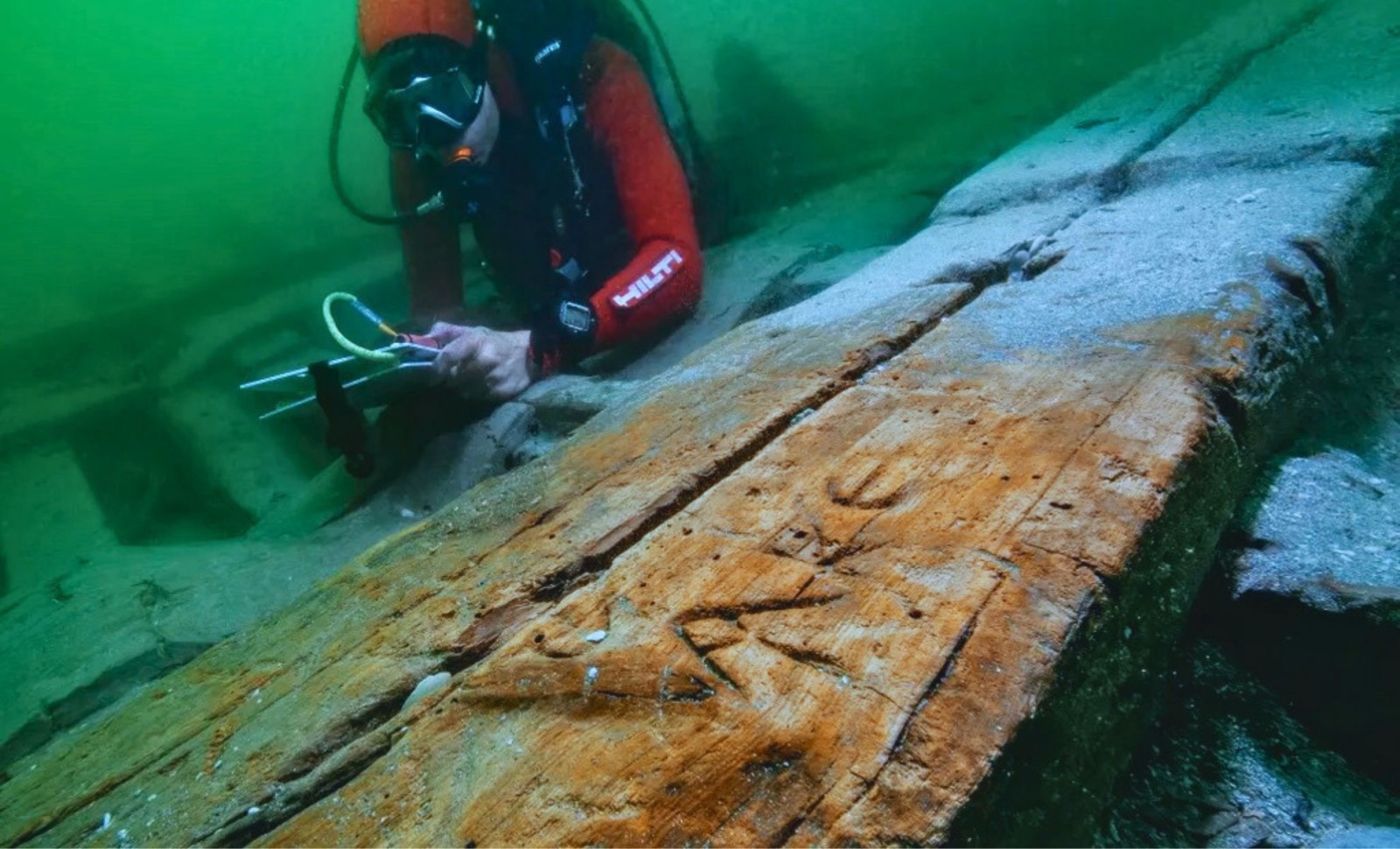
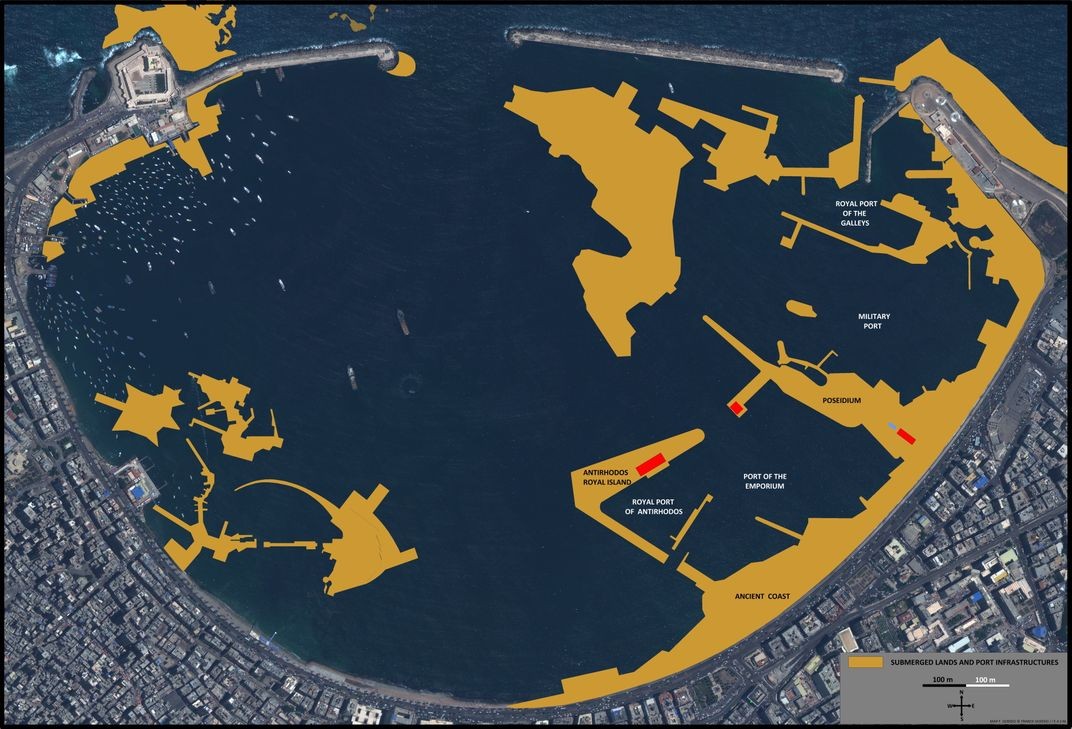
Off the shores of Alexandria, archaeologists have uncovered the remains of a 2,000-year-old vessel, shedding light on the opulent watercraft and maritime customs of ancient Egypt’s elite. Excavated near the submerged island of Antirhodos, this wooden ship has been identified as a royal Nile barge, or thalamegos, representing the first physical evidence of such vessels despite their longstanding presence in historical records.
Announced by the European Institute for Underwater Archaeology (IEASM), the find reveals a craft intended for indulgence, ritual, and ceremonial use, positioned just meters away from the remnants of the Temple of Isis. The excavation, led by expert underwater archaeologist Franck Goddio, confirms references to opulent Nile vessels employed by Egypt’s ruling class.
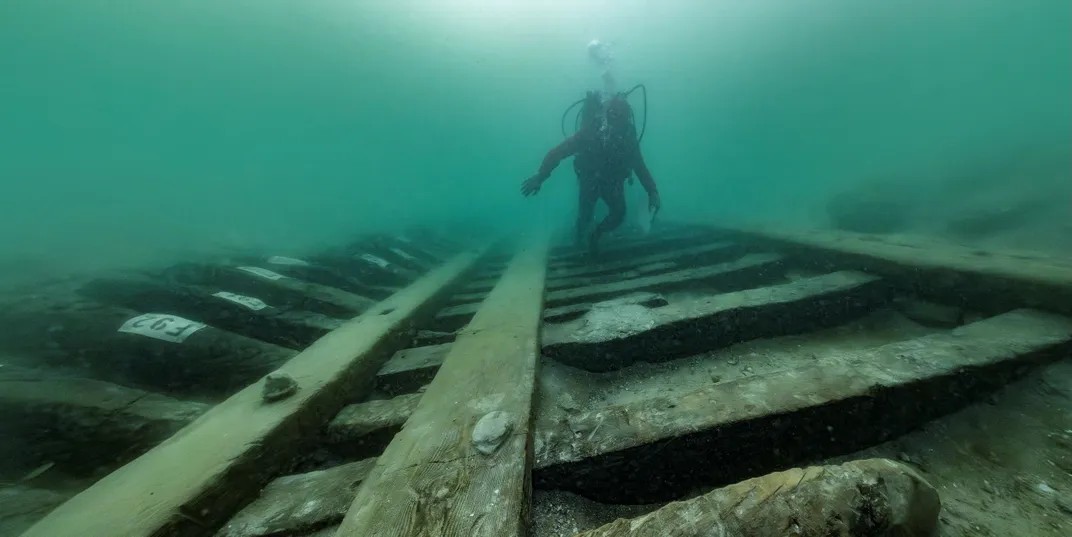
Preliminary measurements estimate the ship was around 115 feet long and 23 feet wide, featuring a flat front, rounded back, and a broad beam suitable for shallow waterways, perfectly adapted to the Nile’s intricate canal network. Its design aligns closely with descriptions from Roman-era Egyptian art, texts, and tradition.

Definitive Evidence of Luxurious Nile Vessels Emerges
The barge, labeled K1, was discovered at a depth of just over seven meters, concealed beneath 1.5 meters of sediment. Excavated in late 2025, the preserved hull structure reveals a boat propelled primarily by rowers rather than sails. Despite mentions in antiquity, this marks the first physical example of such a vessel retrieved from Egyptian waters.
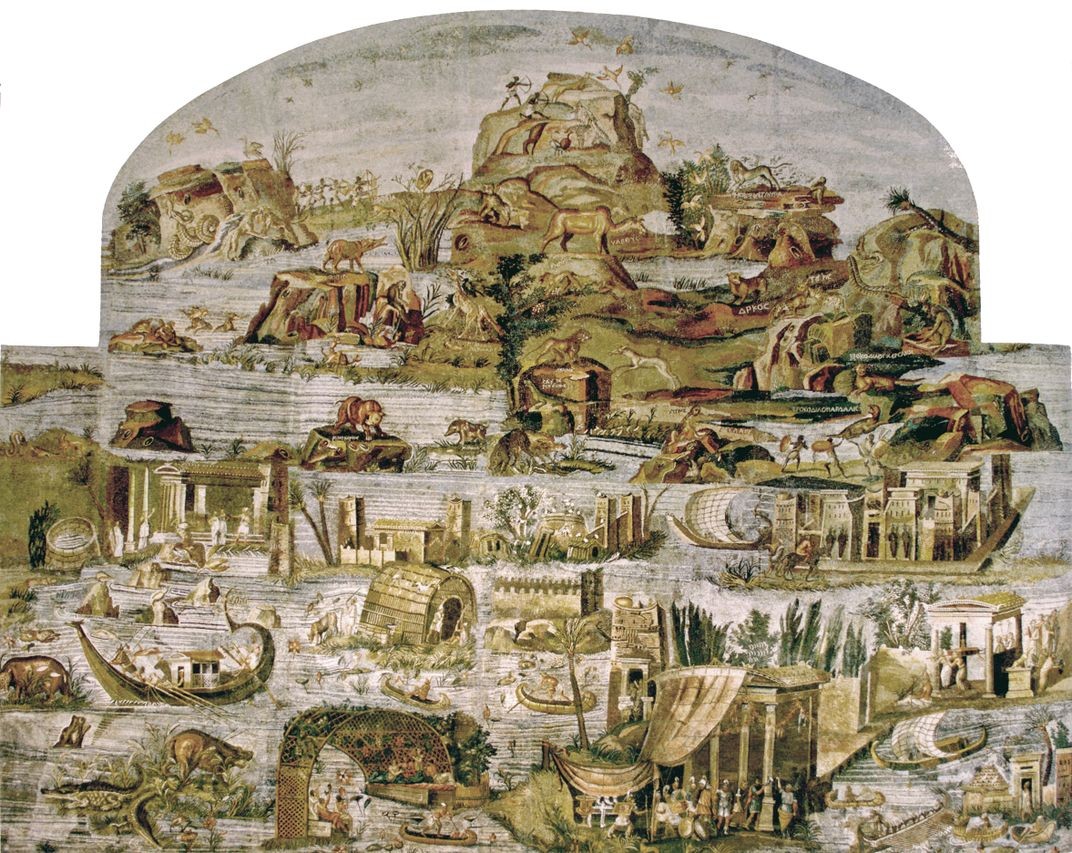
Goddio, also a visiting scholar at the University of Oxford, shared with The Guardian, “This is an unprecedented find in Egypt… Ancient writers like Strabo referenced these vessels, which are also illustrated in artworks such as the Palestrina mosaic. ”
Strabo, a geographer from the first century BCE, documented the deployment of thalamegoi in Alexandria for entertainment and ceremonies. He described them as “lavishly adorned vessels favored by royalty, often hosting lively festivities filled with music and dance.”
Until now, such descriptions were largely anecdotal, but the archaeological evidence provides concrete validation.
Connection to the Temple of Isis Sheds Light on Ritual Use
The proximity of K1 to the submerged Temple of Isis—destroyed around 50 CE due to earthquakes and flooding—prompts fresh interpretations of the ship’s ceremonial role.
In an interview with CBC Radio, Goddio explained, “The vessel’s center, instead of a pavilion, housed a small shrine dedicated to Isis.”
This finding suggests the barge could be linked to the navigium Isidis, a ritual boat procession venerating Isis as the Mistress of the Sea. These events featured elaborately decorated ships symbolizing the solar barque, a powerful emblem of life, death, and rebirth in Egyptian mythology.
Supporting this theory, researchers found Greek inscriptions on the ship’s main timber, dated to the early first century CE, consistent with both the temple’s destruction and Roman-era Isis worship ceremonies. Detailed visualizations and 3D models of the wreck are available on the official K1 wreck project page.
Artistic and Literary Evidence Confirms Ship’s Purpose
Comparisons to vessels illustrated in the Nile Mosaic of Palestrina, which portrays boating ceremonies and hunts from the Roman period, support the identification of K1 as a ritual barge. Combined with ancient texts like those of Strabo, these sources illuminate the grandeur and ceremonial use of such boats by Egypt’s upper class.
Though smaller versions appear in artistic depictions, the impressive size of K1 meant to support a central shrine demonstrates the architectural sophistication of these luxury crafts.
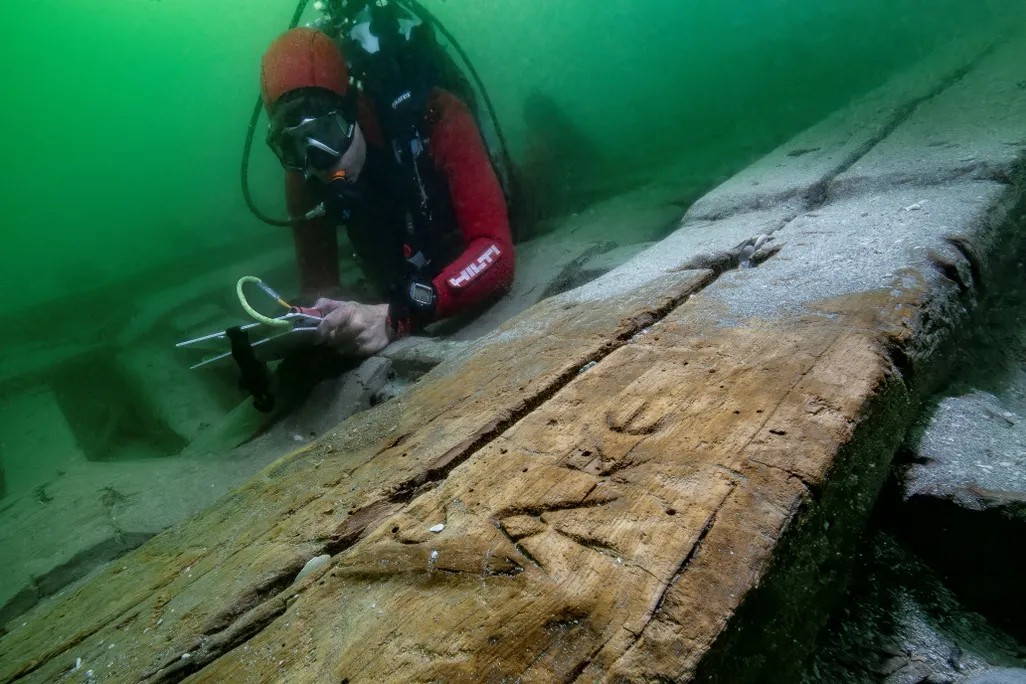
Technically, the barge’s flat-bottomed design and shallow draft suited the Nile’s narrow, vegetation-filled delta channels. Lacking sails, the structure indicates propulsion by approximately 20 oarsmen, engineered for smooth navigation in calm, shallow river environments.
Underwater Conservation Ensures Long-Term Study Potential
In accordance with UNESCO’s underwater heritage preservation protocols, the IEASM team has reburied the barge beneath sediment to protect it in place. The discovery zone is largely untouched, with only a fraction of Portus Magnus explored so far. Advanced 3D photogrammetry was employed to capture the wreck for continued examination.
This discovery follows Goddio’s earlier significant underwater finds near the Bay of Aboukir, including the sunken cities of Thonis-Heracleion and Canopus from the early 2000s, which rank among the most important marine archaeological breakthroughs in recent history.
With ongoing research underway by the Oxford Centre for Maritime Archaeology and IEASM, the K1 vessel promises to deepen understanding of ancient Egypt’s complex relationship with the Nile—as a vital waterway, spiritual symbol, and platform for royal display.
- Categories:
- Science


0 comments
Sign in to Comment