
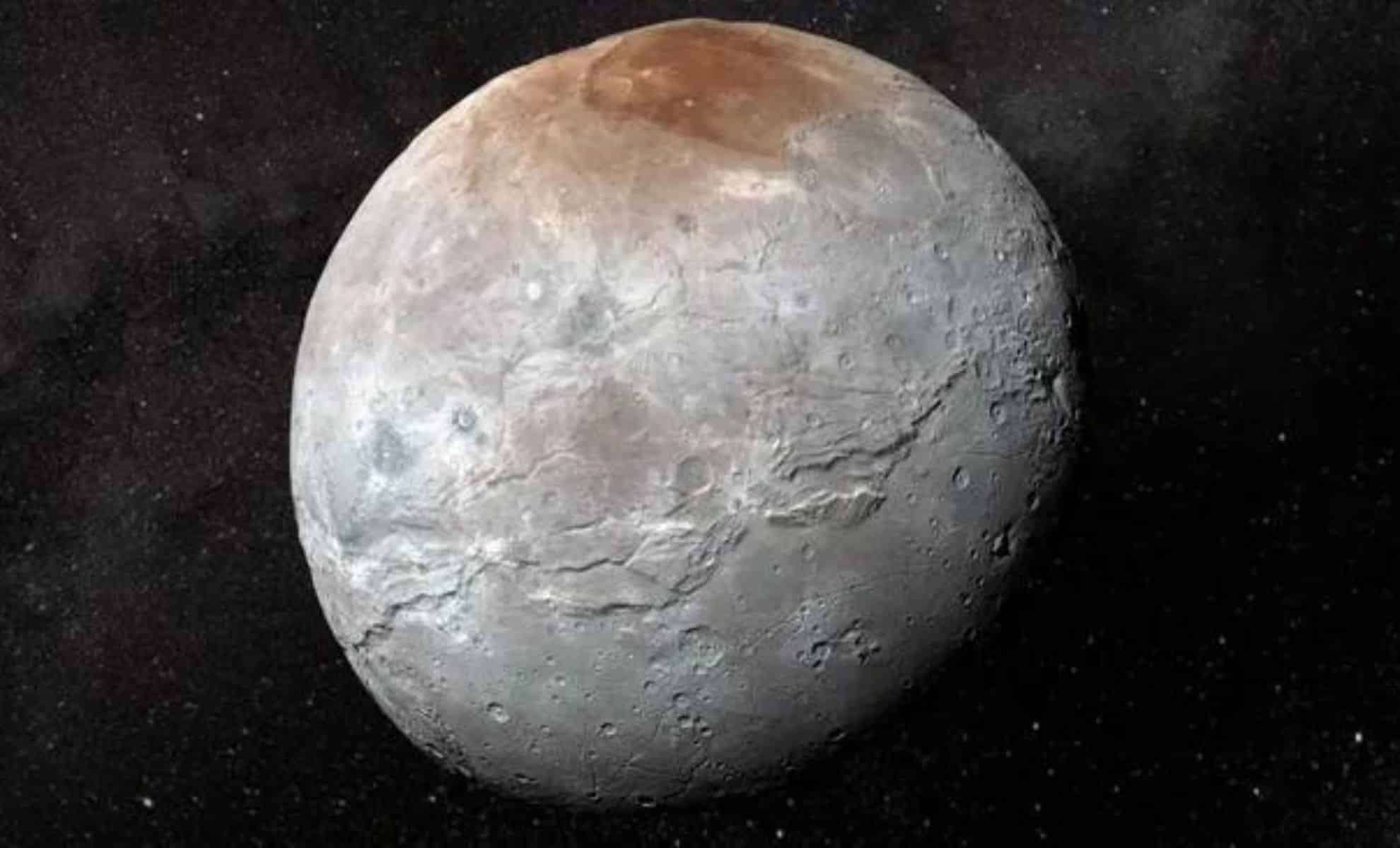
The James Webb Space Telescope (JWST) has made a remarkable breakthrough by identifying carbon dioxide and hydrogen peroxide on the icy surface of Charon, Pluto’s largest moon. These discoveries enhance our understanding of the moon’s surface makeup and shed light on the evolution of icy objects situated in the solar system’s outer reaches.
Detection of Carbon Dioxide and Hydrogen Peroxide on Charon
Discovered in 1978, Charon resides in the distant Kuiper Belt and has been a focus of planetary studies for decades. Prior missions, including NASA’s New Horizons, revealed the presence of water ice, ammonia, and organic compounds on Charon, but carbon dioxide had not been definitively observed until now. Utilizing the advanced capabilities of its Near-Infrared Spectrograph (NIRSpec), the JWST successfully identified carbon dioxide on the moon’s surface. Lead scientist Silvia Protopapa remarked, “Detecting carbon dioxide confirmed a long-held hypothesis about Charon’s surface composition.”
This carbon dioxide is believed to originate from beneath Charon’s icy crust, exposed by impacts that reveal subsurface material. This pivotal finding fills a significant gap in understanding the formation and developmental history of Charon and other icy bodies within the outer solar system.

Unexpectedly, hydrogen peroxide was also discovered, a compound Protopapa had not anticipated on Charon. “Finding hydrogen peroxide on Charon was quite surprising,” she stated. Hydrogen peroxide typically forms when ice is irradiated by cosmic rays or ultraviolet light, indicating that Charon’s surface has experienced extensive alteration due to solar ultraviolet radiation and cosmic particle exposure over time. This marks the first confirmation of hydrogen peroxide on Charon, providing fresh insights into chemical interactions on icy worlds far from the Sun.

What This Means for Kuiper Belt Studies
The revelation of carbon dioxide and hydrogen peroxide on Charon extends beyond the moon itself, offering valuable clues about the broader Kuiper Belt, a zone beyond Neptune filled with numerous icy celestial bodies. Unlike many other trans-Neptunian objects (TNOs), Charon’s surface is relatively free from obscuring methane and other volatile ices, making it an ideal subject to study the effects of radiation and meteoric impacts over vast timespans.
Charon acts as a natural archive, displaying the changes induced by cosmic events and surface bombardment. Protopapa emphasized Charon’s significance, stating, “Such objects act as frozen time capsules, enabling us to glimpse the conditions present in the early stages of our solar system’s history.” The chemical and physical imprint on Charon reflects a story of cosmic exposure and geological processes that have shaped many bodies in the solar system’s periphery.
Insights gained from Charon assist scientists in interpreting the characteristics and origins of other Kuiper Belt objects, most of which remain poorly understood due to their immense distances. By unveiling Charon’s composition, researchers advance knowledge about the formation and evolutionary pathways of these primordial remnants.
Ongoing Investigations with the James Webb Space Telescope
Research on Charon is ongoing, with the James Webb Space Telescope continuing its observations. Scientists plan to explore spectral regions not yet examined, potentially uncovering additional compounds and deepening the understanding of Charon’s surface and internal chemistry.
Protopapa and her colleagues expect future JWST campaigns will reveal further surprises. “Observations targeting uncharted spectral ranges may identify new substances on Charon, enriching its chemical profile,” she noted. Discovering more complex molecules will illuminate the processes that have influenced not only Charon but the entire Kuiper Belt and early solar system dynamics.
Published in Nature Communications, these findings showcase JWST's transformative impact on solar system science, bringing us closer to comprehending the evolutionary history of Pluto’s enigmatic moon and the surrounding cosmic frontier.
- Categories:
- Astronomy ,
- News ,
- Space ,
- Nasa









0 comments
Sign in to Comment